Being arrested or facing criminal proceedings can be overwhelming for an accused person and their family. One of the first legal remedies available after an arrest is applying for bail, which allows the accused to be released from custody while the investigation or trial continues.
The procedure for obtaining bail depends on several factors, including the nature of the offence, whether it is bailable or non-bailable, the stage of the case, and the applicable provisions of the Bharatiya Nagarik Suraksha Sanhita, 2023 (BNSS). Understanding the bail process can help individuals protect their legal rights and avoid unnecessary delays.
This comprehensive guide explains how to apply for bail in India, the different types of bail, eligibility, the courts that can grant bail, and the legal principles governing bail applications under the BNSS.
In this guide, you will learn:
- What bail means.
- Why bail is important.
- Types of bail available in India.
- Who can apply for bail.
- When a bail application can be filed.
- Difference between bailable and non-bailable offences.
- Courts empowered to grant bail.
- Basic legal terms used in bail proceedings.
- Step-by-step application process.
- Frequently asked questions.
What is Bail?
Bail is the legal process through which an accused person is released from police or judicial custody, subject to conditions imposed by the court or authorised officer. Instead of remaining in custody until the conclusion of the investigation or trial, the accused is permitted to remain at liberty while agreeing to appear before the court whenever required.
Grant of bail does not mean that the accused has been declared innocent. It simply ensures that personal liberty is protected while the criminal proceedings continue in accordance with law.
Depending on the circumstances, bail may be granted by:
- The police in certain bailable offences.
- A Judicial Magistrate.
- A Sessions Court.
- A High Court.
- The Supreme Court, where legally permissible.
Why is Bail Important in Criminal Law?
The concept of bail balances two important objectives:
- Protecting the fundamental right to personal liberty.
- Ensuring that the accused remains available for investigation and trial.
Without the system of bail, an accused person could remain in custody for long periods before guilt or innocence is determined. Bail therefore serves as an important safeguard against unnecessary detention while ensuring that the administration of justice is not compromised.
Constitutional Right to Personal Liberty
The principle of bail is closely linked to Article 21 of the Constitution of India, which guarantees that no person shall be deprived of life or personal liberty except according to the procedure established by law.
Indian courts have consistently held that deprivation of liberty should occur only in accordance with legal procedures and that unnecessary detention should generally be avoided. While every bail application is decided on its own facts, courts seek to balance individual liberty with the interests of justice.
Bail Under the Bharatiya Nagarik Suraksha Sanhita (BNSS)
The Bharatiya Nagarik Suraksha Sanhita, 2023 (BNSS) governs criminal procedure in India and lays down the legal framework relating to arrest, investigation, custody, and bail.
Under the BNSS, the court considers factors such as:
- Nature and seriousness of the offence.
- Stage of investigation.
- Possibility of the accused absconding.
- Risk of influencing witnesses.
- Possibility of tampering with evidence.
- Criminal antecedents of the accused.
- Overall interests of justice.
Each application is decided independently based on the applicable law and the facts of the case.
Types of Bail in India
Indian criminal law recognises different forms of bail depending on the circumstances.
1. Regular Bail
Regular bail is sought after a person has been arrested and taken into custody.
It allows the accused to be released pending investigation or trial, subject to conditions imposed by the court.
Regular bail is one of the most common forms of bail in criminal cases.
2. Anticipatory Bail
Anticipatory bail is sought before arrest by a person who reasonably believes that they may be arrested for a non-bailable offence.
If granted, it protects the applicant from being taken into custody subject to the conditions imposed by the court.
3. Interim Bail
Interim bail is a temporary form of relief granted for a specified period.
It is generally granted while a regular or anticipatory bail application is pending or where temporary protection is justified by the circumstances.
4. Default Bail
Default bail (also known as statutory bail) arises when the investigating agency fails to file the charge sheet within the statutory period prescribed under the BNSS, subject to fulfilment of the legal requirements.
Unlike interim bail, default bail is based on a statutory right.
Who Can Apply for Bail?
The following persons may apply for bail where permitted by law:
- A person arrested for a criminal offence.
- A person apprehending arrest (for anticipatory bail).
- An accused in judicial custody.
- An accused in police custody where applicable.
- A person eligible to seek default bail.
- A juvenile, through the procedure prescribed under the Juvenile Justice Act where applicable.
Eligibility depends upon the facts of each case and the applicable legal provisions.
When Can Bail Be Applied For?
The timing of a bail application depends on the nature of the relief sought.
Before Arrest
An individual who has a reasonable apprehension of arrest in a non-bailable case may apply for anticipatory bail.
After Arrest
Once arrested, the accused may apply for regular bail before the competent court.
During Investigation
Bail applications may be filed while the investigation is ongoing, depending on the nature of the offence and other relevant circumstances.
During Trial
An accused may also seek bail while the criminal trial is pending, subject to the applicable legal provisions.
After Expiry of the Statutory Investigation Period
If the investigating agency fails to complete the investigation and file the charge sheet within the prescribed period, the accused may become entitled to seek default bail.
Bailable vs Non-Bailable Offences
Understanding this distinction is essential before filing a bail application.
Bailable Offences
In bailable offences:
- Bail is generally available as a matter of right, subject to the applicable legal provisions.
- The accused may be released by the police or the court upon fulfilling the legal requirements.
- The offence is generally less serious than a non-bailable offence.
Non-Bailable Offences
In non-bailable offences:
- Bail is not automatic.
- The court exercises judicial discretion.
- The seriousness of the allegations and other relevant factors are carefully considered.
The court examines the facts of each case before granting or refusing bail.
Courts That Can Grant Bail
Different courts have jurisdiction to grant bail depending on the nature of the offence and the stage of the proceedings.
These include:
Judicial Magistrate
Generally deals with bail applications in cases within its jurisdiction.
Chief Judicial Magistrate
May hear bail applications in appropriate cases.
Sessions Court
Has jurisdiction to hear bail applications in more serious criminal matters and appeals from subordinate courts where permitted by law.
High Court
May grant bail in appropriate cases and also hear challenges to bail orders passed by lower courts.
Supreme Court
The Supreme Court may grant bail or consider challenges relating to bail in suitable cases within its constitutional and statutory jurisdiction.
Key Legal Terms You Should Know
Before applying for bail, it is useful to understand certain common legal terms.
Accused
A person against whom criminal allegations have been made.
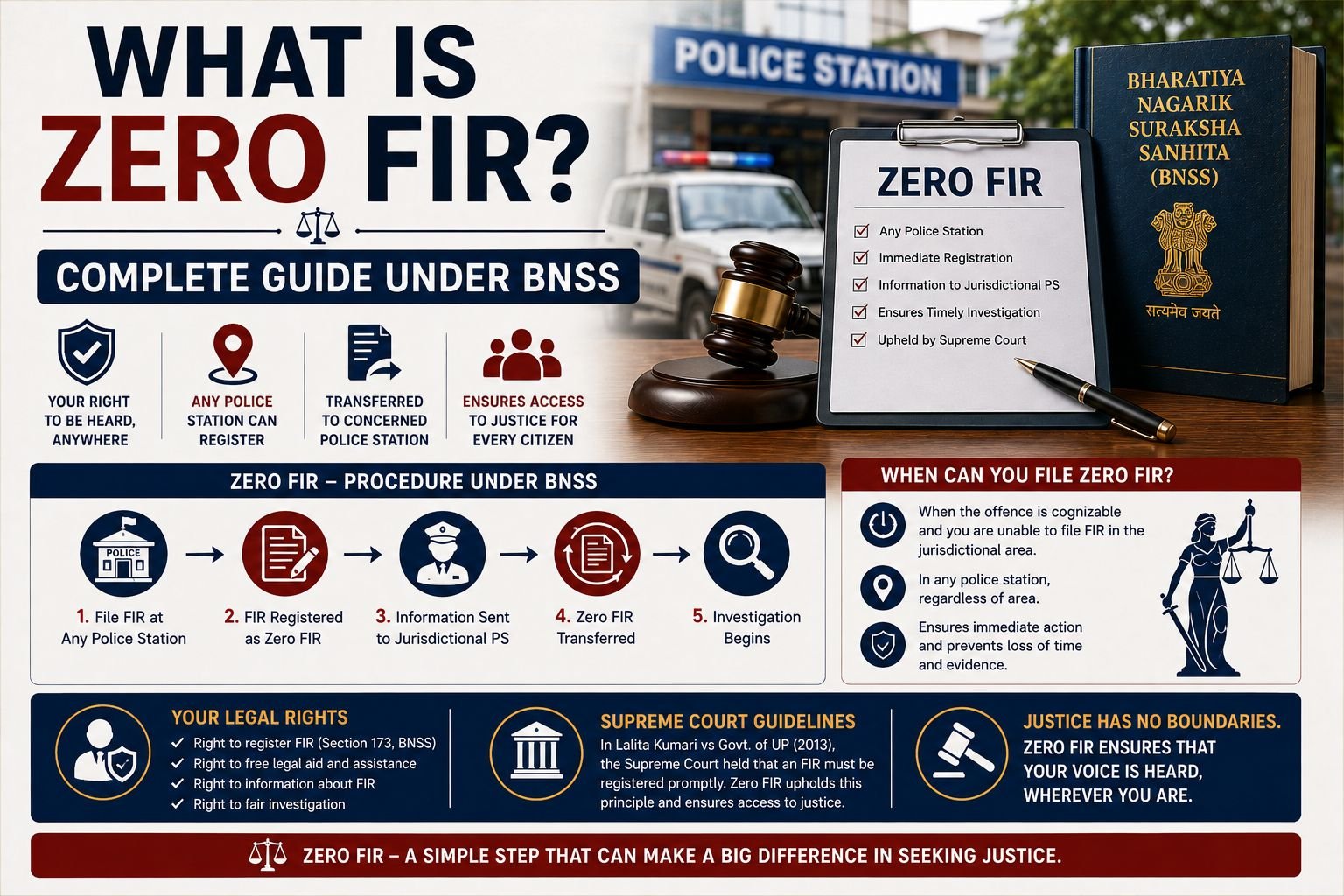
FIR (First Information Report)
The document recorded by the police upon receiving information about the commission of a cognisable offence.
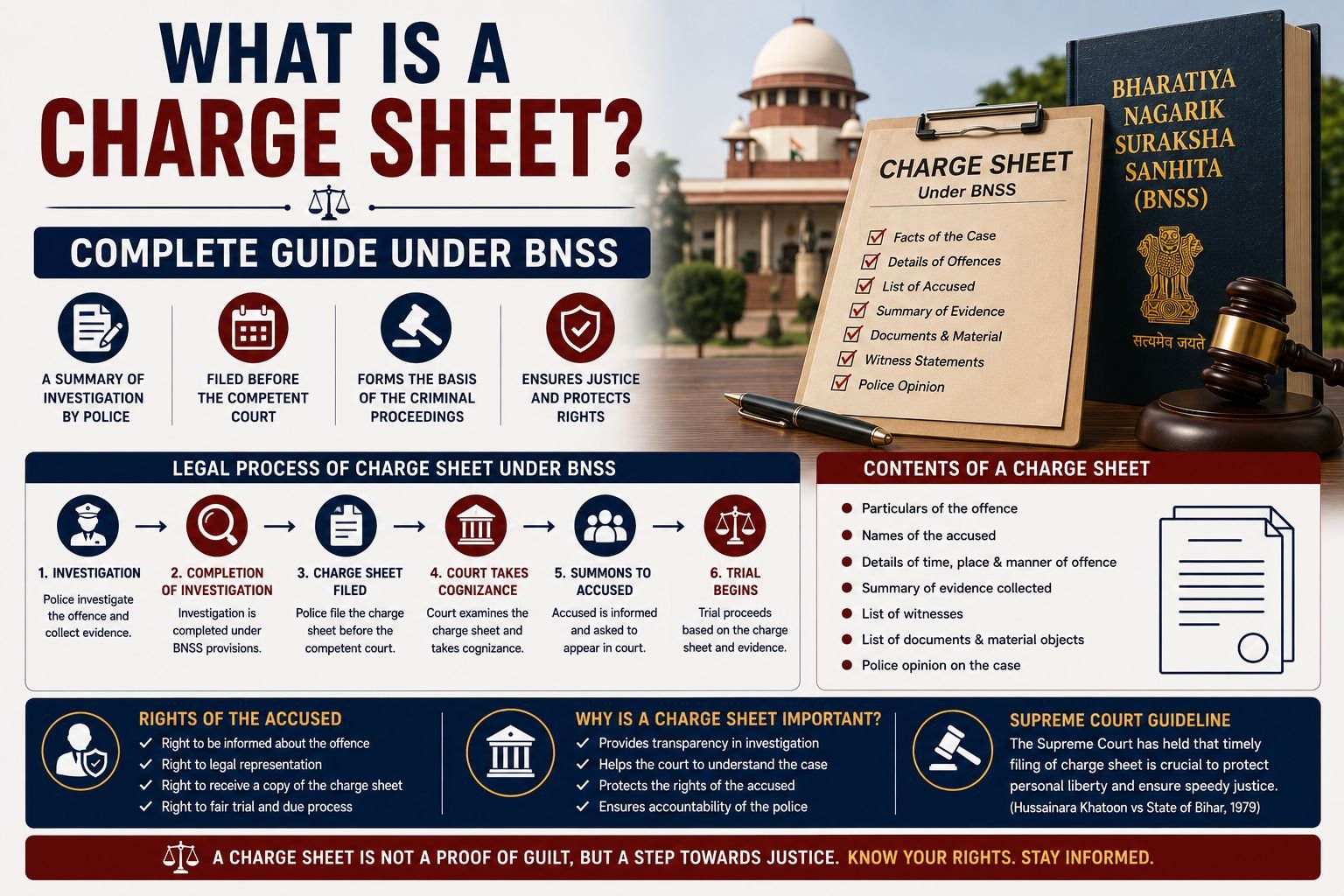
Charge Sheet
The final investigation report submitted by the investigating agency before the competent court after completion of the investigation.
Bail Bond
A written undertaking executed by the accused, often along with sureties where required, promising to comply with the conditions of bail and appear before the court as directed.
Surety
A person who undertakes responsibility for ensuring that the accused complies with the bail conditions and appears before the court whenever required.
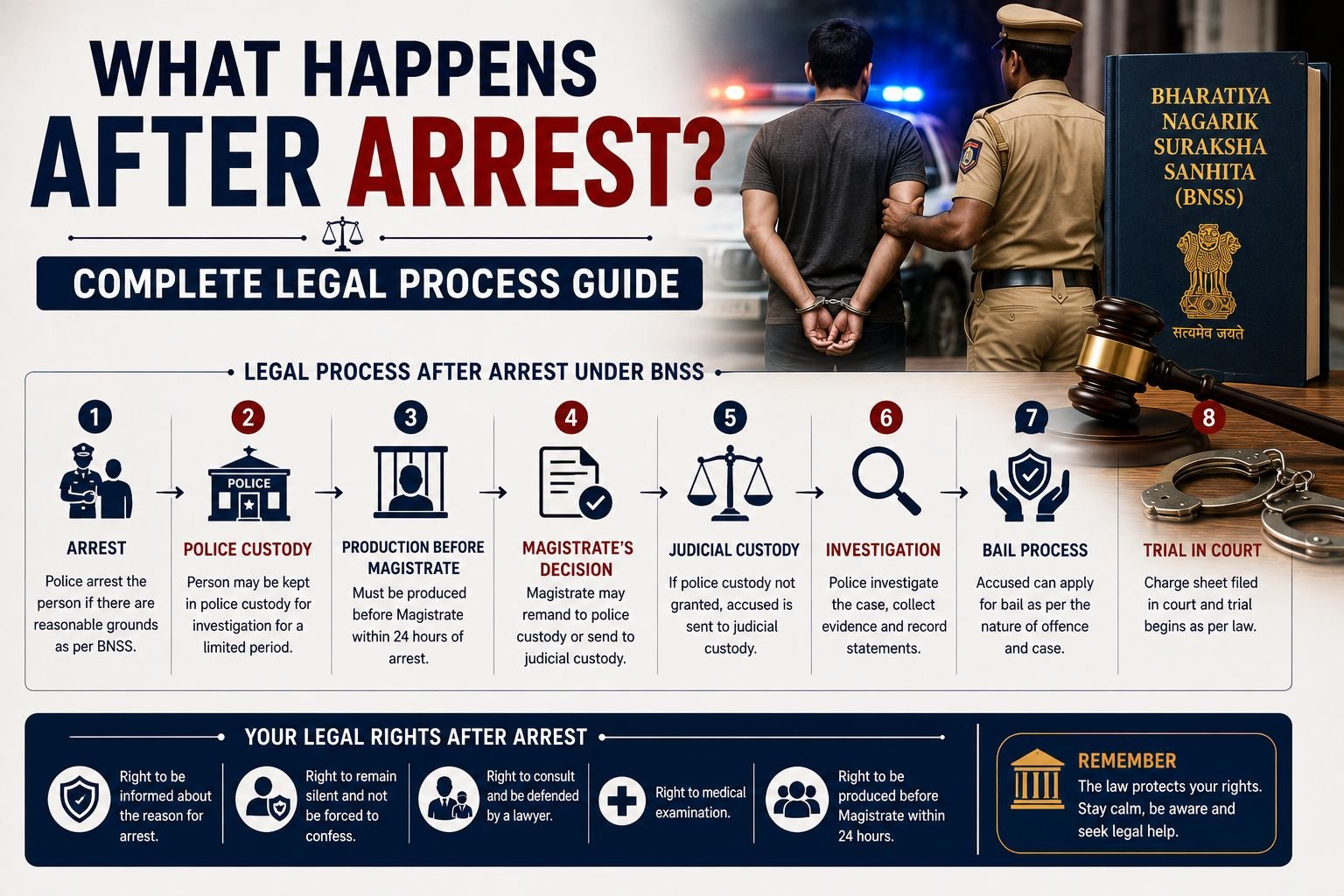
Judicial Custody
Custody authorised by a court in which the accused remains under the supervision of judicial authorities.
Police Custody
Custody granted to the investigating agency for the purpose of investigation, subject to the provisions of the BNSS and judicial oversight.
Remand
An order of the court authorising continued custody of the accused for a legally permissible period.
Why Legal Assistance is Important
Although a person may seek legal aid where available, obtaining advice from an experienced criminal lawyer can help in:
- Determining the appropriate type of bail.
- Preparing the bail application.
- Collecting relevant documents.
- Presenting legal arguments before the court.
- Responding to objections raised by the prosecution.
- Ensuring compliance with bail conditions after release.
Professional legal guidance can improve the accuracy and completeness of the application.
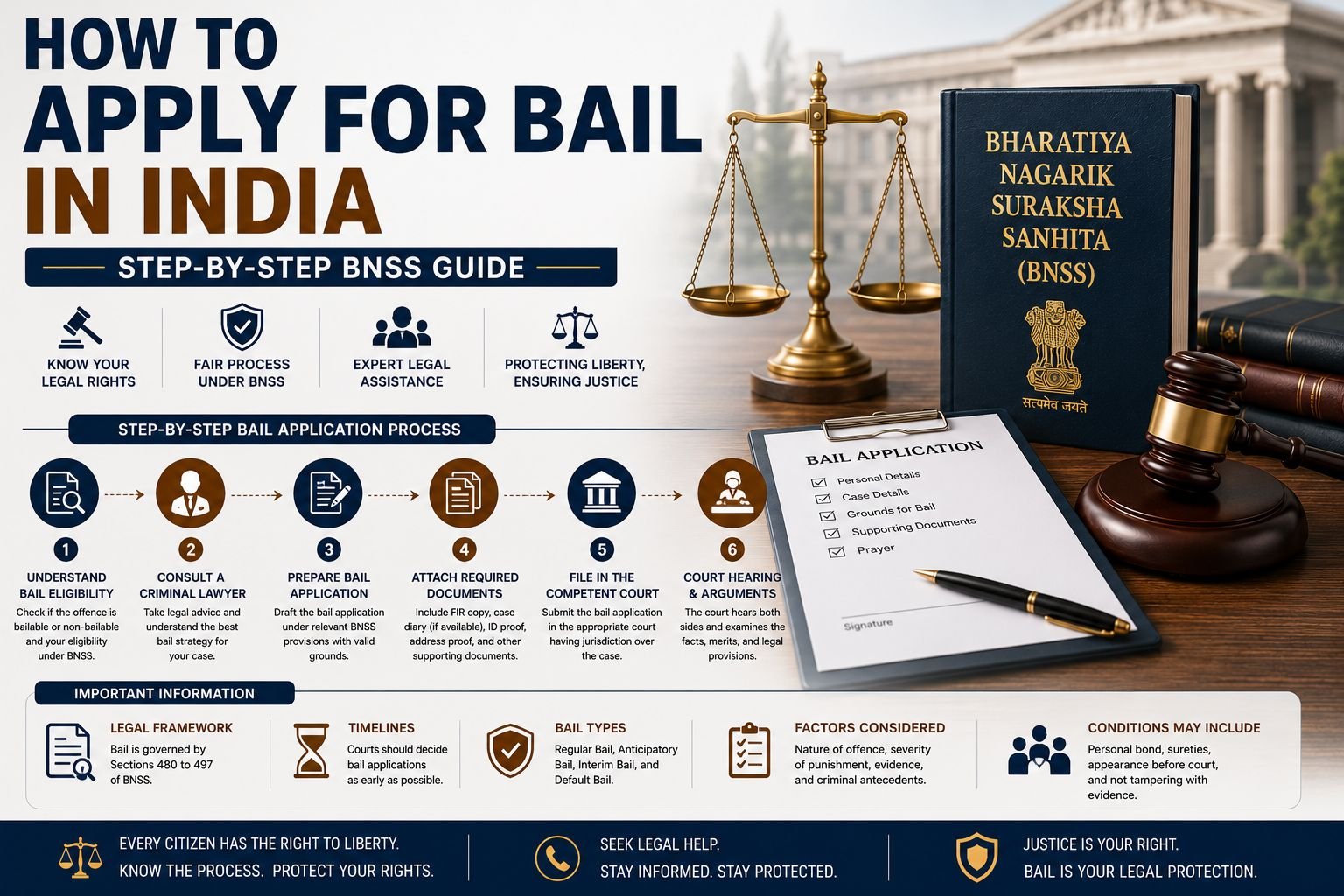
Step-by-Step Bail Application Process
The procedure for applying for bail depends on the nature of the offence, the stage of the criminal proceedings, and the type of bail being sought. While the exact process may vary from case to case, the following steps generally apply.
Step 1: Identify the Type of Bail Required
Before filing an application, it is important to determine which type of bail is appropriate.
The common types include:
- Regular Bail (after arrest)
- Anticipatory Bail (before arrest)
- Interim Bail (temporary relief)
- Default Bail (when the statutory investigation period expires)
Selecting the correct remedy helps avoid unnecessary delays and procedural complications.
Step 2: Consult a Criminal Lawyer
Although legal aid is available in eligible cases, consulting an experienced criminal lawyer is often beneficial.
A lawyer can:
- Examine the FIR and allegations.
- Determine the appropriate legal remedy.
- Explain the chances of obtaining bail.
- Prepare the bail application.
- Collect supporting documents.
- Represent the accused before the court.
- Respond to objections raised by the prosecution.
Timely legal advice is particularly important in non-bailable offences.
Step 3: Collect the Required Documents
Before filing the application, gather all necessary documents.
Common documents include:
- Copy of the FIR.
- Arrest memo.
- Remand order.
- Identity proof.
- Address proof.
- Previous bail orders (if any).
- Medical records (where applicable).
- Supporting documents relating to family emergencies or humanitarian grounds.
- Vakalatnama (where represented by an advocate).
Additional documents may be required depending on the facts of the case.
Step 4: Draft the Bail Application
The bail application should clearly explain why the accused seeks release and why bail should be granted.
A properly drafted application generally contains:
- Name of the court.
- Case number.
- FIR number.
- Police station.
- Name of the accused.
- Details of the alleged offences.
- Brief facts of the case.
- Grounds for seeking bail.
- Prayer requesting release on bail.
The application should be accurate, concise, and supported by relevant facts.
Step 5: File the Bail Application
The completed application is filed before the court having jurisdiction over the case.
Depending on the circumstances, the application may be filed before:
- Judicial Magistrate.
- Chief Judicial Magistrate.
- Sessions Court.
- High Court.
- Supreme Court (where legally permissible).
After filing, the court generally registers the application and fixes a hearing date.
Step 6: Notice to the Prosecution
In many cases, particularly involving non-bailable offences, the prosecution is given an opportunity to respond to the bail application.
The prosecution may:
- Support the application.
- Oppose the application.
- Request additional conditions.
- Produce investigation records.
- Highlight the seriousness of the allegations.
The court considers submissions from both sides before passing an order.
Step 7: Court Hearing
During the hearing, both the defence and the prosecution present their arguments.
The defence may submit that:
- The accused will cooperate with the investigation.
- There is no risk of absconding.
- The accused has permanent residence.
- There is no likelihood of tampering with evidence.
- The accused has no significant criminal antecedents.
- Continued custody is unnecessary.
The prosecution may raise objections depending on the facts of the case.
Factors Considered During the Hearing
The court generally evaluates:
- Nature and seriousness of the offence.
- Stage of investigation.
- Strength of the prosecution’s case.
- Criminal history of the accused.
- Risk of absconding.
- Possibility of influencing witnesses.
- Possibility of tampering with evidence.
- Need for custodial interrogation.
- Overall interests of justice.
Every bail application is decided based on its own facts.
Step 8: Court’s Decision
After hearing both parties, the court may:
- Grant bail.
- Reject the bail application.
- Grant interim protection.
- Adjourn the matter for further hearing.
- Impose additional conditions before granting bail.
The court records the reasons for its decision in accordance with law.
Execution of Bail Bond
If bail is granted, the accused is generally required to execute a bail bond.
A bail bond is an undertaking that the accused will:
- Appear before the court whenever required.
- Comply with all bail conditions.
- Cooperate with the investigation.
- Not misuse the liberty granted by the court.
The court determines the terms of the bail bond based on the facts of the case.
Furnishing Sureties
In many cases, the court may require one or more sureties.
A surety is a person who undertakes to ensure that the accused complies with the conditions of bail and appears before the court as directed.
The court may verify:
- Identity of the surety.
- Residential address.
- Financial capacity, where relevant.
- Relationship with the accused (if applicable).
The number and nature of sureties depend on the court’s order.
Verification of Documents
Before releasing the accused, the court or the concerned authorities may verify:
- Identity documents.
- Bail bond.
- Surety documents.
- Address proof.
- Other supporting records.
If any discrepancies are found, the release process may be delayed until compliance is ensured.
Release from Custody
Once the bail bond and other formalities are completed, the court issues a release order.
The order is forwarded to the jail authorities or the relevant custodial authority, who release the accused after completing the necessary administrative procedures.
The accused must thereafter comply with all conditions imposed by the court.
Timeline for Bail Proceedings
The time taken to decide a bail application varies depending on several factors, including:
- Nature of the offence.
- Court workload.
- Stage of investigation.
- Complexity of the case.
- Availability of case records.
- Response from the prosecution.
Urgent matters may be heard more quickly, while complex cases may require additional hearings.
What Happens if Bail Is Refused?
If the court rejects the bail application, the accused may have legal remedies available, depending on the circumstances.
These may include:
- Filing a fresh bail application if there is a material change in circumstances.
- Approaching a higher court where legally permissible.
- Seeking other remedies available under the BNSS or applicable law.
Each remedy depends on the facts of the case and should be pursued in accordance with legal advice.
Practical Example
Example 1 – Regular Bail
A person is arrested for a non-bailable offence and produced before the Magistrate.
The accused consults a criminal lawyer, who prepares a regular bail application. After considering the arguments of both parties, the court grants bail subject to the execution of a personal bond and the furnishing of one surety.
Example 2 – Anticipatory Bail
A person receives information suggesting that they may be arrested in connection with a non-bailable offence.
They file an anticipatory bail application before the Sessions Court. Pending the final hearing, the court grants interim protection and later decides the anticipatory bail application on its merits.
Example 3 – Default Bail
An accused remains in custody beyond the statutory investigation period without the filing of a charge sheet.
The accused applies for default bail before the competent court. Upon verifying that the statutory conditions have been met, the court grants default bail subject to compliance with the required conditions.
Common Mistakes During the Bail Application Process
Applicants should avoid:
- Filing the application before the wrong court.
- Selecting the incorrect type of bail.
- Omitting important documents.
- Providing inaccurate or incomplete information.
- Ignoring court notices.
- Failing to arrange sureties in advance.
- Violating interim court directions.
Proper preparation can help avoid unnecessary delays.
Documents Required for Bail
The documents required depend on the nature of the case and the type of bail being sought. However, certain documents are commonly required in most bail applications.
Basic Documents
Generally, the following documents are submitted:
- Copy of the FIR.
- Arrest Memo.
- Remand Order.
- Bail Application.
- Identity Proof of the accused.
- Address Proof.
- Passport-size photographs (where required).
- Vakalatnama authorising the advocate.
- Previous bail orders, if any.
Additional Documents
Depending on the circumstances of the case, additional documents may include:
- Medical records.
- Hospital admission documents.
- Doctor’s certificate.
- Death certificate of a family member.
- Marriage invitation or proof.
- Employment documents.
- Educational records.
- Character certificates where relevant.
- Affidavit supporting the application.
Documents for Sureties
Where the court requires sureties, they may need to provide:
- Identity proof.
- Address proof.
- Recent photographs.
- PAN Card or Aadhaar Card (where applicable).
- Property documents or proof of financial capacity, if directed by the court.
The exact requirements vary depending on the court and the facts of the case.
Information Included in a Bail Application
A properly drafted bail application generally contains the following details.
Court Details
- Name of the Court.
- Case Number.
- FIR Number.
- Police Station.
Details of the Applicant
- Full Name.
- Age.
- Occupation.
- Residential Address.
Details of the Case
The application briefly explains:
- Date of arrest.
- Nature of allegations.
- Sections invoked.
- Present stage of investigation or trial.
Grounds for Seeking Bail
The applicant explains why bail should be granted.
Common grounds include:
- Innocence of the accused.
- False implication.
- Completion of investigation.
- No requirement for further custodial interrogation.
- Permanent residence.
- Cooperation with investigation.
- No likelihood of absconding.
- No possibility of influencing witnesses.
- Medical grounds.
- Humanitarian considerations.
The grounds depend entirely upon the facts of the individual case.
Prayer Clause
The application concludes by requesting the court to release the accused on bail subject to such terms and conditions as the court considers appropriate.
Factors Courts Consider Before Granting Bail
While deciding a bail application, courts carefully evaluate several legal and factual considerations.
1. Nature and Gravity of the Offence
The seriousness of the allegations is one of the most important considerations.
More serious offences generally receive closer judicial scrutiny.
2. Punishment Prescribed
The court considers the maximum punishment that may be imposed if the accused is convicted.
3. Stage of Investigation
The court examines whether:
- Investigation is ongoing.
- Charge sheet has been filed.
- Further custodial interrogation is necessary.
4. Criminal Antecedents
Previous criminal history, if any, may be considered.
Courts also examine whether the accused has complied with earlier bail conditions.
5. Possibility of Absconding
The court assesses whether the accused is likely to flee from justice.
Factors include:
- Permanent residence.
- Family ties.
- Employment.
- Financial position.
- Previous conduct.
6. Possibility of Tampering with Evidence
If there is a genuine concern that the accused may destroy or alter evidence, the court may refuse bail.
7. Possibility of Influencing Witnesses
Protection of witnesses is an important factor.
The court considers whether temporary release could affect witness testimony or the investigation.
8. Health and Humanitarian Grounds
Courts may also consider:
- Serious illness.
- Disability.
- Pregnancy.
- Advanced age.
- Exceptional family circumstances.
9. Public Interest
Courts balance the rights of the accused with the larger interests of society and the proper administration of justice.
Common Bail Conditions
When granting bail, courts often impose conditions to ensure that the accused complies with the legal process.
Typical conditions include:
- Furnishing a personal bond.
- Producing one or more sureties.
- Appearing before the court whenever required.
- Cooperating with the investigation.
- Not committing any further offence.
- Not contacting or threatening witnesses.
- Not tampering with evidence.
- Not leaving India or the local jurisdiction without permission, where directed.
- Informing the court about any change of address.
Failure to comply with these conditions may result in cancellation of bail.
What is a Bail Bond?
A bail bond is a written undertaking executed by the accused promising:
- To appear before the court.
- To comply with all bail conditions.
- To cooperate with the investigation.
- To remain available throughout the criminal proceedings.
The court determines the amount and conditions of the bail bond based on the facts of the case.
Personal Bond vs Surety Bond
These terms are often confused but serve different purposes.
| Basis | Personal Bond | Surety Bond |
|---|---|---|
| Executed By | Accused | Surety |
| Purpose | Promise by the accused to appear | Guarantee by another person |
| Financial Responsibility | Accused | Surety |
| Court Requirement | May be sufficient in some cases | Required where directed by the court |
Role of Sureties
A surety plays an important role in the bail process.
The surety undertakes that:
- The accused will comply with bail conditions.
- The accused will appear before the court.
- The accused will not abscond.
The court may verify the identity and credentials of the surety before accepting the bond.
What Happens After Bail is Granted?
Once the court grants bail:
Step 1
The accused executes the bail bond.
Step 2
Sureties furnish the required documents, where applicable.
Step 3
The court verifies the documents.
Step 4
A release order is issued to the jail or custodial authority.
Step 5
The accused is released after completion of all formalities.
Step 6
The accused must comply with every condition imposed by the court.
Can Bail Be Rejected?
Yes.
The court may reject a bail application if it finds that:
- Custodial interrogation is necessary.
- The accused is likely to abscond.
- There is a risk of witness intimidation.
- Evidence may be tampered with.
- The allegations are serious and the facts do not justify release.
- Bail conditions are unlikely to be followed.
Every application is decided on its own merits.
Can You Apply Again After Rejection?
Yes.
Depending on the circumstances, a fresh bail application may be maintainable where:
- There is a material change in circumstances.
- Investigation has progressed.
- Charge sheet has been filed.
- Medical conditions have changed.
- New evidence has emerged.
Alternatively, the accused may approach a higher court if permitted by law.
Cancellation of Bail
Grant of bail does not prevent the court from cancelling it later if justified.
Common grounds include:
- Violation of bail conditions.
- Absconding.
- Threatening witnesses.
- Tampering with evidence.
- Committing another offence.
- Misrepresentation before the court.
Cancellation follows due legal process.
Rights of the Accused After Bail
An accused released on bail continues to enjoy several important legal rights.
These include:
- Right to personal liberty.
- Right to legal representation.
- Right to a fair trial.
- Right to receive copies of documents as permitted by law.
- Right to defend against the allegations.
- Right to seek modification of bail conditions where appropriate.
Responsibilities of the Accused After Bail
The accused must also fulfil important legal responsibilities.
These include:
- Appearing before the court on every date.
- Cooperating with investigators.
- Following every bail condition.
- Keeping the court informed of any required change of address.
- Avoiding contact with witnesses where prohibited.
- Not committing any further offence.
Failure to comply may result in cancellation of bail.
Practical Example
Example 1 – Regular Bail
An accused arrested in a non-bailable offence submits a bail application before the Sessions Court. After considering the investigation records and hearing both parties, the court grants bail upon furnishing a personal bond and one surety.
Example 2 – Bail Rejected
An accused is alleged to have threatened witnesses during the investigation. The court finds a real possibility of witness intimidation and rejects the bail application.
Example 3 – Bail Cancelled
An accused released on bail repeatedly fails to appear before the court despite notices. Upon an application by the prosecution, the court cancels the bail after following the prescribed legal procedure.
Common Mistakes to Avoid
Applicants should avoid:
- Filing incomplete applications.
- Producing inaccurate documents.
- Hiding material facts.
- Ignoring court directions.
- Violating bail conditions.
- Arranging unreliable sureties.
- Missing court hearings.
- Attempting to influence witnesses.
Proper compliance with court directions is essential throughout the bail process.
Common Mistakes While Applying for Bail
Many bail applications fail because of avoidable mistakes. Careful preparation and compliance with legal requirements can improve the quality of the application.
Some common mistakes include:
- Filing the application before the wrong court.
- Applying for the wrong type of bail.
- Providing incomplete or inaccurate information.
- Not attaching supporting documents.
- Concealing important facts.
- Ignoring previous court orders.
- Failing to arrange sureties in advance.
- Missing court hearings.
- Violating interim protection or earlier bail conditions.
- Delaying the filing of the application despite urgent circumstances.
Avoiding these mistakes helps ensure that the court considers the application on its merits without unnecessary procedural issues.
Tips to Improve the Chances of Getting Bail
Although no lawyer or court can guarantee bail, certain practical steps may strengthen an application.
1. Hire an Experienced Criminal Lawyer
A lawyer can identify the correct legal remedy, prepare a legally sound application, and present effective arguments before the court.
2. File the Correct Type of Bail Application
Choose the appropriate remedy based on your circumstances:
- Regular Bail
- Anticipatory Bail
- Interim Bail
- Default Bail
Using the correct legal procedure avoids unnecessary delays.
3. Submit Complete Documents
Ensure that all relevant documents are attached, including:
- FIR copy
- Bail application
- Identity proof
- Medical documents (if applicable)
- Supporting evidence
4. Demonstrate Cooperation
Courts generally consider whether the accused has cooperated with the investigation and complied with previous legal directions.
5. Follow Court Directions
Strictly comply with all interim orders, notices, and conditions imposed by the court.
6. Avoid Contact with Witnesses
Any attempt to threaten, influence, or contact witnesses contrary to court directions may negatively affect the bail application.
7. Attend Every Hearing
Regular attendance demonstrates respect for the judicial process and reduces concerns about absconding.
Important Supreme Court Judgments on Bail
Several landmark decisions have shaped bail jurisprudence in India.
1. Gurbaksh Singh Sibbia v. State of Punjab (1980)
This landmark judgment established important principles relating to judicial discretion in bail matters and emphasised the protection of personal liberty.
Key Principle
Bail decisions should be based on the facts of each case, and judicial discretion must be exercised fairly and cautiously.
2. Gudikanti Narasimhulu v. Public Prosecutor (1978)
The Supreme Court observed that the object of bail is to balance personal liberty with the interests of justice.
Key Principle
Liberty should not be curtailed unnecessarily unless justified by law.
3. Arnesh Kumar v. State of Bihar (2014)
This judgment laid down safeguards against unnecessary arrests, particularly in offences punishable with imprisonment up to seven years.
Key Principle
Arrest should not be automatic, and investigating officers must follow statutory safeguards.
4. Satender Kumar Antil v. CBI (2022)
The Supreme Court issued comprehensive guidelines regarding arrest, custody, and bail.
Key Principle
Bail applications should be decided promptly, and unnecessary detention should be avoided.
5. Sanjay Chandra v. CBI (2012)
The Court reiterated that pre-trial detention should not become a form of punishment.
Key Principle
The purpose of bail is to secure the presence of the accused during the trial rather than to punish before conviction.
Bail Under CrPC vs BNSS
The criminal procedure relating to bail is now governed by the Bharatiya Nagarik Suraksha Sanhita, 2023 (BNSS), which has replaced the Code of Criminal Procedure, 1973 (CrPC).
| Basis | CrPC | BNSS |
|---|---|---|
| Governing Law | Code of Criminal Procedure, 1973 | Bharatiya Nagarik Suraksha Sanhita, 2023 |
| Bail Procedure | Governed by CrPC provisions | Governed by BNSS provisions |
| Regular Bail | Available | Available |
| Anticipatory Bail | Available | Available |
| Interim Bail | Recognised through judicial practice | Recognised through judicial practice |
| Default Bail | Available | Available |
| Judicial Discretion | Yes | Yes |
While the governing legislation has changed, the fundamental principles relating to personal liberty, judicial discretion, and fair trial continue to guide bail decisions.
How Long Does the Bail Process Take?
There is no fixed timeline for deciding a bail application.
The duration depends on factors such as:
- Nature of the offence.
- Stage of investigation.
- Court workload.
- Complexity of the case.
- Availability of records.
- Response from the prosecution.
Urgent applications, particularly those involving medical emergencies or personal liberty concerns, may be heard on a priority basis where appropriate.
Can Bail Be Applied for Online?
Many courts now provide electronic filing facilities through their e-filing systems.
Depending on the applicable High Court rules, lawyers may be able to:
- File bail applications electronically.
- Upload supporting documents.
- Track case status.
- Receive hearing details through online court systems.
However, the availability of e-filing varies across jurisdictions.
Cost of Filing a Bail Application
The overall cost of a bail application depends on several factors, including:
- Nature and complexity of the case.
- Court where the application is filed.
- Advocate’s professional fees.
- Documentation expenses.
- Notary or affidavit charges, where applicable.
There is no uniform fee applicable to every bail matter. Applicants should discuss professional fees and expected expenses with their advocate in advance.
Role of a Criminal Lawyer
A criminal lawyer plays an essential role throughout the bail process.
The lawyer may assist in:
- Analysing the allegations.
- Advising on the appropriate type of bail.
- Preparing the application.
- Drafting legal arguments.
- Collecting supporting evidence.
- Representing the accused during hearings.
- Challenging adverse bail orders.
- Seeking modification or cancellation of conditions where justified.
Professional legal assistance helps ensure compliance with procedural requirements and effective presentation before the court.
Practical Examples
Example 1 – Regular Bail
An individual is arrested in connection with a financial fraud case.
After examining the investigation records, the Sessions Court grants regular bail subject to the execution of a bail bond, furnishing two sureties, and surrendering the passport.
Example 2 – Anticipatory Bail
A person receives credible information that they may be arrested following a business dispute.
They approach the Sessions Court seeking anticipatory bail. After hearing both sides, the court grants protection subject to specified conditions.
Example 3 – Interim Bail
An accused undergoing cancer treatment seeks temporary release to continue medical care.
Upon considering the medical records, the court grants interim bail for a limited period with directions to surrender on the specified date.
Example 4 – Default Bail
The investigating agency fails to file the charge sheet within the statutory period.
The accused applies for default bail before the competent court, which grants bail after confirming that the legal requirements have been satisfied.
Advantages of Bail
Grant of bail serves several important purposes within the criminal justice system.
Protects Personal Liberty
Bail safeguards the constitutional right to personal liberty while criminal proceedings continue.
Prevents Unnecessary Detention
An accused need not remain in custody where continued detention is not legally justified.
Enables Preparation of Defence
Release on bail allows the accused to consult legal counsel, gather evidence, and prepare an effective defence.
Reduces Overcrowding in Prisons
Granting bail in appropriate cases helps reduce unnecessary overcrowding in correctional institutions.
Supports Fair Trial Principles
Bail ensures that pre-trial detention does not become a substitute for punishment before conviction.
Limitations of Bail
Despite its importance, bail is subject to certain limitations.
Not Automatic
Bail is not available as a matter of right in every case, particularly for non-bailable offences.
Subject to Court Conditions
The accused must comply with all conditions imposed by the court.
Can Be Cancelled
Violation of bail conditions may result in cancellation of bail.
Investigation Continues
Grant of bail does not prevent the investigating agency from continuing the investigation.
Does Not Decide Guilt or Innocence
Bail only determines temporary release from custody and does not affect the outcome of the criminal trial.
Key Practical Advice
If you or a family member needs to apply for bail:
- Seek legal advice immediately after arrest.
- Preserve all case-related documents.
- Cooperate fully with investigators.
- Attend every court hearing.
- Comply with all bail conditions.
- Avoid discussing the case publicly in a manner that could affect the proceedings.
- Inform your lawyer promptly of any change in circumstances.
Frequently Asked Questions (FAQs)
1. What is the procedure to apply for bail in India?
The general procedure involves determining the appropriate type of bail, preparing the application, filing it before the competent court, attending the hearing, and complying with the conditions imposed by the court if bail is granted.
2. Who can apply for bail?
Any person accused of a criminal offence may apply for bail, depending on the nature of the offence and the applicable provisions of the BNSS.
3. Can bail be applied for before arrest?
Yes. A person apprehending arrest in a non-bailable offence may apply for anticipatory bail before the competent court.
4. Which court can grant bail?
Depending on the case, bail may be granted by:
- Judicial Magistrate
- Chief Judicial Magistrate
- Sessions Court
- High Court
- Supreme Court
5. What documents are required for a bail application?
Common documents include:
- FIR copy
- Bail application
- Arrest memo
- Remand order
- Identity proof
- Address proof
- Medical documents (if applicable)
- Vakalatnama
- Supporting evidence
6. Is hiring a lawyer mandatory for bail?
While legal representation is not mandatory in every situation, engaging an experienced criminal lawyer can help ensure that the application is properly prepared and presented.
7. What is a bail bond?
A bail bond is an undertaking executed by the accused to appear before the court and comply with the conditions imposed while on bail.
8. What is a surety?
A surety is a person who guarantees that the accused will comply with the bail conditions and appear before the court whenever required.
9. Can bail be granted without a surety?
Yes. In certain cases, the court may release an accused on a personal bond without requiring a surety, depending on the facts and applicable law.
10. How long does it take to get bail?
There is no fixed timeline. The duration depends on the nature of the offence, the court’s schedule, the stage of the investigation, and the complexity of the case.
11. Can bail be rejected?
Yes. The court may reject a bail application if it considers that continued custody is necessary or if other legal factors justify refusal.
12. Can I apply for bail again after rejection?
Yes. A fresh application may be filed if there is a significant change in circumstances, or the accused may approach a higher court where permitted by law.
13. What is the difference between bailable and non-bailable offences?
In bailable offences, bail is generally available as a matter of right. In non-bailable offences, the court decides whether bail should be granted based on the facts and applicable legal principles.
14. Can bail be cancelled after it is granted?
Yes. A competent court may cancel bail if the accused violates bail conditions or misuses the liberty granted.
15. What happens if I violate bail conditions?
Violation of bail conditions may result in cancellation of bail and other legal consequences.
16. Can I travel while on bail?
You must comply with the conditions imposed by the court. If travel restrictions are part of the bail order, prior permission from the court may be required.
17. Does bail mean the case is over?
No. Bail only permits temporary release from custody. The criminal investigation and trial continue according to law.
18. Does bail mean I have been declared innocent?
No. Bail does not determine guilt or innocence. It only concerns release from custody during the pendency of the criminal proceedings.
19. Can bail be granted in serious criminal cases?
Yes. Courts may grant bail even in serious cases after considering the facts, legal provisions, and interests of justice.
20. Can bail be granted on medical grounds?
Yes. Courts may grant bail or interim bail where genuine medical circumstances justify temporary or regular release, subject to supporting evidence.
21. What is interim bail?
Interim bail is temporary bail granted for a specified period until the court decides the main bail application or for another limited purpose.
22. What is default bail?
Default bail is a statutory right available when the investigating agency fails to file the charge sheet within the prescribed period under the BNSS, subject to the fulfilment of legal conditions.
23. Can bail be applied for online?
Many courts now permit electronic filing of bail applications through their e-filing systems, subject to the rules of the respective High Courts.
24. What factors do courts consider while deciding bail?
Courts generally consider:
- Nature of the offence
- Seriousness of allegations
- Stage of investigation
- Criminal antecedents
- Risk of absconding
- Possibility of witness intimidation
- Possibility of evidence tampering
- Overall interests of justice
25. What are common conditions imposed while granting bail?
Common conditions include:
- Furnishing a bail bond
- Providing sureties where required
- Appearing before the court
- Cooperating with the investigation
- Not tampering with evidence
- Not threatening witnesses
26. Can the police oppose a bail application?
Yes. The prosecution or investigating agency may oppose bail by presenting legal and factual objections before the court.
27. What should I do immediately after being released on bail?
You should carefully read the bail order, comply with all conditions, remain in contact with your lawyer, attend every hearing, and cooperate with the investigation.
28. Can a family member apply for bail on behalf of the accused?
A lawyer engaged by the accused or their family may file the bail application before the competent court, depending on the circumstances of the case.
29. Is bail available for every criminal offence?
No. The availability of bail depends on the nature of the offence, the applicable legal provisions, and the court’s discretion.
30. Where can I get legal help for filing a bail application?
You may consult an experienced criminal lawyer or seek assistance from the Legal Services Authorities if you are eligible for free legal aid.
Conclusion
Applying for bail in India is a structured legal process that requires an understanding of the applicable provisions under the Bharatiya Nagarik Suraksha Sanhita, 2023 (BNSS) and the facts of the individual case. Whether seeking regular bail after arrest, anticipatory bail before arrest, interim bail for temporary relief, or default bail due to delay in filing the charge sheet, every application must be prepared carefully and supported by relevant documents.
Courts balance the accused’s constitutional right to personal liberty with the need to ensure a fair investigation and trial. They consider factors such as the seriousness of the offence, the possibility of absconding, the risk of influencing witnesses, and the overall interests of justice before deciding whether to grant bail.
Understanding the bail process, complying with court directions, and obtaining timely legal advice can help accused persons and their families navigate criminal proceedings more effectively while protecting their legal rights.