
The Knowledge Centre · Blogs

One statute at a time — the laws that decide what happens to your property.

Every article in this series is built around a single Act — what it actually says, and what it means the moment your property runs into trouble.

Educational information, not legal advice
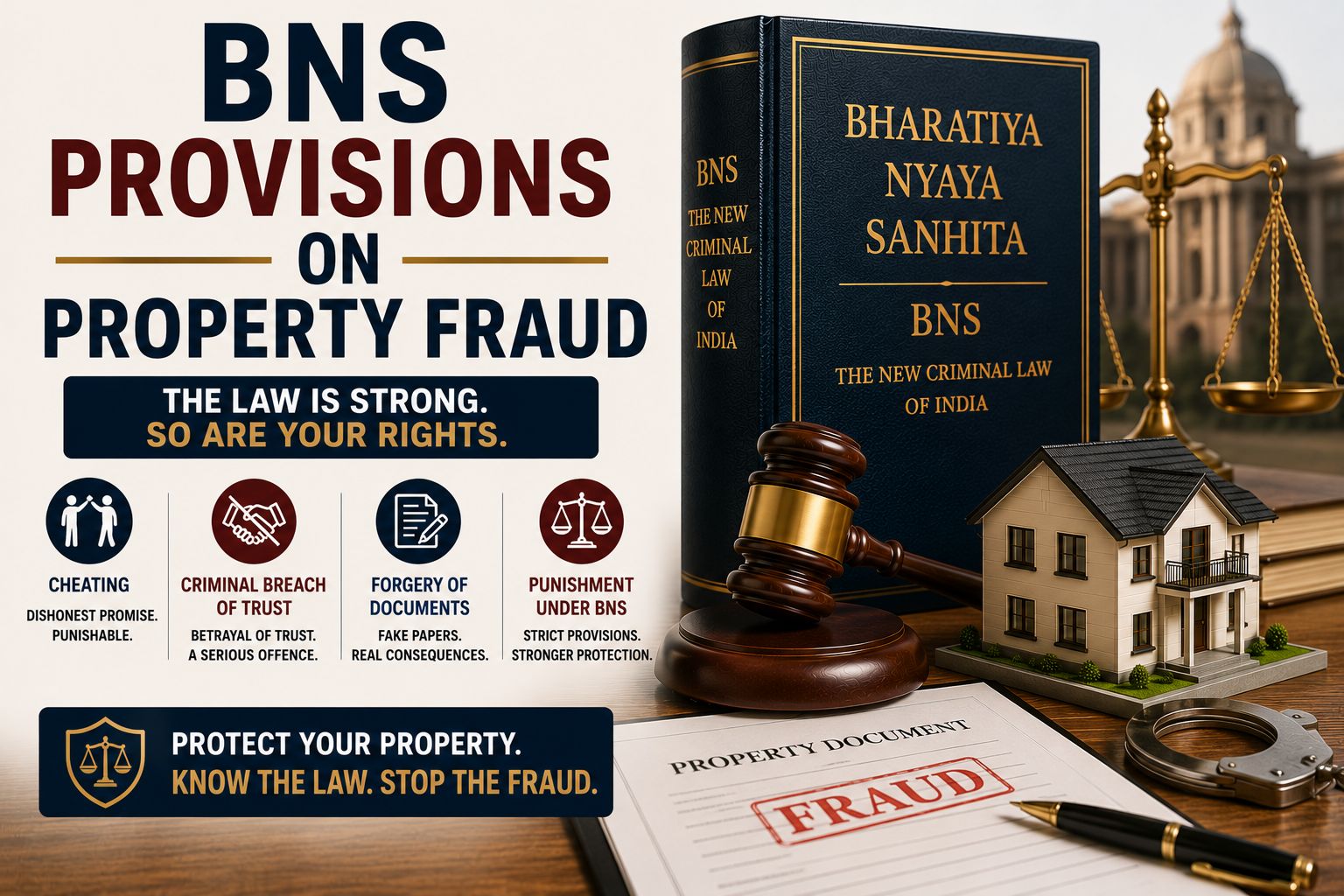
BNS Provisions
The Bharatiya Nyaya Sanhita, which replaced the IPC, covers cheating, criminal breach of trust and forgery in property fraud.
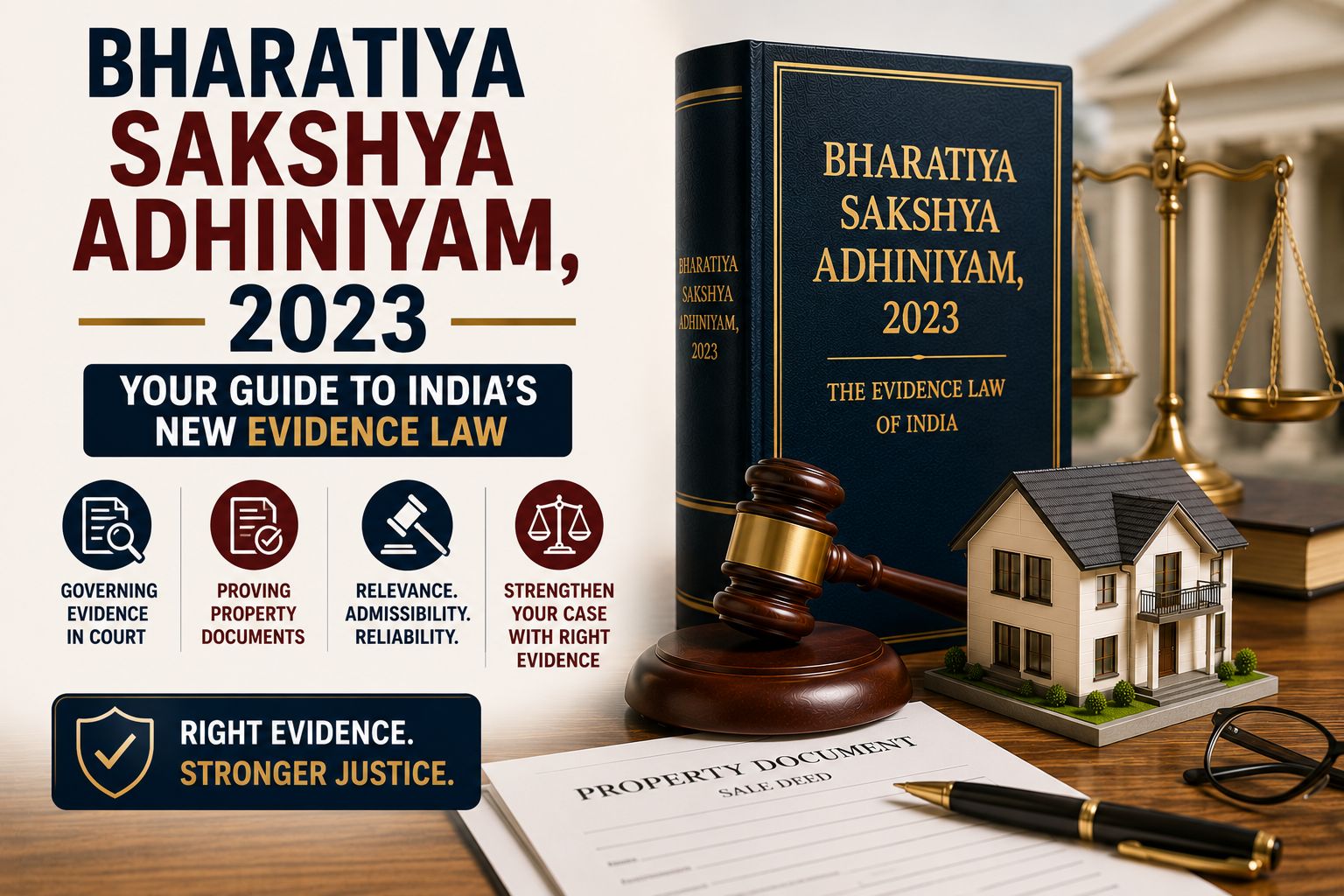
Bharatiya Sakshya Adhiniyam
The 2023 evidence law that replaced the Indian Evidence Act from July 2024, governing how property documents are proved in court.
Indian Stamp Act
Governs the stamp duty payable on property documents, with rates set and varied by each state.
Limitation Act
Sets the deadlines for bringing property claims to court — miss the window and an otherwise good case can be lost.
Consumer Protection Act
Treats a homebuyer as a consumer, allowing complaints for deficient service and unfair trade practices before consumer commissions.
Specific Relief Act
Allows a court to order that a property contract actually be performed, not just compensated, in deserving cases.
Indian Contract Act
Governs the validity and enforcement of agreements, including builder-buyer agreements and agreements to sell.
Registration Act
Makes registration of sale deeds, gift deeds and long leases mandatory, and gives registered documents their legal weight.
Transfer of Property Act
The backbone law on how immovable property is sold, mortgaged, leased, gifted or exchanged between people.

Looking for something specific?

Buyer rights & RERA start at the Knowledge Centre

Have a live dispute? Speak to an advocate

When you’re ready

Read the law first. Then, if you need it, talk to someone who practises it.

Each article here stands on its own — but property disputes rarely fit into a single statute. If your situation touches more than one of these laws, a qualified advocate can help you see how they interact.

No filler, no false promises. Every article here is educational, written to help you understand the law before you act on it. It isn’t a substitute for advice on your specific case — that comes only from an independent advocate you choose to engage.