Before RERA, before modern real estate regulation, before any of today’s property tech — there was one law quietly running the show behind every sale, mortgage, lease, gift, and exchange of immovable property in India. Chances are, it’s touched every property transaction your family has ever made, even if nobody mentioned it by name.
Meet the Transfer of Property Act, 1882 — 140+ years old, and still the backbone of how property legally changes hands in India.
What Is the Transfer of Property Act?
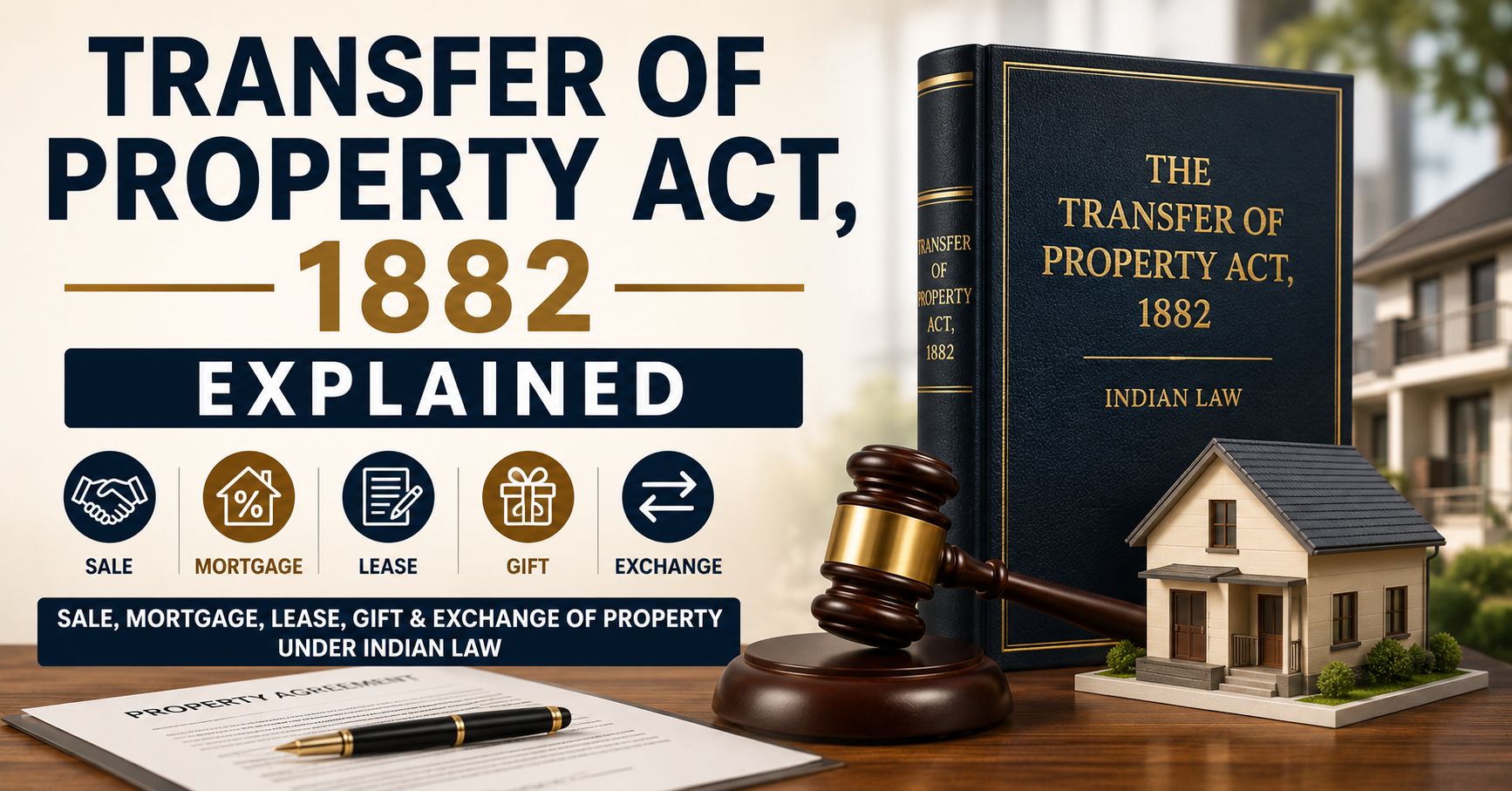
The Transfer of Property Act (TPA), enacted in 1882, governs how ownership and interest in immovable property — land, buildings, and things permanently attached to them — can be legally transferred between living persons.
It doesn’t cover inheritance or transfers by court decree; those fall under separate laws. TPA specifically deals with transfers made voluntarily, between people who are alive at the time of transfer — what the law calls “transfer inter vivos.”
In plain terms: if you’re selling, mortgaging, leasing, gifting, or exchanging property with another living person, TPA is the rulebook you’re playing by.
The Five Modes of Transfer Under TPA
1. Sale
The transfer of ownership in exchange for a price, paid or promised. This is the most common transaction — and TPA lays down exactly what makes a sale valid, how the price must be handled, and what rights pass to the buyer.
2. Mortgage
A transfer of interest in property to secure a loan or debt. The property owner doesn’t lose ownership outright — they transfer a limited interest to the lender until the debt is repaid. TPA recognizes multiple types of mortgages, each with different repayment and foreclosure rules.
3. Lease
A transfer of the right to enjoy property for a fixed period or in perpetuity, in exchange for rent. Every landlord-tenant relationship in India ultimately traces its legal foundation back to this section of TPA.
4. Gift
A voluntary transfer of property without any payment in return. TPA sets out the conditions that make a gift legally valid — including acceptance by the recipient during the donor’s lifetime.
5. Exchange
A mutual transfer of ownership of one property for another, without involving money as the primary consideration.
Why This 1882 Law Still Matters in 2026
Skeptical that a Victorian-era law still governs modern property deals? Here’s the thing — TPA was built on principles, not technology, which is exactly why it hasn’t aged out.
- It defines what counts as a valid transfer — protecting both parties from fraudulent or incomplete deals
- It governs rights and liabilities of buyers, sellers, mortgagors, mortgagees, lessors, and lessees
- It introduced the doctrine of lis pendens — meaning property under litigation can’t be secretly transferred to defeat a pending court case
- It established the concept of an actionable claim, which underpins modern-day transactions involving debts and unsecured rights
Every sale deed, lease agreement, or mortgage document your lawyer drafts today still operates within the framework TPA laid down.
Key Concepts Every Property Buyer Should Know
| Concept | What It Means |
|---|---|
| Immovable Property | Land, buildings, and rights attached to them — excludes standing timber, growing crops, and grass |
| Doctrine of Lis Pendens | Property under active litigation cannot be transferred in a way that affects the outcome of the case |
| Fraudulent Transfer | Transfers made to defeat creditors can be challenged and declared void |
| Actionable Claim | An unsecured debt or beneficial interest that can itself be legally transferred |
| Condition Restraining Alienation | A clause that entirely prohibits a buyer from ever transferring the property is generally void |
Where TPA and RERA Actually Meet
Here’s the connection buyers often miss: RERA regulates the process of buying under-construction property from developers, but TPA still governs the underlying legal transfer — the sale deed, the conveyance, the ownership transfer itself. They’re not competing laws; they work in layers.
When your RERA lawyer reviews a builder-buyer agreement, they’re checking RERA compliance and ensuring the transfer holds up under TPA’s foundational rules. Miss either layer, and your ownership claim can be challenged later — sometimes years after possession.
Common Mistakes That Trace Back to TPA Violations
- Buying property under litigation without checking for pending disputes — violates the spirit of lis pendens protections
- Accepting a gift deed without registration or acceptance during the donor’s lifetime, making it legally invalid
- Signing sale agreements with restrictive clauses that unlawfully prevent future resale
- Ignoring mortgage disclosures, only to discover the “clean” property was already pledged as collateral
A quick legal review before signing can catch every one of these — after signing, they become expensive court battles.
The Bottom Line
The Transfer of Property Act isn’t just legal history — it’s the invisible framework underneath every property transaction in India, RERA-regulated or not. Understanding it doesn’t just make you a smarter buyer; it makes you a harder target for fraud.
Planning a property transfer, mortgage, or lease? Get your documents reviewed by a property lawyer before you sign — not after a dispute forces you to.
FAQs
Q1: Does the Transfer of Property Act apply to inherited property? No. TPA governs transfers between living persons. Property passed on through inheritance or a will is governed by succession laws, not TPA.
Q2: What is the doctrine of lis pendens? It’s a rule preventing property involved in an ongoing court case from being transferred in a way that affects the case’s outcome — protecting the rights of the party who filed the litigation.
Q3: Is an unregistered gift deed valid under TPA? Generally, no. A valid gift of immovable property under TPA requires a registered instrument and acceptance by the recipient during the donor’s lifetime.
Q4: How is a mortgage different from a sale under TPA? A sale transfers full ownership. A mortgage transfers only a limited interest in the property as security for a debt — ownership remains with the borrower until the debt is repaid.
Q5: Can a property with a pending court case be sold? It can technically be sold, but under the doctrine of lis pendens, the sale won’t override the outcome of the pending litigation — making such purchases legally risky.