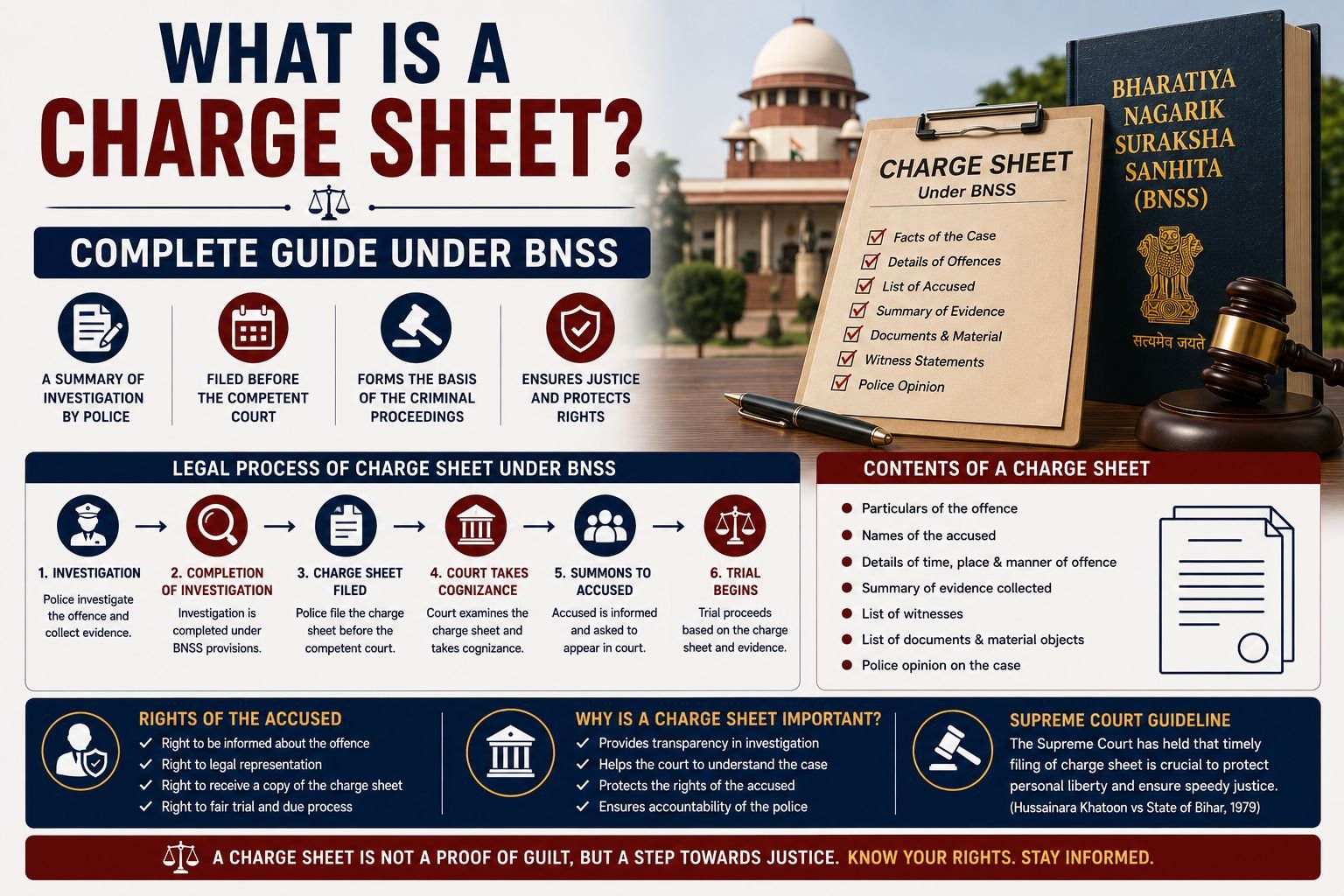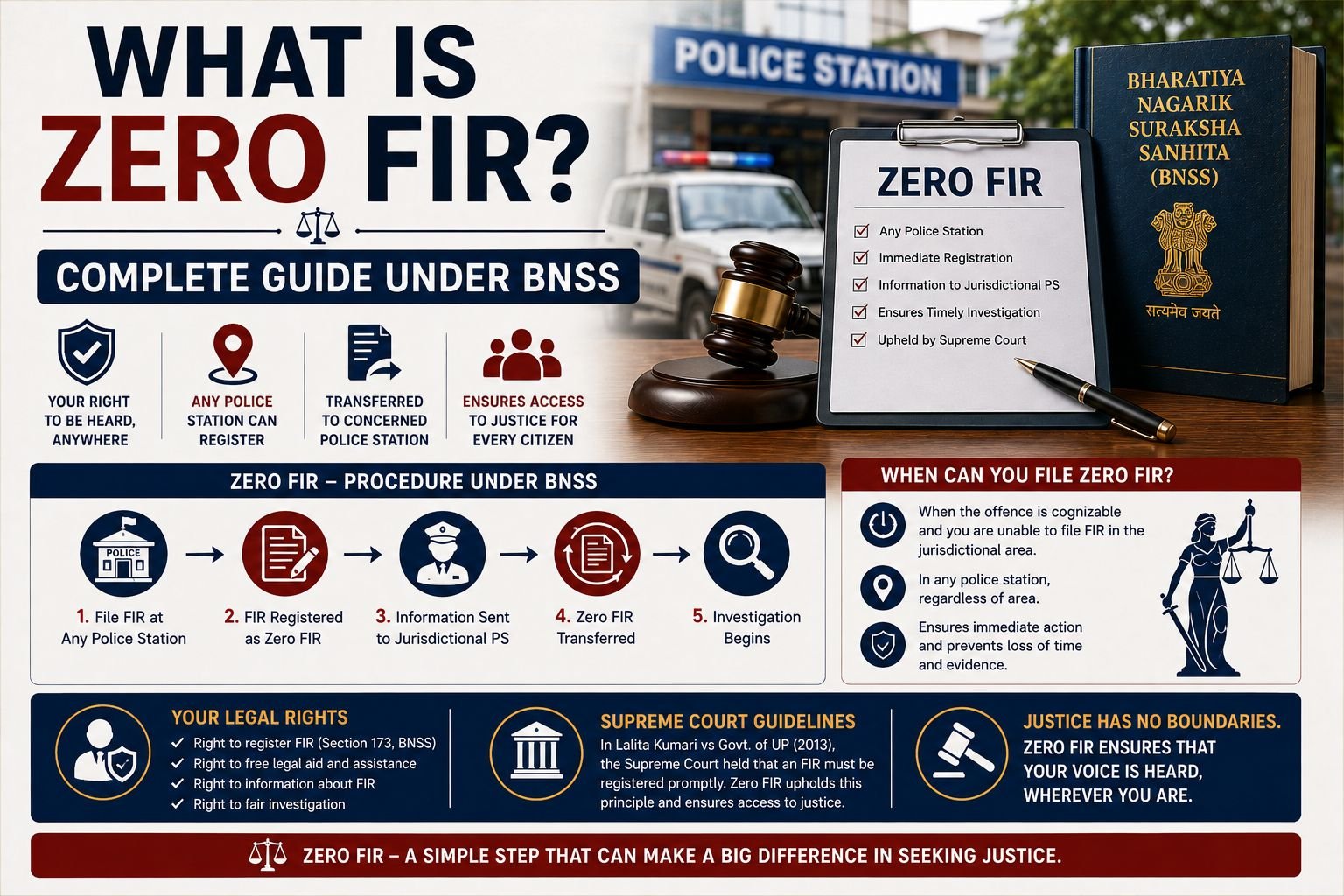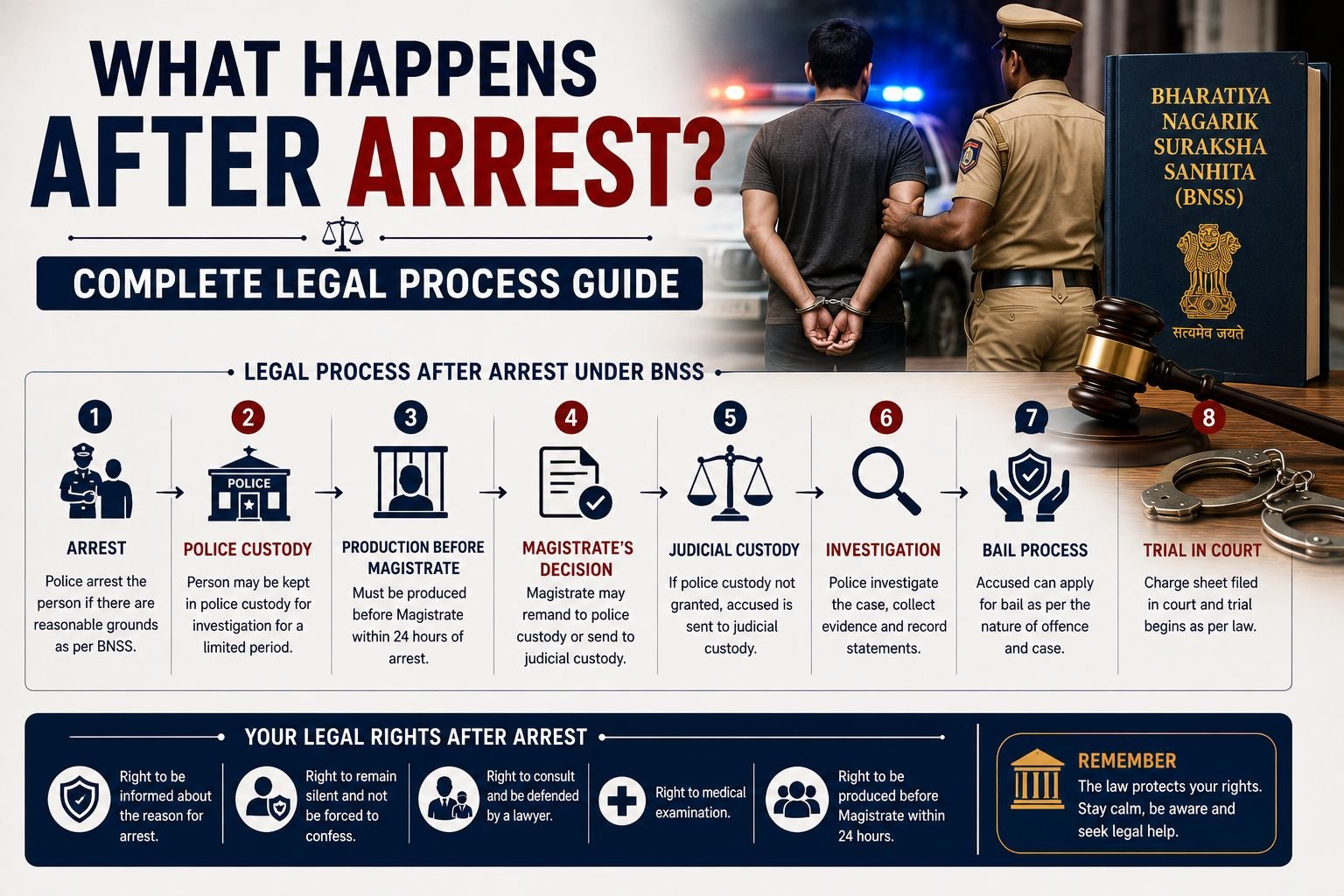
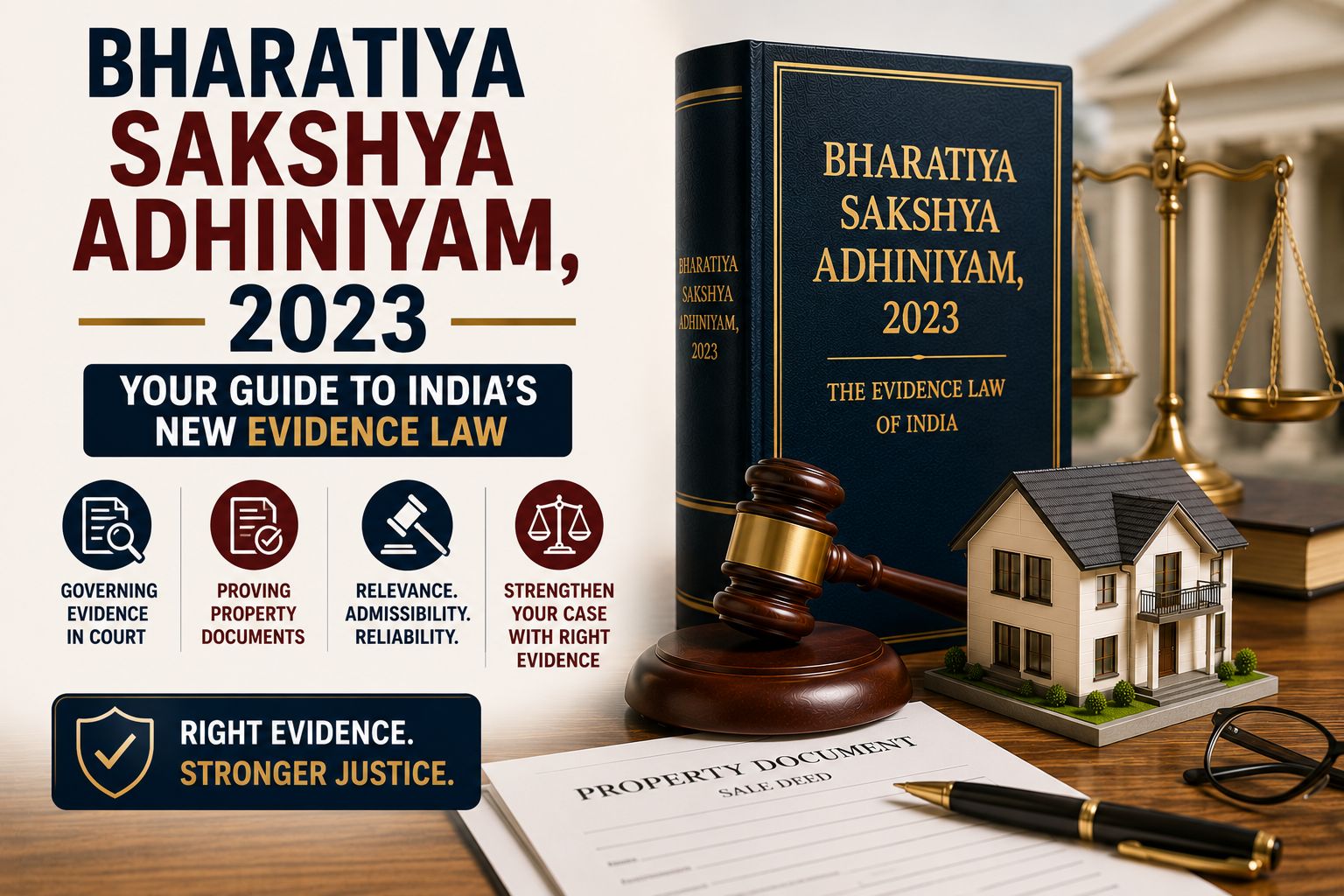
Owning a registered, stamped, perfectly drafted sale deed feels like the end of the story. It isn’t. If that document ever needs to be used in a dispute, it still has to pass one more test: it has to be legally proved in court. And the rulebook for that changed in 2024.
Enter the Bharatiya Sakshya Adhiniyam, 2023 — India’s new law of evidence, replacing the 147-year-old Indian Evidence Act of 1872, and now the framework that decides whether your carefully preserved documents actually count in a courtroom.
What Is the Bharatiya Sakshya Adhiniyam?
The Bharatiya Sakshya Adhiniyam (BSA), 2023 came into force on July 1, 2024, replacing the Indian Evidence Act as part of a broader overhaul of India’s criminal justice framework, alongside the Bharatiya Nyaya Sanhita and the Bharatiya Nagarik Suraksha Sanhita.
While much of the public conversation around this reform focused on criminal law, the BSA also governs something far more routine and personal: how documents — including property documents — are admitted, proved, and relied upon in civil disputes, including RERA-adjacent litigation and property suits.
In essence, no matter how solid your sale deed, registration, or contract is under the other laws in this series, the BSA is what determines whether — and how — that document can actually be used as proof in a courtroom.
Why an Evidence Law Matters for Property Owners
Here’s the connection buyers often miss: having a document isn’t the same as being able to prove it in court. A dispute isn’t won on the strength of what you signed — it’s won on the strength of what you can legally establish happened, using admissible evidence.
The BSA governs foundational questions like:
- What counts as a valid, admissible document?
- How is a document’s authenticity established?
- What role do digital and electronic records play as evidence?
- When can secondary evidence (like a copy) be used if the original is lost or unavailable?
- How are presumptions applied to certain categories of documents?
For property disputes specifically — where a case often hinges on a single sale deed, agreement, or communication trail — these rules aren’t academic. They’re often the deciding factor.
Key Areas Relevant to Property Documentation
Documentary Evidence
The BSA continues to recognize registered documents, like sale deeds and lease agreements, as carrying significant evidentiary weight — reinforcing why registration under the Registration Act isn’t just a formality, but a practical safeguard for future disputes.
Electronic and Digital Records
One of the most significant modernizations in the BSA is its expanded and clarified treatment of electronic records as evidence. In an era where builder communications, payment confirmations, and even possession notices increasingly happen over email, WhatsApp, or portals, this matters enormously for property disputes.
This means saved emails, digital payment receipts, and electronic correspondence with a builder can carry real evidentiary weight — provided they meet the law’s requirements for authentication and reliability.
Presumptions Regarding Certain Documents
Certain categories of documents — particularly those that are registered, notarized, or otherwise formally executed — may benefit from legal presumptions regarding their genuineness, shifting the practical burden onto the party disputing them.
Secondary Evidence
If an original document is lost, destroyed, or otherwise unavailable, the BSA outlines circumstances under which secondary evidence — such as certified copies or reliable reproductions — may be admitted, which can be critical in older property disputes involving decades-old paperwork.
Why This Matters Across the Rest of This Legal Series
This law doesn’t operate in isolation — it’s the final link connecting everything else in your property transaction:
| Law | What It Establishes | How BSA Connects |
|---|---|---|
| Transfer of Property Act | How ownership legally transfers | BSA governs how that transfer is proved if disputed |
| Registration Act | Mandatory recording of key documents | BSA gives registered documents evidentiary weight |
| Indian Contract Act | Validity of the underlying agreement | BSA governs how contract terms are proved in court |
| Indian Stamp Act | Tax validity of the document | Improperly stamped documents can face admissibility issues |
| RERA / Consumer Protection Act | Regulatory and consumer remedies | BSA principles inform how evidence is assessed in these forums too |
A perfectly registered, properly stamped, contractually sound document still needs to be proved under BSA principles when a dispute reaches a courtroom or tribunal.
What This Means Practically for Buyers
- Preserve original documents carefully — registered originals continue to carry significant weight
- Don’t underestimate digital evidence — save emails, payment confirmations, and builder communications, as these increasingly hold real evidentiary value
- Understand that copies aren’t automatically usable — secondary evidence has specific conditions attached, so losing an original document isn’t necessarily fatal, but it does complicate matters
- Formal documentation beats informal assurances — verbal promises are inherently harder to prove than a written, ideally registered, record
A Note on This Transition Period
Because the BSA is still a relatively recent replacement for a law that governed Indian courts for nearly a century and a half, judicial interpretation and precedent under the new framework continue to develop. Many core evidentiary principles carry forward in substance, but buyers and their lawyers should stay attentive to how courts apply the new provisions in property-related disputes as case law evolves.
The Bottom Line
Every document in your property journey — the sale deed, the builder-buyer agreement, the payment receipts, even that email where the builder admitted a delay — is only as useful as your ability to prove it in court. The Bharatiya Sakshya Adhiniyam, 2023 is the law that now governs exactly how that proof happens, making it the quiet final chapter behind every property document you’ve ever signed.
Involved in a property dispute, or want to safeguard your documentation properly? Consult a lawyer to ensure your records — physical and digital — will actually hold up as evidence if you ever need them to.
FAQs
Q1: When did the Bharatiya Sakshya Adhiniyam come into effect? It came into force on July 1, 2024, replacing the Indian Evidence Act, 1872.
Q2: Are WhatsApp messages and emails admissible as evidence in property disputes? Electronic records, including digital communications, can be admissible under the BSA, provided they meet the law’s requirements for authentication and reliability.
Q3: Does a registered sale deed still carry strong evidentiary value under the new law? Yes. Registered documents generally continue to carry significant evidentiary weight, reinforcing the importance of proper registration under the Registration Act.
Q4: What happens if I lose the original of an important property document? The BSA outlines circumstances under which secondary evidence, such as certified copies, may be admitted, though the process and requirements are more involved than relying on an original.
Q5: Does the BSA replace RERA or other property-specific laws? No. The BSA is a general evidence law governing how facts and documents are proved across legal proceedings — it works alongside, not in place of, RERA, the Transfer of Property Act, and other property-specific legislation.