Most property disputes end in a refund, a compensation order, or a court-enforced sale deed. But some cross a different line entirely — where a builder or seller didn’t just breach a contract, they committed a crime. Selling the same flat to three different buyers. Forging a signature on a sale deed. Vanishing with your money after presenting fake approvals.
When that happens, RERA and civil courts aren’t your only options anymore. The Bharatiya Nyaya Sanhita (BNS), 2023 — India’s new criminal code — steps in.
What Is the Bharatiya Nyaya Sanhita?
The BNS came into force on July 1, 2024, replacing the Indian Penal Code (IPC) of 1860 as India’s primary criminal law, alongside the Bharatiya Nagarik Suraksha Sanhita (replacing the CrPC) and the Bharatiya Sakshya Adhiniyam (replacing the Evidence Act).
While most people associate criminal law with violent crime, a significant portion of the BNS deals with economic offences — cheating, forgery, and breach of trust — that show up with striking regularity in property transactions gone wrong.
Understanding when a real estate dispute crosses from “civil breach” into “criminal offence” gives buyers an important, often underused, additional layer of legal leverage.
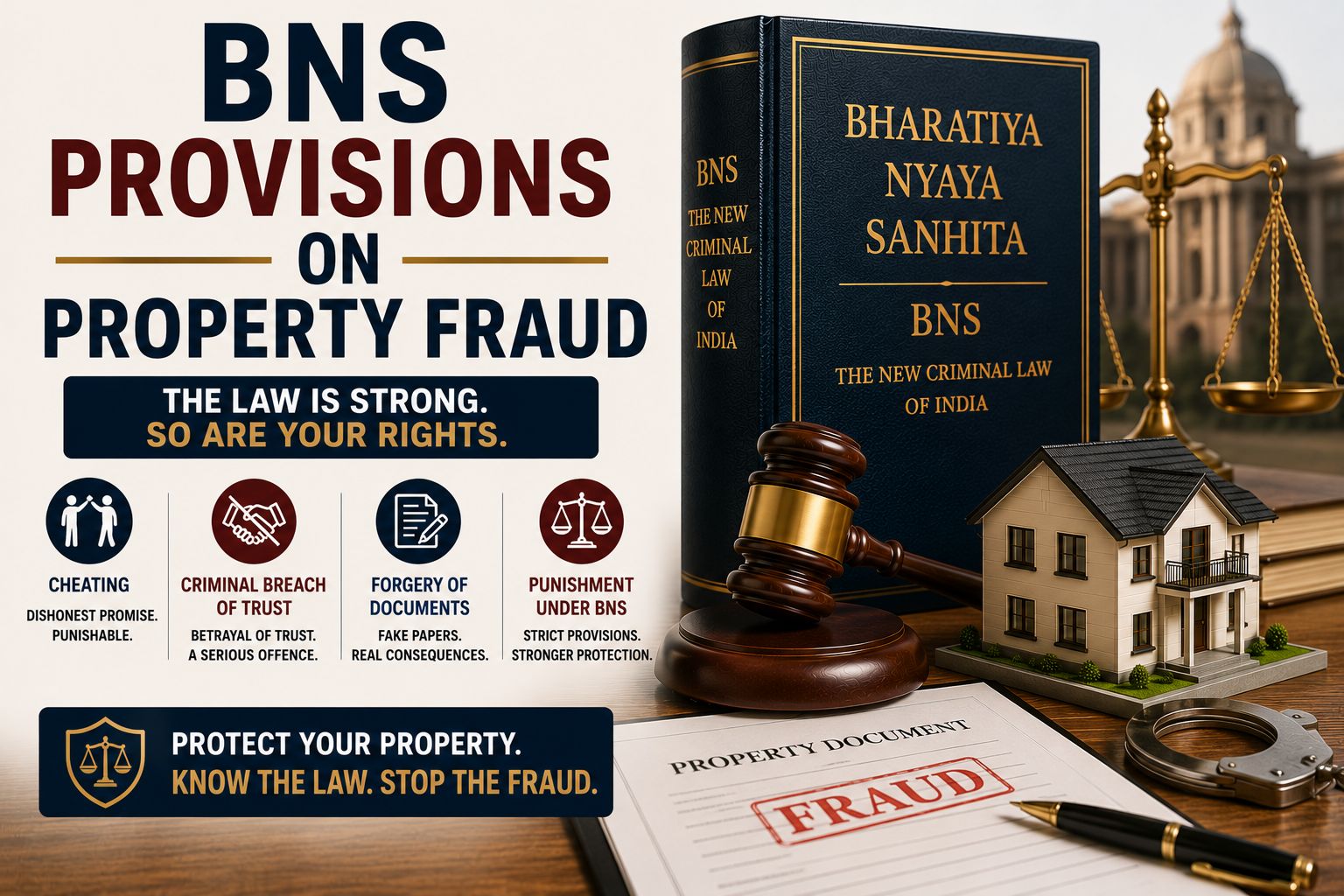
The Three Offences Most Relevant to Property Fraud
1. Cheating
Cheating occurs when someone deceives another person, fraudulently or dishonestly inducing them to deliver property or money, causing wrongful loss. In real estate, this shows up as:
- Collecting booking amounts for a project that was never actually approved or intended to be built
- Selling a property while concealing an existing mortgage or litigation
- Presenting forged approvals, NOCs, or ownership documents to induce a purchase
The key ingredient is dishonest intention at the time of the transaction — not just a later failure to deliver, but deception baked in from the start.
2. Criminal Breach of Trust
This applies when someone entrusted with property or money dishonestly misappropriates it, or uses it in violation of the terms of that trust. For property buyers, this is especially relevant to:
- Escrow fund misuse — a builder diverting the mandatory 70% of collected funds (required under RERA) toward unrelated projects or personal use
- Diverting buyer payments meant for construction toward other purposes entirely
- A power-of-attorney holder misusing entrusted property rights for personal gain
This offence sits at the intersection of RERA’s escrow rules and criminal accountability — RERA sets the obligation, and criminal breach of trust provisions provide teeth if that obligation is dishonestly violated.
3. Forgery
Forgery involves creating a false document, or altering a genuine one, with the intent to cause damage, support a false claim, or commit fraud. In property transactions, this can include:
- Forged sale deeds or ownership documents
- Fabricated NOCs, occupancy certificates, or building approvals
- Falsified signatures on agreements or power-of-attorney documents
- Manipulated title documents used to mislead a buyer or lender
Civil Remedy vs. Criminal Complaint: Knowing the Difference
This is where many buyers get confused, so it’s worth laying out clearly:
| Civil Remedy (RERA / Consumer / Civil Court) | Criminal Complaint (BNS) | |
|---|---|---|
| Purpose | Compensation, refund, specific performance | Punishment for the wrongdoer, deterrence |
| Standard of Proof | Balance of probabilities | Beyond reasonable doubt |
| Who Initiates | The aggrieved buyer directly | Police/FIR, or private criminal complaint |
| Typical Outcome | Refund, interest, possession, compensation | Investigation, prosecution, potential imprisonment |
| Best Suited For | Delays, defects, contract breaches | Deliberate deception, forgery, fund misappropriation |
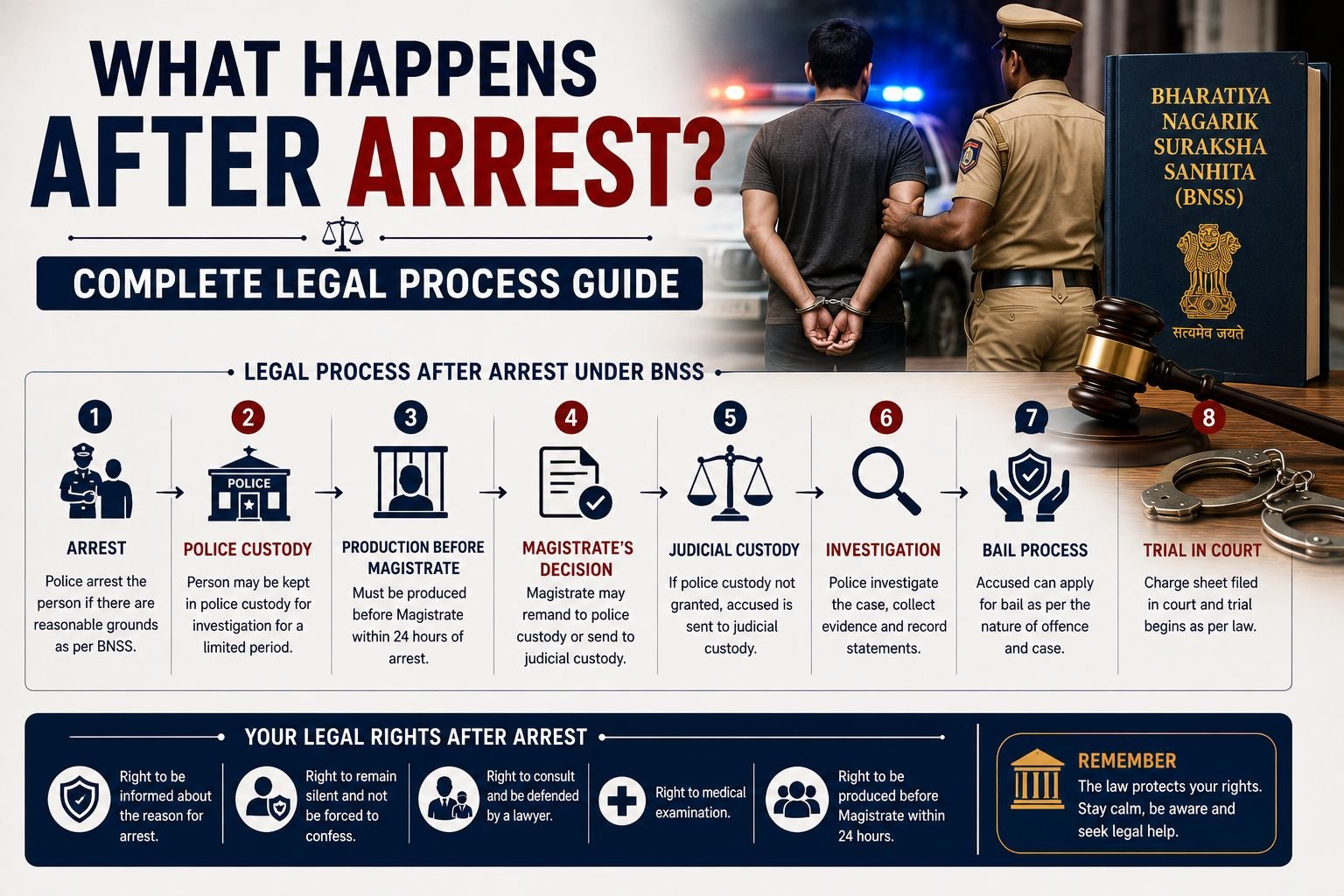
Crucially, these routes aren’t mutually exclusive. A buyer defrauded by a builder can often pursue both a civil/RERA remedy for their money, and a criminal complaint for the underlying fraud — they address different questions and different forms of accountability.
How Do You Know If Your Case Has a Criminal Angle?
Not every delayed possession or construction defect is criminal — most aren’t. The line generally depends on intent. Ask:
- Was there deliberate deception at the time money changed hands, or just a later failure to perform?
- Were documents forged or fabricated, versus simply incomplete or delayed?
- Was entrusted money knowingly diverted, versus mismanaged through poor business decisions?
- Was the same property sold to multiple buyers deliberately?
A builder who genuinely struggled with construction delays due to funding issues is very different, legally, from one who knowingly collected money for a project they never intended to complete, or who forged documents to close a sale.
How to Pursue a Criminal Complaint
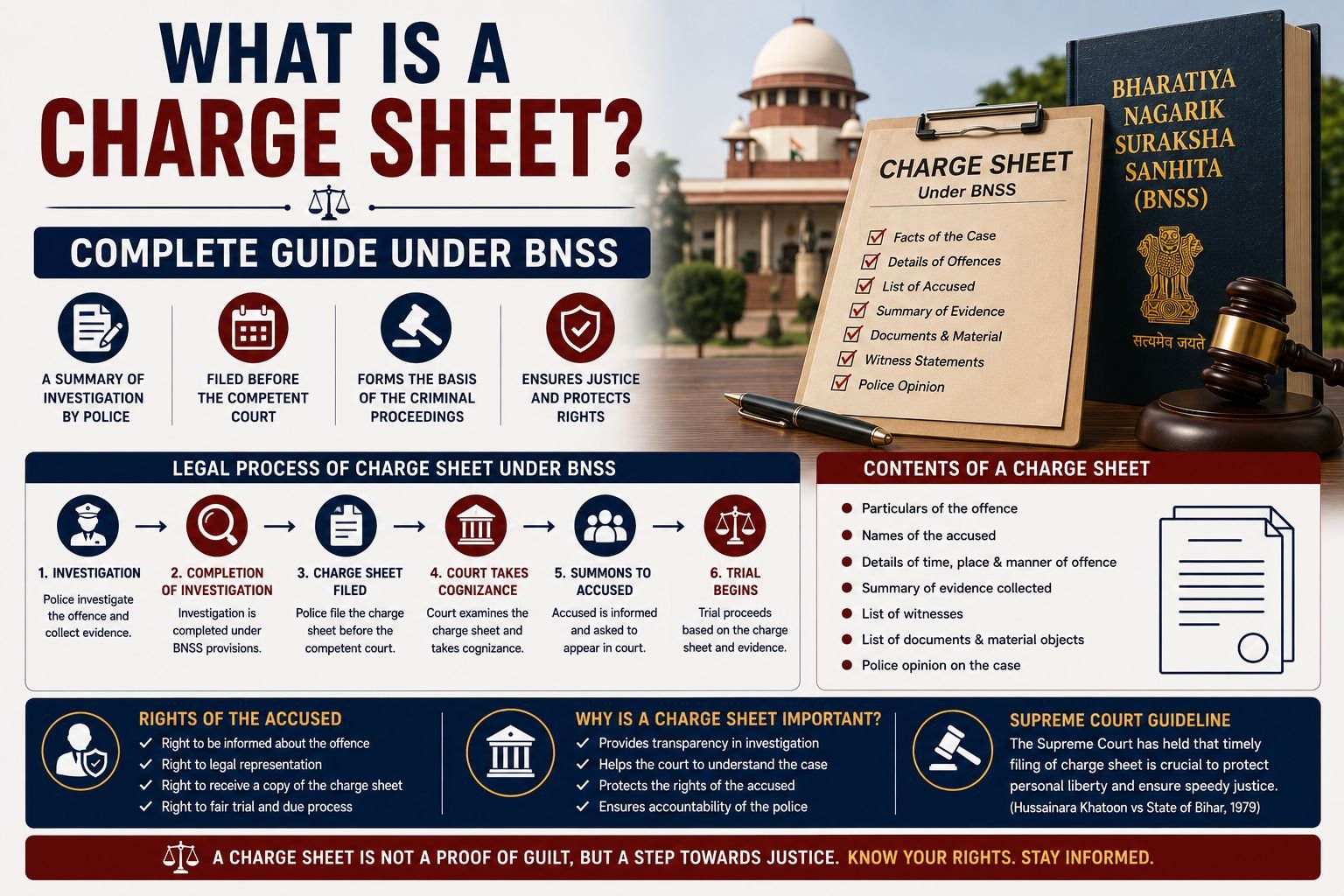
Step 1: Gather documentation — agreements, payment records, correspondence, and anything indicating deliberate deception or forgery.
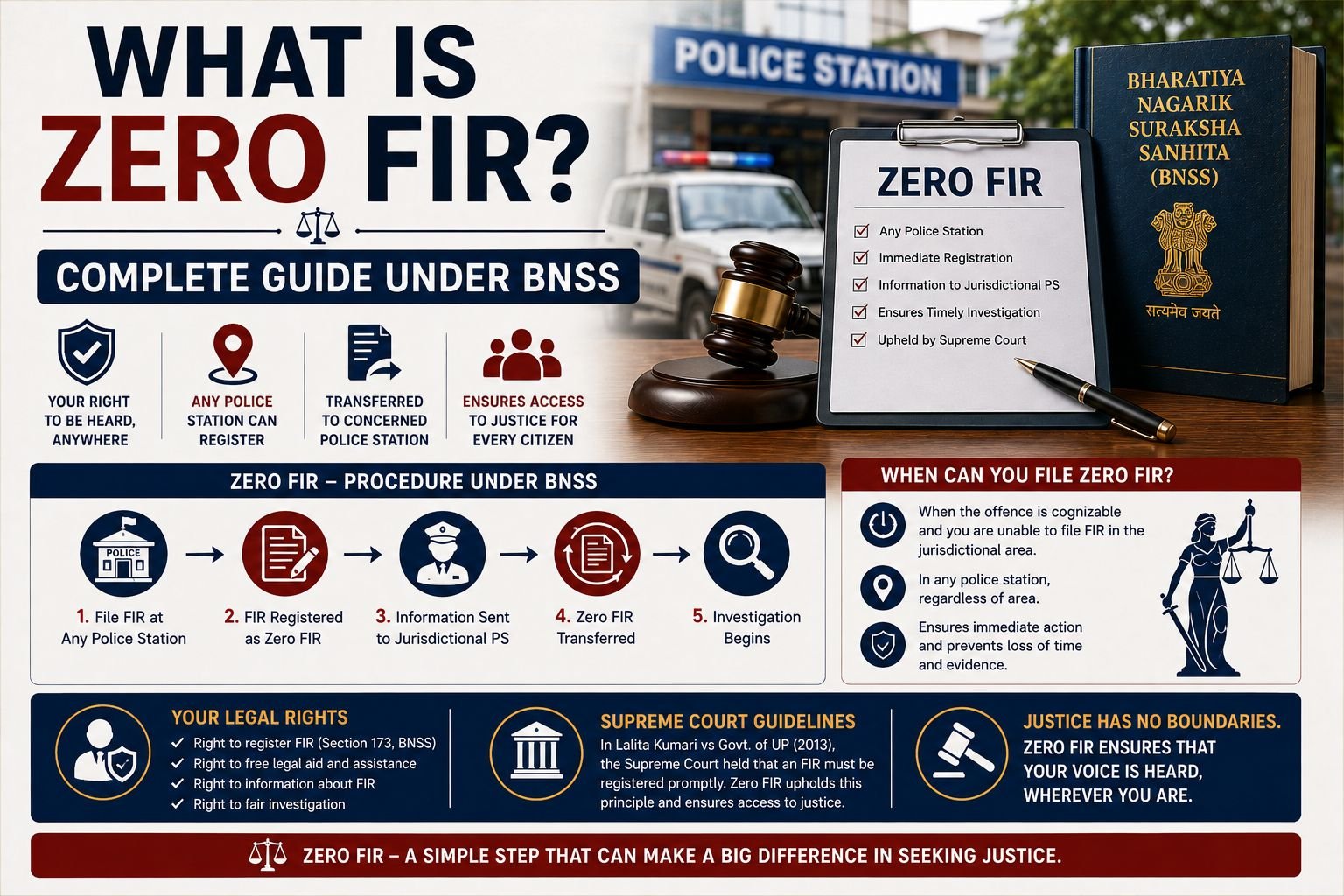
Step 2: File a First Information Report (FIR) at the relevant police station, or approach a magistrate directly through a private criminal complaint if police action is delayed.
Step 3: Cooperate with investigation — provide evidence and statements as the case is investigated.
Step 4: Criminal trial proceeds separately from any parallel civil, RERA, or consumer proceedings you may also be pursuing.
Because criminal complaints involve a different standard of proof and process entirely, consulting a lawyer experienced in both real estate and criminal law is essential before filing — a poorly framed complaint can weaken an otherwise legitimate case.
Why This Matters as Leverage, Not Just Punishment
Beyond the pursuit of justice itself, the possibility of a criminal complaint often changes the dynamics of a civil dispute considerably. A builder facing only a refund order may calculate that delay is worth the risk. A builder facing a criminal complaint for breach of trust or forgery faces a fundamentally different set of consequences — and often responds very differently to settlement discussions as a result.
The Bottom Line
Most property disputes are genuinely civil matters — delays, defects, and disagreements that RERA, consumer commissions, and civil courts are built to resolve. But when deception, forgery, or misappropriation of entrusted funds enters the picture, the Bharatiya Nyaya Sanhita provides a serious additional layer of accountability — one that shifts the conversation from “please pay me back” to genuine criminal consequence.
Suspect fraud, forgery, or fund misuse in your property transaction? Consult a lawyer promptly to assess whether your case has a criminal dimension worth pursuing alongside your civil claim.
FAQs
Q1: Can I file both a RERA complaint and a criminal complaint against the same builder? Yes, in appropriate cases. Civil/regulatory remedies and criminal complaints address different aspects of a dispute and can often be pursued simultaneously.
Q2: Is delayed possession alone a criminal offence? Generally, no. Simple delay, without deliberate deception or forgery, is typically treated as a civil/contractual breach rather than a criminal matter.
Q3: What’s the difference between cheating and criminal breach of trust? Cheating involves deceiving someone to induce them to part with property or money. Criminal breach of trust involves someone already entrusted with property or money dishonestly misusing it — the distinction lies in whether trust was established first.
Q4: How do I prove forgery in a property document? This typically requires expert document examination, comparison with genuine records, and often forensic verification — a lawyer can guide the evidentiary process required.
Q5: Does escrow fund misuse under RERA automatically become a criminal case? Not automatically, but deliberate diversion of escrow funds required under RERA can potentially constitute criminal breach of trust, depending on the facts and evidence of dishonest intent.