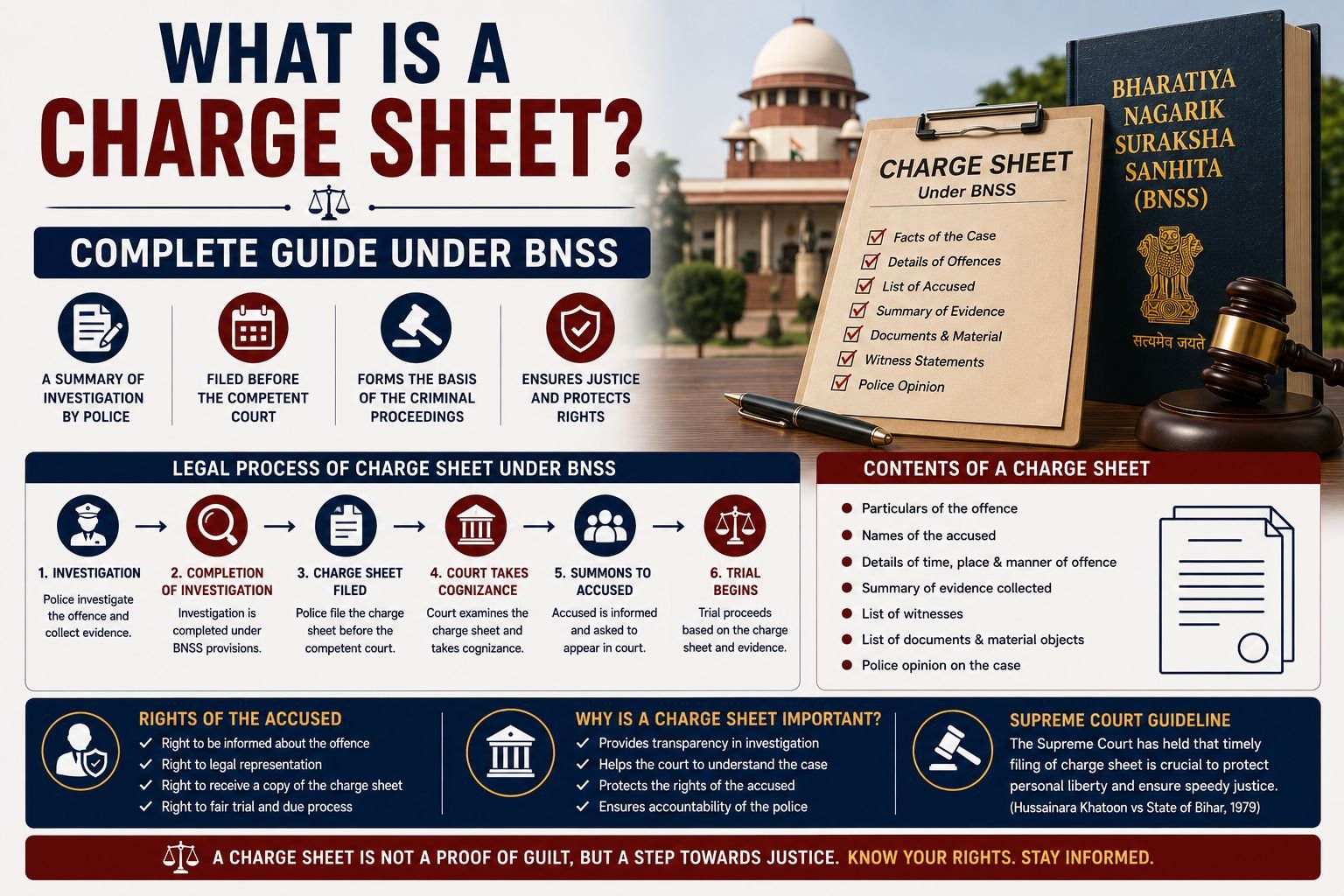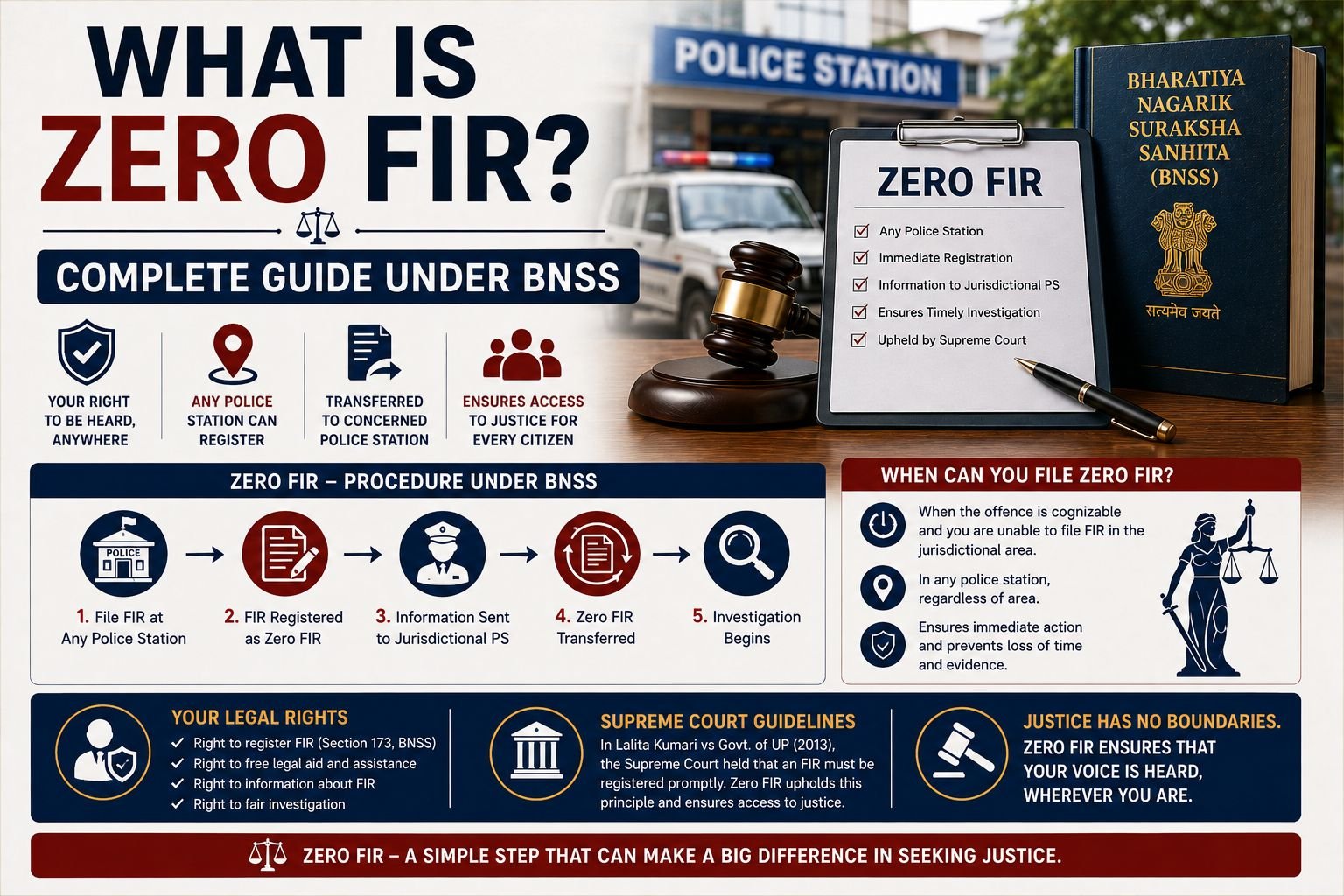
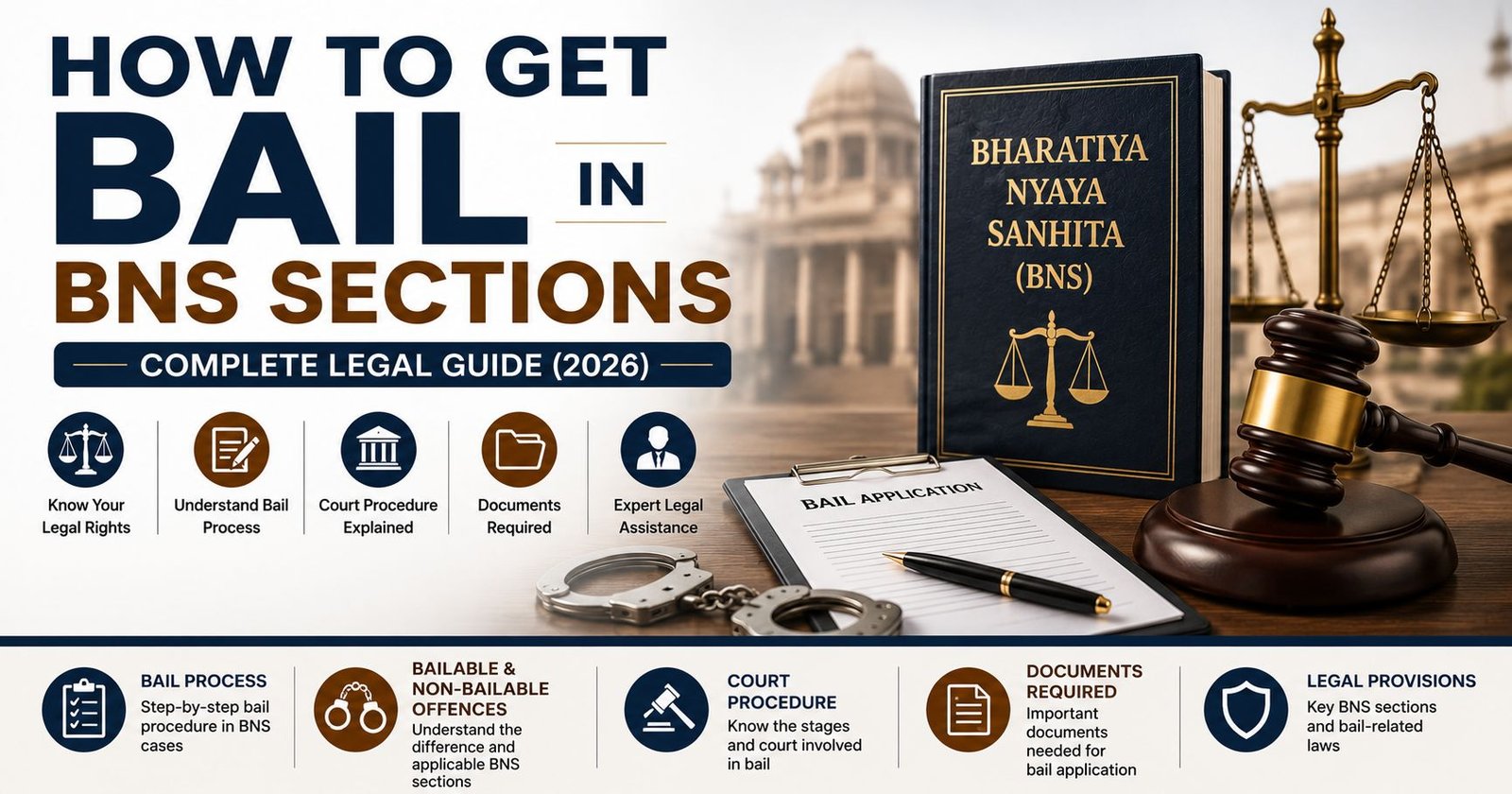
The introduction of the Bharatiya Nyaya Sanhita (BNS), 2023 marked a significant reform in India’s criminal justice system. Effective from 1 July 2024, BNS replaced the Indian Penal Code (IPC), 1860 as the primary law defining criminal offences and punishments in India. Alongside the Bharatiya Nagarik Suraksha Sanhita (BNSS) and the Bharatiya Sakshya Adhiniyam (BSA), it forms the foundation of India’s new criminal law framework.
One of the most important legal rights available to an accused person under this framework is the right to seek bail. Bail allows an accused to obtain temporary release from police or judicial custody while the investigation or trial is pending, subject to the conditions imposed by the competent authority or court. It ensures that personal liberty is protected while also enabling the criminal justice system to proceed without unnecessary detention.
Understanding how to get bail in BNS sections is essential because the procedure differs depending on whether the offence is bailable or non-bailable, the stage of the case, and the specific facts involved. While some offences allow bail as a matter of law, others require judicial discretion after considering the seriousness of the allegations, the available evidence, and other relevant factors.
Although BNS defines criminal offences, the procedure for arrest, investigation, and bail is governed by the Bharatiya Nagarik Suraksha Sanhita (BNSS), 2023. Therefore, anyone seeking bail in a BNS case should understand both the substantive provisions of BNS and the procedural requirements under BNSS.
This comprehensive guide explains every aspect of obtaining bail under the new criminal laws, including:
- Meaning and purpose of bail
- Types of bail available under BNSS
- Difference between bailable and non-bailable offences
- Step-by-step procedure for obtaining bail
- Documents required
- Common BNS sections and their bail status
- Grounds for rejection or cancellation of bail
- Rights of an arrested person
- Frequently asked questions
Whether you are an accused person, family member, advocate, law student, or someone researching India’s new criminal laws, this guide will help you understand the bail process under BNS in a clear and practical manner.
Quick Summary
| Particular | Details |
|---|---|
| Criminal Law | Bharatiya Nyaya Sanhita (BNS), 2023 |
| Procedural Law | Bharatiya Nagarik Suraksha Sanhita (BNSS), 2023 |
| Types of Bail | Regular Bail, Anticipatory Bail, Interim Bail, Default Bail, Transit Bail |
| Bailable Offences | Bail generally available as provided by law |
| Non-Bailable Offences | Bail granted at the discretion of the court |
| Authorities | Police, Magistrate, Sessions Court, High Court |
| Purpose | Temporary release pending investigation or trial |
Table of Contents
- What is Bail Under BNS?
- Why Bail is Important
- Constitutional Basis of Bail
- Legal Framework Under BNSS
- Types of Bail
- Difference Between Bailable and Non-Bailable Offences
- Step-by-Step Bail Process
- Documents Required
- BNS Sections and Bail Status
- Bail Conditions
- Bail Rejection and Cancellation
- Rights of the Accused
- Supreme Court Judgments
- FAQs
What is Bail Under BNS?
Bail is the legal process through which an accused person is temporarily released from police or judicial custody while criminal proceedings continue. It allows the accused to remain at liberty until the investigation or trial is completed, subject to compliance with conditions imposed by the court or the competent authority.
The grant of bail does not mean that the accused has been acquitted or declared innocent. Instead, it reflects the legal principle that every individual is presumed innocent until proven guilty in a court of law.
Under the new criminal law framework, BNS defines offences and punishments, while the procedure for granting bail is governed by BNSS.
Objectives of Bail
The concept of bail serves several important purposes in criminal law.
Protecting Personal Liberty
One of the primary objectives of bail is to safeguard the constitutional right to personal liberty and prevent unnecessary detention before conviction.
Ensuring Presence During Trial
Bail ensures that the accused remains available to participate in the investigation and attend court proceedings whenever required.
Preventing Unnecessary Custody
If custodial detention is no longer required for investigation, continued imprisonment before conviction may not be justified in many cases.
Promoting Fair Criminal Proceedings
An accused released on bail has a better opportunity to consult legal counsel, gather evidence, identify witnesses, and prepare an effective defence.
Reducing Prison Overcrowding
Granting bail in appropriate cases helps reduce the number of undertrial prisoners and supports efficient administration of justice.
Bail Does Not Mean Acquittal
Many people incorrectly assume that obtaining bail means the accused has won the case.
This is not correct.
After bail is granted:
- The criminal case continues.
- The accused remains subject to trial.
- Court hearings must be attended.
- Bail conditions must be followed.
- Bail may be cancelled if conditions are violated.
The final determination of guilt or innocence is made only after the trial concludes.
Why is Bail Important Under BNS?
Bail continues to play a crucial role under the Bharatiya Nyaya Sanhita and Bharatiya Nagarik Suraksha Sanhita. It balances the rights of the accused with the interests of society and the effective administration of justice.
1. Protection of Fundamental Rights
Article 21 of the Constitution guarantees the right to life and personal liberty. Bail helps ensure that these rights are respected while criminal proceedings are pending.
2. Presumption of Innocence
Indian criminal law is based on the principle that every accused person is presumed innocent until proven guilty. Bail reflects this principle by avoiding unnecessary detention before conviction.
3. Opportunity to Prepare a Defence
A person released on bail can meet advocates, collect evidence, communicate with family members, and prepare the case more effectively than someone in custody.
4. Family and Professional Responsibilities
Detention may affect employment, education, business, and family obligations. Bail allows the accused to continue fulfilling these responsibilities while complying with legal proceedings.
5. Efficient Criminal Justice System
Granting bail in suitable cases allows investigating agencies and courts to focus custodial resources on cases where detention is genuinely necessary.
Constitutional Basis of Bail
Although the Constitution of India does not expressly use the word “bail,” the concept derives strong support from Article 21, which protects every person’s right to life and personal liberty except according to the procedure established by law.
Indian courts have consistently held that personal liberty is a fundamental constitutional value. While courts must protect society and ensure a fair investigation, they must also avoid unnecessary pre-trial detention where the law permits release.
The principle that “bail is the rule and jail is the exception” continues to guide judicial decisions, although each case is decided on its own facts.
Legal Framework Governing Bail Under BNSS
While BNS defines criminal offences, the procedure for granting bail is governed by the Bharatiya Nagarik Suraksha Sanhita (BNSS), 2023.
The court generally considers several factors while deciding a bail application, including:
- Nature and seriousness of the offence.
- Gravity of the allegations.
- Maximum punishment prescribed.
- Prima facie evidence available.
- Criminal history of the accused.
- Possibility of absconding.
- Risk of influencing witnesses.
- Chances of tampering with evidence.
- Stage of the investigation.
- Overall interests of justice.
The court evaluates each application individually based on the facts and applicable legal principles.
Authorities That Can Grant Bail
Depending on the offence and stage of the proceedings, different authorities may grant bail.
Police Officer
For offences where bail is available as provided by law, the police may release the accused after completing the prescribed legal formalities.
Judicial Magistrate
Magistrates commonly hear bail applications relating to both bailable and certain non-bailable offences. They examine the case records, hear both parties, and decide whether bail should be granted.
Sessions Court
The Sessions Court has wider powers to consider bail applications in serious criminal cases and in matters where relief has not been granted by the Magistrate.
High Court
The High Court has broad jurisdiction to grant bail in appropriate cases, particularly where important legal issues arise or where relief has been denied by subordinate courts.
General Principles Followed While Granting Bail
Every bail application is decided independently after considering the relevant facts.
Some of the common principles include:
Nature of the Offence
More serious offences generally receive greater judicial scrutiny.
Strength of the Evidence
The court may examine whether there is sufficient prima facie material against the accused without conducting a full trial.
Criminal Antecedents
The previous criminal record, if any, may be considered while deciding the application.
Possibility of Absconding
The court evaluates whether the accused is likely to evade investigation or trial if released.
Threat to Witnesses
The possibility of influencing witnesses or interfering with evidence is an important consideration.
Public Interest
Courts seek to balance the rights of the accused with the interests of society and the proper administration of justice.
Types of Bail Under BNSS
The Bharatiya Nagarik Suraksha Sanhita (BNSS), 2023 provides different forms of bail depending on the circumstances of the case, the stage of the criminal proceedings, and the nature of the offence. Understanding these types is essential because each serves a different legal purpose and follows a separate procedure.
1. Regular Bail
Regular bail is granted to a person who has already been arrested and is in police or judicial custody. The accused applies before the competent court seeking release until the investigation or trial is completed.
This is the most common type of bail in criminal cases.
When Can Regular Bail Be Sought?
Regular bail may be sought:
- After arrest by the police.
- During police custody.
- During judicial custody.
- During investigation.
- After filing of the charge sheet.
- During trial, where legally permissible.
Who Can Grant Regular Bail?
Depending on the offence, regular bail may be granted by:
- Police (for bailable offences where applicable).
- Judicial Magistrate.
- Sessions Court.
- High Court.
2. Anticipatory Bail
Anticipatory bail is sought by a person who reasonably apprehends arrest in a non-bailable offence. Instead of waiting to be arrested, the individual approaches the Sessions Court or High Court seeking protection.
If the court grants anticipatory bail, the accused is generally protected from being taken into custody in accordance with the conditions specified in the order.
Situations Where Anticipatory Bail Is Commonly Sought
- Property disputes.
- Matrimonial disputes.
- Business disagreements.
- False criminal complaints.
- Political rivalry.
- Family disputes.
Conditions That May Be Imposed
The court may direct the accused to:
- Cooperate with the investigation.
- Appear before the investigating officer whenever required.
- Avoid threatening or influencing witnesses.
- Not leave India without permission, where directed.
- Comply with any additional conditions considered necessary.
3. Interim Bail
Interim bail is temporary protection granted until the court decides the main bail application.
It is commonly granted when the court requires additional time to hear the matter but considers temporary protection appropriate.
Interim Bail May Be Granted
- While an anticipatory bail application is pending.
- During urgent hearings.
- For humanitarian reasons.
- Until the next date of hearing.
Interim bail automatically comes to an end unless extended or replaced by a final bail order.
4. Default Bail
Default bail is a statutory right available when the investigating agency fails to complete the investigation and file the final report within the period prescribed by law.
If the legal requirements are satisfied, the accused may seek release through default bail before the charge sheet is filed.
5. Transit Bail
Transit bail provides temporary protection to a person who fears arrest in another State or Union Territory.
Its purpose is to allow sufficient time to approach the competent court having jurisdiction over the case.
Transit bail is generally granted for a limited period.
Difference Between Bailable and Non-Bailable Offences Under BNS
One of the most important questions after an FIR is registered is whether the alleged offence is bailable or non-bailable. The answer determines how the accused can seek release from custody.
Although BNS defines criminal offences, the classification of offences for bail purposes is governed by the applicable procedural law under BNSS.
Comparison Table
| Basis | Bailable Offence | Non-Bailable Offence |
|---|---|---|
| Right to Bail | Generally available as provided by law | Depends on the discretion of the court |
| Granting Authority | Police or Magistrate | Magistrate, Sessions Court, or High Court |
| Nature of Offence | Comparatively less serious | Generally more serious |
| Judicial Scrutiny | Limited | Detailed examination by the court |
| Conditions | Usually simpler | May involve stricter conditions |
Important: A non-bailable offence does not mean that bail cannot be granted. It simply means that the accused does not have an automatic right to bail and must satisfy the court that release is appropriate.
How to Determine Whether a BNS Offence Is Bailable
To determine the bail status of a particular BNS offence, you should:
- Check the relevant provisions under BNSS.
- Review official legal resources.
- Examine the FIR and the sections invoked.
- Consult a qualified legal professional.
The bail status depends on the offence alleged and the applicable procedural law.
Step-by-Step Process to Get Bail in BNS Sections
The procedure for obtaining bail under BNS depends on whether the offence is bailable or non-bailable. The following steps provide a general overview of the process.
Step 1: Identify the BNS Section
The first step is to identify the exact BNS section mentioned in the FIR or arrest memo.
This helps determine:
- Whether the offence is bailable.
- The prescribed punishment.
- The competent authority.
- The appropriate legal procedure.
Step 2: Obtain a Copy of the FIR
The FIR contains the allegations against the accused and the BNS sections invoked.
The accused or their advocate should review the FIR carefully before preparing the bail application.
Step 3: Consult a Lawyer
Although legal representation is not mandatory in every case, consulting an experienced criminal lawyer is advisable, especially for non-bailable offences.
A lawyer can:
- Evaluate the allegations.
- Draft the bail application.
- Present legal arguments.
- Cite relevant judicial precedents.
- Respond to objections raised by the prosecution.
Step 4: Determine the Appropriate Court
The competent authority depends on the nature of the offence.
The application may be filed before:
- Police (where applicable).
- Judicial Magistrate.
- Sessions Court.
- High Court.
Step 5: Prepare the Bail Application
A bail application generally includes:
- Name of the accused.
- FIR number.
- Police station.
- BNS sections involved.
- Brief facts of the case.
- Grounds for seeking bail.
- Assurance of cooperation.
- Prayer requesting release.
Step 6: Attach Supporting Documents
The following documents are commonly required:
- FIR copy.
- Arrest memo.
- Identity proof.
- Address proof.
- Affidavit (where applicable).
- Medical documents (if relied upon).
- Surety documents.
Step 7: Court Hearing
At the hearing:
- The defence presents arguments supporting bail.
- The prosecution may oppose the application.
- The court examines the facts, legal provisions, and relevant materials.
The court does not decide guilt at this stage; it only determines whether the accused should be released pending investigation or trial.
Step 8: Court Decision
After hearing both parties, the court may:
- Grant bail.
- Reject the application.
- Grant interim bail.
- Impose conditions while granting bail.
If bail is refused, the accused may, where legally permissible, approach a higher court.
How to Get Bail in Bailable BNS Offences
Where the alleged offence is bailable, the law generally permits release on bail after completion of the prescribed formalities.
General Procedure
- Arrest by the police.
- Information that the offence is bailable.
- Execution of the bail bond.
- Production of surety, if required.
- Verification of documents.
- Release of the accused.
This process is generally quicker because the law provides a statutory right to bail in such offences.
How to Get Bail in Non-Bailable BNS Offences
For non-bailable offences, the accused must apply before the competent court.
The court evaluates several factors before passing an order.
Factors Considered by the Court
- Nature and gravity of the offence.
- Maximum punishment prescribed.
- Criminal antecedents.
- Possibility of absconding.
- Risk of witness intimidation.
- Possibility of tampering with evidence.
- Conduct of the accused.
- Stage of investigation.
- Interests of justice.
The court may impose conditions before granting bail to ensure the accused cooperates with the investigation and attends future proceedings.
Documents Required for Bail
Proper documentation helps avoid unnecessary delays in processing the bail application.
| Document | Purpose |
|---|---|
| Bail Application | Formal request for release |
| FIR Copy | Details of allegations and BNS sections |
| Arrest Memo | Proof of arrest |
| Identity Proof | Verification of identity |
| Address Proof | Verification of residence |
| Passport-sized Photographs | Court records |
| Surety Documents | Verification of surety |
| Affidavit | Supporting declaration where required |
| Medical Records | If health is relied upon as a ground |
| Previous Bail Orders | If relevant |
Essential Contents of a Bail Application
A properly drafted bail application generally contains:
- Name and details of the accused.
- FIR number.
- Police station.
- BNS sections involved.
- Date of arrest.
- Brief facts of the case.
- Grounds for bail.
- Assurance of cooperation.
- Undertaking to comply with court conditions.
- Prayer seeking release.
Common Grounds for Seeking Bail
Depending on the facts of the case, the accused may rely on one or more of the following grounds:
- False implication.
- Permanent residence.
- No previous criminal history.
- Cooperation with the investigation.
- No possibility of absconding.
- No likelihood of influencing witnesses.
- Medical condition.
- Completion of custodial interrogation.
- Delay in investigation.
- Long period of detention.
Each ground should be supported by relevant facts and legal submissions.
Factors Courts Consider Before Granting Bail
While deciding a bail application, courts generally consider:
- Nature of the offence.
- Seriousness of allegations.
- Strength of prima facie evidence.
- Criminal history.
- Conduct of the accused.
- Risk of absconding.
- Possibility of witness intimidation.
- Tampering with evidence.
- Stage of investigation.
- Overall interests of justice.
No single factor is decisive. The court assesses the entire factual and legal context before passing an order.
Common BNS Sections and Their Bail Status
One of the first questions after an arrest is whether the alleged offence under the Bharatiya Nyaya Sanhita (BNS), 2023 is bailable or non-bailable. This classification determines whether the accused is entitled to bail as a matter of law or whether the court will exercise its discretion after considering the facts of the case.
While BNS defines criminal offences and punishments, the procedure relating to bail is governed by the Bharatiya Nagarik Suraksha Sanhita (BNSS), 2023. The table below provides a general reference to the bail status of commonly searched BNS sections.
Disclaimer: The information below is for general educational purposes. Bail classification may vary depending on the exact offence, accompanying charges, amendments, and applicable procedural law. Always verify the latest legal provisions and seek professional legal advice for case-specific guidance.
Common BNS Sections and Bail Status
| BNS Section | Offence | Bailable / Non-Bailable | Cognizable / Non-Cognizable | Generally Triable By |
|---|---|---|---|---|
| Section 103 | Murder | Non-Bailable | Cognizable | Sessions Court |
| Section 105 | Culpable Homicide Not Amounting to Murder | Non-Bailable | Cognizable | Sessions Court |
| Section 106 | Causing Death by Negligence | Bailable | Cognizable | Magistrate |
| Section 109 | Attempt to Murder | Non-Bailable | Cognizable | Sessions Court |
| Section 115 | Voluntarily Causing Hurt | Bailable | Non-Cognizable | Magistrate |
| Section 117 | Voluntarily Causing Grievous Hurt | Bailable | Cognizable | Magistrate |
| Section 118 | Grievous Hurt by Dangerous Weapons | Non-Bailable | Cognizable | Sessions Court |
| Section 121 | Wrongful Restraint | Bailable | Cognizable | Magistrate |
| Section 124 | Wrongful Confinement | Bailable | Cognizable | Magistrate |
| Section 126 | Assault or Criminal Force | Bailable | Non-Cognizable | Magistrate |
| Section 74 | Assault or Criminal Force Against Woman | Non-Bailable | Cognizable | Magistrate |
| Section 75 | Sexual Harassment | Depends on the clause | Cognizable (certain cases) | Magistrate |
| Section 76 | Assault with Intent to Disrobe | Non-Bailable | Cognizable | Sessions Court |
| Section 77 | Voyeurism | First offence: Bailable; Subsequent: Non-Bailable | Cognizable | Magistrate |
| Section 78 | Stalking | First offence: Bailable; Subsequent: Non-Bailable | Cognizable | Magistrate |
| Section 137 | Kidnapping | Non-Bailable | Cognizable | Sessions Court |
| Section 138 | Kidnapping for Murder | Non-Bailable | Cognizable | Sessions Court |
| Section 139 | Kidnapping for Marriage | Non-Bailable | Cognizable | Sessions Court |
| Section 63 | Rape | Non-Bailable | Cognizable | Sessions Court |
| Section 64 | Punishment for Rape | Non-Bailable | Cognizable | Sessions Court |
| Section 303 | Theft | Bailable | Cognizable | Magistrate |
| Section 304 | Snatching | Non-Bailable | Cognizable | Magistrate |
| Section 305 | Theft in Dwelling House | Non-Bailable | Cognizable | Magistrate |
| Section 309 | Robbery | Non-Bailable | Cognizable | Sessions Court |
| Section 310 | Dacoity | Non-Bailable | Cognizable | Sessions Court |
| Section 311 | Robbery or Dacoity with Attempt to Cause Death | Non-Bailable | Cognizable | Sessions Court |
| Section 316 | Criminal Breach of Trust | Non-Bailable | Cognizable | Magistrate |
| Section 318 | Cheating | Non-Bailable | Cognizable | Magistrate |
| Section 319 | Cheating by Personation | Non-Bailable | Cognizable | Magistrate |
| Section 336 | Forgery of Valuable Security | Non-Bailable | Cognizable | Magistrate |
| Section 338 | Forgery for Purpose of Cheating | Non-Bailable | Cognizable | Magistrate |
| Section 340 | Using Forged Document | Depends on the related offence | Cognizable | Magistrate |
| Section 351 | Criminal Intimidation | Depends on the nature of threat | Depends | Magistrate |
| Section 352 | Intentional Insult | Bailable | Non-Cognizable | Magistrate |
| Section 356 | Defamation | Bailable | Non-Cognizable | Magistrate |
| Section 357 | Criminal Trespass | Bailable | Cognizable | Magistrate |
| Section 329 | House Trespass After Preparation for Hurt | Non-Bailable | Cognizable | Magistrate |
| Section 61 | Criminal Conspiracy | Depends on the principal offence | Depends | Magistrate / Sessions Court |
| Section 189 | Unlawful Assembly | Bailable | Cognizable | Magistrate |
| Section 191 | Rioting | Bailable | Cognizable | Magistrate |
| Section 192 | Rioting with Deadly Weapon | Non-Bailable | Cognizable | Magistrate |
| Section 196 | Promoting Enmity Between Groups | Non-Bailable | Cognizable | Sessions Court |
| Section 221 | Obstructing Public Servant | Bailable | Non-Cognizable | Magistrate |
| Section 223 | Disobedience to Public Order | Bailable | Cognizable | Magistrate |
| Section 281 | Rash Driving | Bailable | Cognizable | Magistrate |
| Section 317 | Receiving Stolen Property | Non-Bailable | Cognizable | Magistrate |
| Section 326 | Mischief Causing Damage | Bailable | Cognizable | Magistrate |
| Section 331 | House-Breaking | Non-Bailable | Cognizable | Magistrate |
How Long Does It Take to Get Bail?
The time required to obtain bail depends on the nature of the offence, the court’s workload, the complexity of the case, and whether all required documents are in order.
Indicative Timelines
| Type of Bail | Typical Time* |
|---|---|
| Police Bail (Bailable Offence) | Often on the same day after legal formalities |
| Magistrate Bail | Same day to a few days |
| Sessions Court Bail | Several days to a few weeks |
| High Court Bail | Depends on urgency and court schedule |
These timelines are indicative and may vary depending on the facts of each case and the court’s calendar.
Factors Affecting the Timeline
- Nature of the offence.
- Seriousness of allegations.
- Completeness of the bail application.
- Availability of the case diary.
- Objections by the prosecution.
- Court workload.
- Complexity of the case.
Bail Bond and Surety Explained
Once bail is granted, the court may require the accused to execute a bail bond and, where appropriate, provide one or more sureties.
What is a Bail Bond?
A bail bond is a written undertaking by the accused agreeing to:
- Appear before the court whenever required.
- Comply with all bail conditions.
- Cooperate with the investigation.
- Avoid violating the terms of release.
Failure to comply may result in cancellation of bail and forfeiture of the bond, subject to the court’s orders.
What is a Surety?
A surety is a person who undertakes responsibility for ensuring that the accused complies with the bail conditions and appears before the court as directed.
The court may verify the surety’s:
- Identity.
- Residential address.
- Financial capacity (where relevant).
- Relationship with the accused, if necessary.
Conditions Commonly Imposed While Granting Bail
When granting bail, courts often impose conditions to ensure that the accused does not misuse the liberty granted.
Common conditions include:
- Furnishing a personal bond.
- Producing one or more sureties, if required.
- Appearing before the court on all hearing dates unless exempted.
- Cooperating with the investigating agency.
- Not influencing or threatening witnesses.
- Not tampering with evidence.
- Informing the court before changing address.
- Not leaving India without prior permission, where directed.
- Complying with any additional conditions imposed by the court.
Failure to comply with these conditions may result in cancellation of bail.
Which Court Should You Approach for Bail?
The appropriate authority depends on the nature of the offence and the stage of the criminal proceedings.
Judicial Magistrate
A Magistrate generally hears:
- Bail applications in bailable offences.
- Many non-bailable offences within the Magistrate’s jurisdiction.
The Magistrate considers the FIR, investigation records, and submissions of both parties before deciding the application.
Sessions Court
The Sessions Court commonly deals with:
- Serious criminal offences.
- Cases triable by the Sessions Court.
- Bail applications after refusal by the Magistrate, where maintainable.
The Sessions Court has wider powers than the Magistrate in serious criminal matters.
High Court
The High Court may grant bail in appropriate cases, including:
- Serious offences.
- Matters involving important legal questions.
- Cases where relief has not been granted by the lower courts.
The High Court exercises broad discretionary powers while considering bail applications.
Practical Examples
Example 1: BNS Section 115 (Voluntarily Causing Hurt)
Rahul is arrested following a neighborhood dispute and booked under BNS Section 115. As the offence is generally bailable, he furnishes the required bail bond and completes the prescribed legal formalities. He is then released while the case proceeds.
Example 2: BNS Section 318 (Cheating)
Priya is accused of cheating under BNS Section 318. Since the offence is generally non-bailable, her advocate files a bail application before the competent court. After considering the allegations, evidence, and submissions of both parties, the court grants bail subject to specific conditions.
Example 3: BNS Section 103 (Murder)
An accused charged under BNS Section 103 applies for bail before the Sessions Court. The prosecution opposes the application due to the seriousness of the allegations. The court evaluates the available material, the stage of the investigation, and the applicable legal principles before passing an order.
Practical Tips Before Applying for Bail
- Apply for bail without unnecessary delay where legally permissible.
- Ensure the bail application is complete and supported by relevant documents.
- Cooperate fully with the investigating agency.
- Avoid contacting witnesses or interfering with the investigation.
- Follow all directions issued by the court.
- Seek assistance from an experienced criminal lawyer, particularly in serious offences.
Can Bail Be Rejected Under BNS?
Yes. Even under the Bharatiya Nyaya Sanhita (BNS), 2023 and the Bharatiya Nagarik Suraksha Sanhita (BNSS), 2023, bail is not granted automatically in every case. While courts generally protect the personal liberty of an accused, they also ensure that the investigation, trial, and interests of justice are not compromised.
In bailable offences, the accused is generally entitled to bail in accordance with the law. However, in non-bailable offences, the court exercises judicial discretion after considering the facts and circumstances of the case.
A rejection of bail does not mean that the accused is guilty. It only means that the court has decided that continued custody is necessary at that stage of the proceedings. The accused may file a fresh bail application if there is a change in circumstances or approach a higher court where legally permissible.
Common Reasons for Rejection of Bail
The court may reject a bail application for various reasons.
1. Serious Nature of the Offence
If the accused is charged with a serious offence punishable with life imprisonment or death, the court generally examines the bail application more carefully.
Examples include:
- Murder
- Terror-related offences
- Organized crime
- Serious sexual offences
- Offences affecting national security
2. Strong Prima Facie Evidence
Where the prosecution places substantial material before the court showing the involvement of the accused, the court may consider continued custody necessary.
At the bail stage, the court does not conduct a full trial but examines whether sufficient prima facie material exists.
3. Possibility of Absconding
If the court believes that the accused may flee or avoid future court proceedings, bail may be refused.
Factors considered include:
- Permanent residence.
- Employment.
- Family ties.
- Previous conduct.
- Financial capacity to leave the jurisdiction.
4. Threat to Witnesses
Protection of witnesses is an important consideration.
If there is a reasonable possibility that the accused may:
- Threaten witnesses.
- Influence witnesses.
- Induce witnesses to change statements.
- Create fear among witnesses,
the court may reject bail.
5. Tampering with Evidence
Courts may refuse bail if releasing the accused could result in:
- Destruction of documents.
- Alteration of electronic records.
- Removal of physical evidence.
- Interference with the investigation.
6. Criminal Antecedents
Previous criminal convictions, pending criminal cases, or repeated involvement in offences may influence the court’s decision.
The court examines whether the accused has a history of:
- Repeated offences.
- Violating previous bail conditions.
- Evading investigation.
- Misusing liberty granted by earlier courts.
7. Requirement of Custodial Interrogation
If investigating agencies demonstrate that further custodial interrogation is necessary for effective investigation, the court may postpone granting bail.
8. Larger Public Interest
In exceptional cases involving public safety, national security, organized crime, or large-scale financial fraud, courts may also consider broader public interest while deciding the bail application.
Can Bail Be Cancelled?
Yes.
Grant of bail does not permanently protect the accused from being taken back into custody. If the accused violates the conditions imposed by the court or misuses the liberty granted, the prosecution or complainant may apply for cancellation of bail.
Cancellation of bail is a judicial decision and is not automatic.
Grounds for Cancellation of Bail
The court may cancel bail if the accused:
- Violates any condition of the bail order.
- Commits another criminal offence while on bail.
- Attempts to influence witnesses.
- Threatens the complainant.
- Tampers with evidence.
- Avoids court hearings.
- Attempts to abscond.
- Misuses the liberty granted by the court.
- Interferes with the investigation.
Procedure for Cancellation of Bail
The process generally involves:
Step 1
The prosecution or complainant files an application before the competent court.
Step 2
The court issues notice to the accused.
Step 3
Both parties are heard.
Step 4
The court examines the evidence and surrounding circumstances.
Step 5
If sufficient grounds exist, the court cancels bail and directs that the accused be taken into custody.
Rights of an Arrested Person Under BNSS
Even after arrest, every accused continues to enjoy important constitutional and statutory protections.
Right to Know the Grounds of Arrest
The arrested person has the right to be informed of:
- The reason for arrest.
- The BNS sections invoked.
- The allegations made against them.
Right to Consult an Advocate
Every accused has the right to consult and be defended by a lawyer of their choice.
If the accused cannot afford legal representation, free legal aid may be available through the Legal Services Authorities.
Right to Inform Family or Friends
The arrested person may have a relative, friend, or another nominated person informed about the arrest and the place of detention.
Right to Be Produced Before a Magistrate
Except where the law provides otherwise, an arrested person must generally be produced before the nearest Magistrate within 24 hours of arrest, excluding travel time.
Right Against Illegal Detention
No person can be detained beyond the period permitted by law without judicial authorization.
Right to Medical Examination
Where applicable, an arrested person may request or be entitled to a medical examination in accordance with legal requirements.
Right Against Self-Incrimination
Constitutional protections continue to apply, and an accused cannot generally be compelled to make self-incriminating statements.
Right to Apply for Bail
Where permitted by law, every accused has the right to seek bail before the competent authority or court.
Important Supreme Court Judgments on Bail
The Supreme Court of India has developed important principles governing bail through several landmark decisions. These principles continue to guide courts even under the new criminal law framework.
1. State of Rajasthan v. Balchand (1977)
Principle
The Supreme Court observed that “bail is the rule and jail is the exception.”
Importance
This judgment remains one of the foundational decisions emphasizing the protection of personal liberty.
2. Gudikanti Narasimhulu v. Public Prosecutor (1978)
Principle
Courts must balance:
- Personal liberty.
- Interests of society.
- Fair investigation.
- Administration of justice.
Importance
The judgment discourages mechanical acceptance or rejection of bail applications.
3. Hussainara Khatoon v. State of Bihar (1979)
Principle
The Supreme Court recognized that the right to a speedy trial is part of Article 21.
Importance
The case highlighted the plight of undertrial prisoners and reinforced the need to avoid prolonged detention.
4. Sanjay Chandra v. CBI (2012)
Principle
Pre-trial detention should not become a substitute for punishment.
Importance
The Court emphasized that the primary purpose of bail is to ensure the accused’s presence during trial.
5. Arnesh Kumar v. State of Bihar (2014)
Principle
The Court issued safeguards against unnecessary arrests.
Importance
The judgment encourages investigating agencies to exercise arrest powers carefully and lawfully.
6. Satender Kumar Antil v. CBI (2022)
Principle
The Supreme Court issued comprehensive guidelines regarding arrests and bail.
Importance
The judgment promotes consistency, fairness, and protection of personal liberty during criminal proceedings.
Common Mistakes to Avoid While Applying for Bail
A properly prepared bail application improves the chances of efficient consideration by the court.
Avoid the following mistakes:
Filing an Incomplete Application
Ensure all relevant facts and documents are included.
Providing Incorrect Information
False statements may damage the credibility of the applicant.
Ignoring Court Notices
Failure to appear before the court may result in adverse legal consequences.
Violating Bail Conditions
Once bail is granted, every condition imposed by the court must be strictly followed.
Contacting Witnesses
Attempting to influence witnesses may result in cancellation of bail.
Delaying the Bail Application
Where bail is legally available, unnecessary delay may prolong custody.
Not Seeking Professional Legal Advice
Experienced legal representation is particularly important in serious or non-bailable offences.
Bail in Special Circumstances
Certain situations require courts to consider additional humanitarian or legal factors.
Bail for Women
Courts may consider factors such as:
- Nature of allegations.
- Health.
- Family responsibilities.
- Applicable statutory provisions.
Each application is decided on its own facts.
Bail for Senior Citizens
Age and medical condition may be relevant considerations while deciding whether continued custody is necessary.
Bail on Medical Grounds
Serious illness requiring specialized treatment may be placed before the court as one of the factors supporting bail.
Bail for Juveniles
Children alleged to have committed offences are generally dealt with under the Juvenile Justice (Care and Protection of Children) Act, 2015, rather than the ordinary bail provisions applicable to adults.
Bail After Long Custody
Where an accused has remained in custody for an extended period and the trial is unlikely to conclude soon, prolonged incarceration may be considered while deciding bail.
Practical Tips for a Successful Bail Application
- File the application promptly where appropriate.
- Ensure all supporting documents are complete.
- Cooperate fully with the investigating agency.
- Demonstrate permanent residence and stable community ties.
- Highlight the absence of criminal antecedents, where applicable.
- Explain why further custody is unnecessary.
- Undertake to comply with all bail conditions.
- Attend every court hearing unless exempted.
- Maintain respectful conduct throughout the proceedings.
Advantages of Obtaining Bail Under BNS
Obtaining bail under the Bharatiya Nyaya Sanhita (BNS), 2023 allows an accused person to remain free while the investigation or trial continues, subject to the conditions imposed by the court. Bail plays a vital role in protecting personal liberty without affecting the ongoing criminal proceedings.
Some of the major advantages include:
1. Protection of Personal Liberty
Bail safeguards the constitutional right to personal liberty and prevents unnecessary detention before conviction.
2. Better Preparation for Defence
An accused released on bail can meet advocates, collect documents, contact witnesses, and prepare a stronger legal defence.
3. Continue Employment or Business
Remaining out of custody enables the accused to continue employment, business, education, or professional responsibilities.
4. Family Support
Bail allows individuals to continue supporting their families emotionally and financially while attending court proceedings.
5. Reduced Pre-Trial Detention
Where custodial interrogation is no longer required, bail helps avoid unnecessary incarceration before the conclusion of the trial.
6. Easier Access to Legal Representation
A person on bail can regularly consult legal counsel and actively participate in building the defence.
7. Fair Opportunity During Trial
Being released on bail helps the accused participate effectively in court proceedings while complying with legal obligations.
Challenges in Obtaining Bail Under BNS
Although bail protects personal liberty, it is not guaranteed in every case. Courts carefully assess each application based on the facts and applicable law.
1. Serious Nature of the Offence
Offences involving severe punishments are generally examined more strictly before bail is granted.
2. Strong Prosecution Evidence
Where there is substantial prima facie evidence against the accused, the court may refuse bail.
3. Criminal History
Previous convictions or pending criminal cases may influence the court’s decision.
4. Risk of Absconding
If there is a possibility that the accused may evade trial, the court may deny bail or impose strict conditions.
5. Witness Protection Concerns
The court considers whether the accused could influence or intimidate witnesses or interfere with the investigation.
6. Delay in Court Proceedings
Depending on the complexity of the case and the court’s schedule, bail applications may take time to be heard.
7. Strict Bail Conditions
Courts may require the accused to comply with conditions such as furnishing sureties, surrendering a passport, reporting to the police, or appearing before the court regularly.
Frequently Asked Questions (FAQs)
1. What is bail under BNS?
Bail is the temporary release of an accused person from custody while the criminal case remains pending, subject to conditions imposed by the court or the competent authority.
2. Which law governs bail under BNS?
While the Bharatiya Nyaya Sanhita (BNS) defines criminal offences, the procedure relating to bail is governed by the Bharatiya Nagarik Suraksha Sanhita (BNSS), 2023.
3. How do I apply for bail in BNS cases?
The accused or their advocate must file a bail application before the competent authority or court, depending on the nature of the offence.
4. What is the difference between bailable and non-bailable offences?
In bailable offences, bail is generally available as provided by law. In non-bailable offences, the court decides whether bail should be granted.
5. Can the police grant bail?
Yes. In bailable offences, the police may release the accused on bail after completing the prescribed legal formalities.
6. What documents are required for bail?
Common documents include the FIR copy, arrest memo, bail application, identity proof, address proof, and surety documents where required.
7. What is regular bail?
Regular bail is granted to a person who has already been arrested and is in custody.
8. What is anticipatory bail?
Anticipatory bail protects a person who reasonably apprehends arrest in a non-bailable offence, subject to the court’s order.
9. What is interim bail?
Interim bail is temporary bail granted until the court finally decides the main bail application.
10. What is default bail?
Default bail is a statutory right available when the investigating agency fails to complete the investigation within the prescribed time limit, subject to legal requirements.
11. What is transit bail?
Transit bail is temporary protection granted to enable an accused to approach the court having jurisdiction over the case in another State or Union Territory.
12. Can bail be rejected?
Yes. Courts may reject bail after considering factors such as the seriousness of the offence, available evidence, risk of absconding, or witness protection concerns.
13. Can bail be cancelled after it is granted?
Yes. Bail may be cancelled if the accused violates the conditions imposed by the court or misuses the liberty granted.
14. Which court grants bail in BNS cases?
Depending on the offence, bail may be granted by the police (where applicable), Magistrate, Sessions Court, or High Court.
15. Is BNS Section 103 bailable?
No. BNS Section 103 (Murder) is generally treated as a non-bailable offence.
16. Is BNS Section 318 (Cheating) bailable?
Generally, BNS Section 318 is treated as a non-bailable offence, subject to the applicable procedural law and the facts of the case.
17. How long does it take to get bail?
The timeline varies depending on the nature of the offence, the court involved, and the complexity of the case. Bailable offences are generally processed more quickly.
18. What is a bail bond?
A bail bond is a written undertaking by the accused to appear before the court and comply with the conditions of bail.
19. Who can be a surety?
A surety is a person accepted by the court who undertakes responsibility for ensuring that the accused complies with the bail conditions.
20. What are common bail conditions?
Conditions may include executing a bond, furnishing sureties, appearing before the court, cooperating with the investigation, and not influencing witnesses.
21. Can the High Court grant bail?
Yes. The High Court has the power to grant bail in appropriate cases in accordance with the law.
22. Can the Sessions Court grant bail?
Yes. The Sessions Court can hear bail applications in serious criminal matters and other cases within its jurisdiction.
23. Does bail mean the accused has been acquitted?
No. Bail only allows temporary release from custody. The criminal case continues until it is decided by the court.
24. What happens after bail is granted?
The accused must execute the bail bond, comply with all conditions imposed by the court, and appear before the court whenever required.
25. Can a fresh bail application be filed after rejection?
Yes. A fresh bail application may be filed if there is a change in circumstances or before a higher court, where legally permissible.
26. What rights does an arrested person have?
An arrested person has rights such as being informed of the grounds of arrest, consulting a lawyer, informing family members, and being produced before a Magistrate within the time prescribed by law.
27. Does Article 21 protect the right to bail?
Article 21 protects the right to life and personal liberty. Bail jurisprudence has developed around this constitutional guarantee through judicial decisions.
28. What happens if bail conditions are violated?
Violation of bail conditions may result in cancellation of bail and other legal consequences.
29. Can bail be granted in serious offences?
Yes. Even in serious or non-bailable offences, courts may grant bail after considering the facts, evidence, and applicable legal principles.
30. Where can I check the bail status of a BNS section?
You can refer to the relevant provisions of the BNSS, official legal resources, judicial decisions, or consult a qualified legal professional.
Conclusion
Understanding how to get bail in BNS sections is essential for anyone dealing with criminal proceedings under India’s new legal framework. While the Bharatiya Nyaya Sanhita (BNS), 2023 defines criminal offences and punishments, the Bharatiya Nagarik Suraksha Sanhita (BNSS), 2023 governs the procedure for arrest and bail. Whether an offence is bailable or non-bailable significantly affects the process of obtaining release from custody.
Courts consider several factors before granting bail, including the seriousness of the offence, the available evidence, the possibility of absconding, and the need for a fair investigation. Preparing a complete bail application, submitting the required documents, and complying with all court-imposed conditions can improve the chances of obtaining relief.
As India’s criminal justice system continues to evolve, staying informed about the latest legal provisions and judicial decisions is important for accused persons, legal practitioners, and the general public. If you are involved in a criminal case, it is advisable to seek guidance from a qualified legal professional who can provide advice based on the specific facts of your matter.