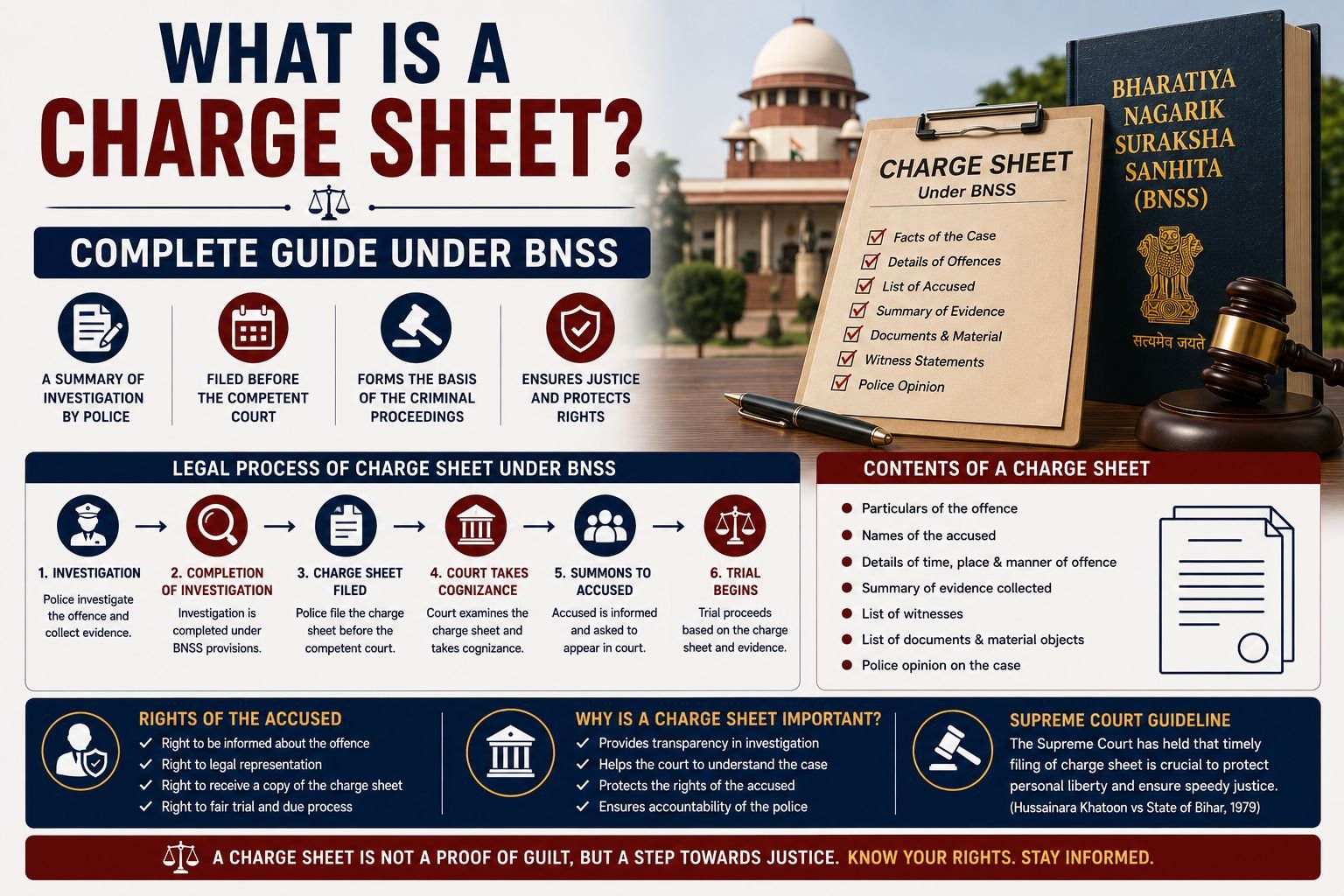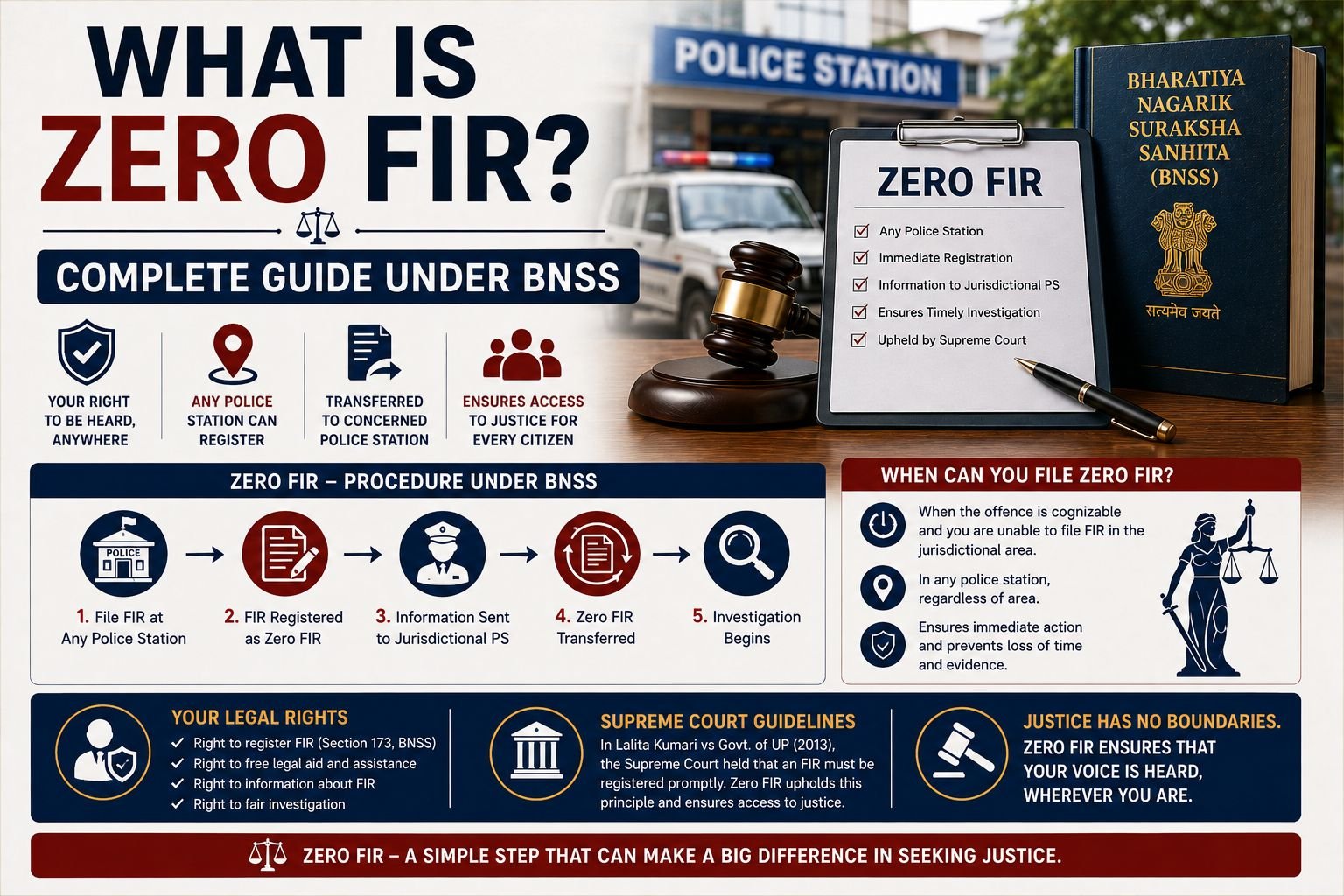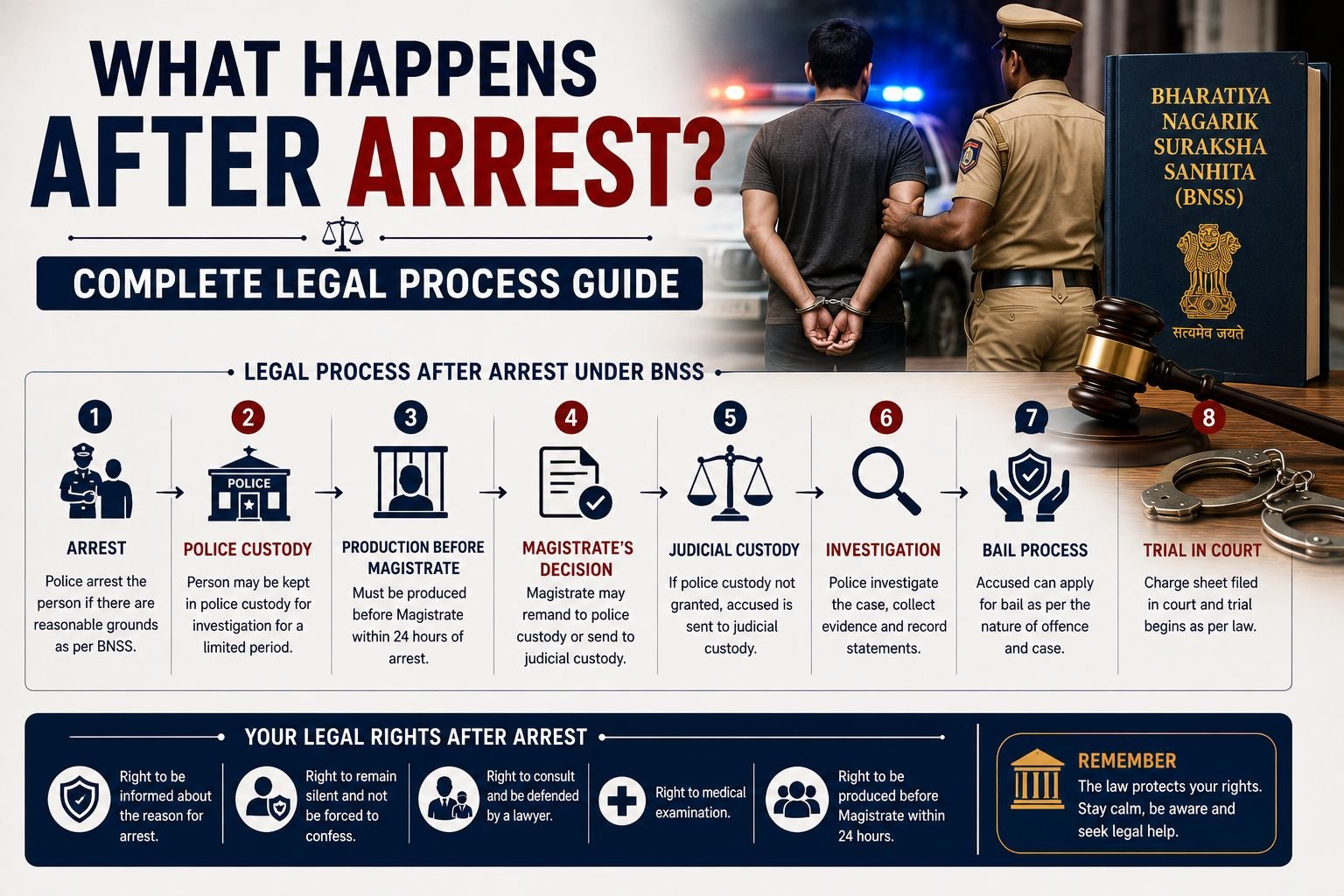
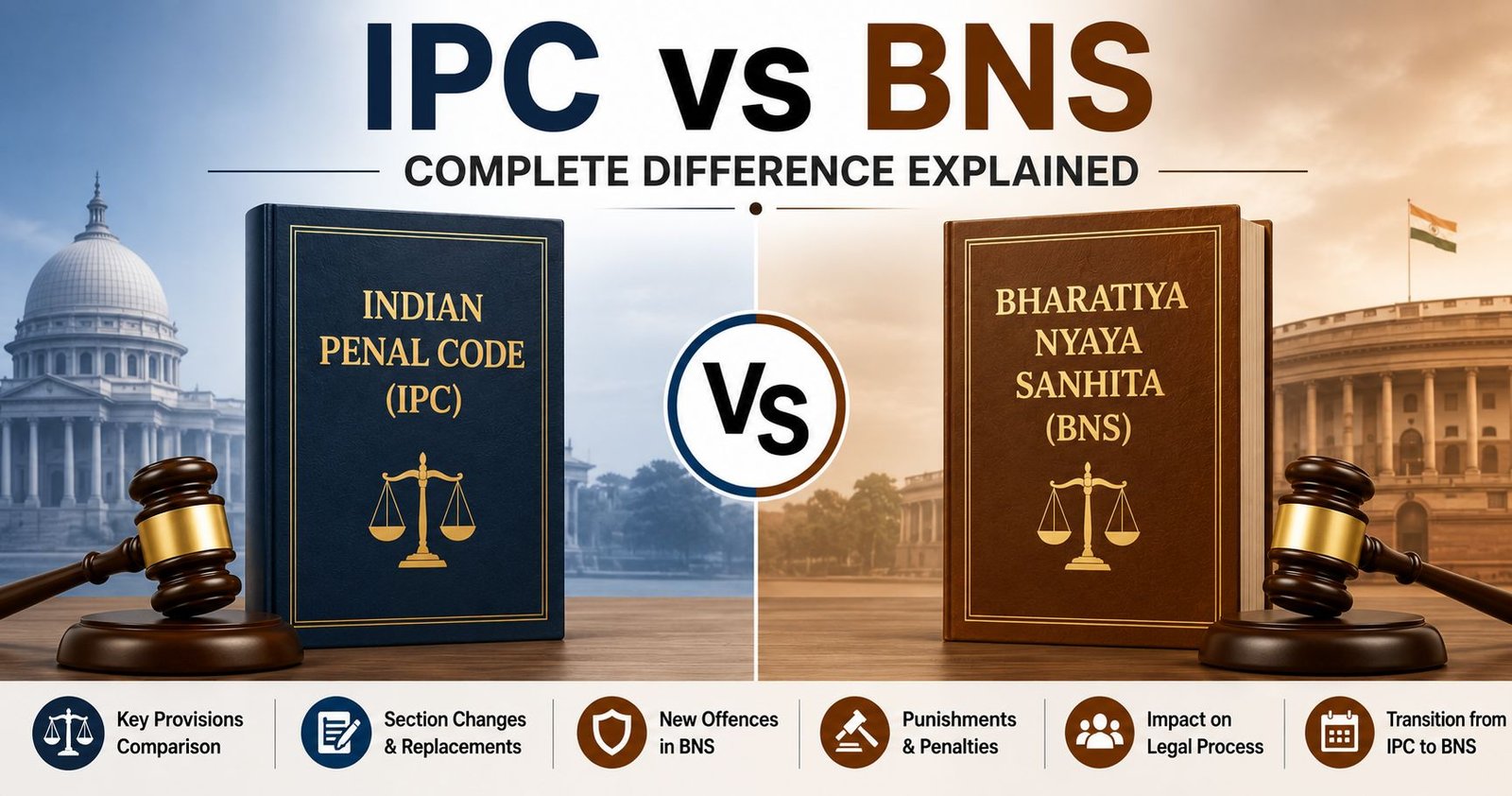
India’s criminal justice system underwent one of its biggest legal reforms when the Bharatiya Nyaya Sanhita, 2023 (BNS) replaced the Indian Penal Code, 1860 (IPC). After serving as the principal criminal law for more than 160 years, the IPC was repealed and replaced with a modern legal framework designed to address contemporary crimes, technological developments, organized criminal activities, and victim rights.
The transition from IPC to BNS is not merely a change in the name of the law. It introduces revised definitions, renumbered sections, new offences, updated punishments, and a stronger emphasis on speedy justice and public safety. While many offences remain substantially similar, several important provisions have been modified to reflect present-day realities.
Whether you are a law student, legal professional, police officer, judicial aspirant, researcher, or someone looking to understand India’s new criminal laws, this guide provides a comprehensive comparison between IPC and BNS. It explains why the change was made, highlights the major differences, compares important provisions, and examines how the new law affects criminal investigations, trials, and pending cases.
IPC vs BNS: Quick Comparison
| Feature | IPC | BNS |
|---|---|---|
| Full Name | Indian Penal Code | Bharatiya Nyaya Sanhita |
| Enacted | 1860 | 2023 |
| Effective From | 1860 | 1 July 2024 |
| Current Status | Repealed | In Force |
| Total Sections | 511 | 358 |
| Purpose | Criminal offences and punishments | Criminal offences and punishments with modern reforms |
| Focus | Colonial criminal law | Contemporary criminal justice system |
| Introduces Community Service | No | Yes (for specified offences) |
| Covers Organized Crime | Limited | Specifically recognized |
| Covers Terrorism | Through special laws | Includes provisions addressing terrorist acts |
Table of Contents
- What is the Indian Penal Code (IPC)?
- What is Bharatiya Nyaya Sanhita (BNS)?
- Why Was IPC Replaced?
- IPC vs BNS Comparison Table
- Major Differences Between IPC and BNS
- New Offences Introduced in BNS
- Important Section Changes
- Offences Removed or Modified
- Community Service Under BNS
- Effect on Pending Criminal Cases
- Practical Examples
- Frequently Asked Questions
What is the Indian Penal Code (IPC)?
The Indian Penal Code (IPC) was enacted in 1860 during British rule based on the recommendations of the First Law Commission chaired by Lord Macaulay. It came into force on 1 January 1862 and served as India’s principal criminal law for more than a century and a half.
The IPC defined various criminal offences, prescribed punishments, and established the legal framework for prosecuting crimes throughout India. It covered offences against the human body, property, public order, the State, marriage, religion, and reputation, among many others.
Over time, the IPC was amended several times to address changing social and legal needs. However, many of its provisions continued to reflect colonial-era drafting and terminology. As crime evolved with technological advancements, cybercrime, organized criminal networks, and financial frauds, the need for a more contemporary criminal code became increasingly evident.
Key Features of IPC
- Enacted in 1860 during British rule.
- Applied across India with certain historical exceptions.
- Contained 511 sections divided into multiple chapters.
- Defined criminal offences and corresponding punishments.
- Formed the foundation of criminal prosecutions for over 160 years.
What is Bharatiya Nyaya Sanhita (BNS)?
The Bharatiya Nyaya Sanhita, 2023 (BNS) is India’s new criminal code that replaced the Indian Penal Code with effect from 1 July 2024. It was enacted as part of a broader overhaul of the country’s criminal justice system alongside the Bharatiya Nagarik Suraksha Sanhita (BNSS) and the Bharatiya Sakshya Adhiniyam (BSA).
BNS seeks to modernize criminal law by incorporating provisions for crimes that have gained prominence in recent decades, such as organized crime, terrorist acts, and offences facilitated through technology. It also revises the structure of the law by reducing the total number of sections through consolidation while introducing new concepts such as community service for specified offences.
The objective of BNS is to provide a legal framework that aligns with present-day realities, improves efficiency in criminal justice, and strengthens protection for victims without changing the core principles of criminal liability.
Objectives of BNS
- Modernize India’s criminal law.
- Replace colonial terminology and outdated provisions.
- Address emerging forms of crime.
- Strengthen public safety.
- Improve victim protection.
- Encourage efficient administration of justice.
Why Was IPC Replaced by BNS?
Although the IPC remained a comprehensive criminal code for many decades, legal experts and policymakers identified several areas where reform was considered necessary. The Government introduced BNS with the objective of creating a criminal law better suited to present-day India.
1. Modern Criminal Landscape
Criminal activity has evolved significantly since the nineteenth century. Organized crime, cyber-enabled offences, financial frauds, and cross-border criminal networks require legal provisions that reflect contemporary realities.
2. Colonial Legacy
The IPC was drafted during British rule and contained terminology, structure, and concepts rooted in the colonial legal system. BNS seeks to replace many of these with language and provisions designed for India’s current legal framework.
3. Better Protection for Victims
The new law places greater emphasis on protecting victims through updated provisions and procedural reforms introduced alongside the new criminal law framework.
4. Recognition of New Forms of Crime
BNS introduces provisions relating to organized crime, terrorist acts, and certain offences that were either absent or dealt with through separate legislation.
5. Simplified Legal Structure
The number of sections has been reduced by consolidating related provisions, making the law more structured and easier to navigate.
IPC vs BNS: Detailed Comparison
| Basis | IPC | BNS |
|---|---|---|
| Year | 1860 | 2023 |
| Effective Law | Historical criminal code | Current criminal code |
| Number of Sections | 511 | 358 |
| Status | Repealed | In force |
| Language | Colonial drafting style | Modern legislative language |
| Community Service | Not provided | Introduced for certain offences |
| Organized Crime | No dedicated chapter | Specifically addressed |
| Terrorist Acts | Governed mainly through special laws | Included within the code |
| Digital Era Considerations | Limited | Updated to reflect modern realities |
| Focus | Punishment of offences | Justice, victim protection, and public safety |
Major Differences Between IPC and BNS
Modern Legislative Framework
BNS restructures criminal law by consolidating provisions and updating legislative drafting while retaining many well-established criminal principles.
Organized Crime
One of the significant additions in BNS is the explicit recognition of organized crime. The law provides specific provisions dealing with criminal syndicates and organized illegal activities.
Terrorist Acts
BNS contains provisions addressing terrorist acts within the criminal code, complementing the broader legal framework applicable to national security offences.
Community Service
Unlike IPC, BNS introduces community service as a form of punishment for certain offences. This reflects a reformative approach for less serious crimes while maintaining imprisonment and fines for more serious offences.
Renumbering of Sections
Nearly every provision has been renumbered. Legal practitioners must therefore refer to updated section mappings when citing the new law.
Updated Terminology
Several provisions use modern legal terminology to improve clarity and align the law with present-day legislative drafting standards.
Important IPC to BNS Section Mapping
| IPC Section | BNS Section | Subject |
|---|---|---|
| IPC 302 | BNS 103 | Murder |
| IPC 304A | BNS 106 | Causing death by negligence |
| IPC 307 | BNS 109 | Attempt to murder |
| IPC 323 | BNS 115 | Voluntarily causing hurt |
| IPC 354 | BNS 74 | Assault or criminal force on woman (refer to updated BNS provision) |
| IPC 375 | BNS 63 | Rape |
| IPC 376 | Corresponding BNS provisions | Punishment for rape |
| IPC 378 | BNS 303 | Theft |
| IPC 406 | BNS 316 | Criminal breach of trust |
| IPC 420 | BNS 318 | Cheating |
| IPC 499 | Corresponding BNS provision | Defamation |
New Features Introduced in BNS
Some notable additions and reforms include:
- Recognition of organized crime.
- Provisions relating to terrorist acts.
- Community service for specified offences.
- Consolidation of similar offences.
- Updated legal terminology.
- Streamlined chapter structure.
- Enhanced focus on public order and victim protection.
Offences Removed or Modified
Several provisions have been revised, reorganized, or replaced in BNS. In some cases, the offence continues with modified wording or a different section number, while in others, the legal approach has changed.
Users should compare individual sections carefully because changes may relate to definitions, punishment, scope, or terminology.
Community Service Under BNS
A notable reform introduced by BNS is the use of community service as a punishment for certain minor offences. This reflects a shift toward reformative justice by allowing offenders, where legally applicable, to perform socially beneficial work instead of facing only traditional punishments.
The availability and conditions for community service depend on the specific offence and the provisions of the law.
Effect on Pending Criminal Cases
The introduction of BNS does not automatically invalidate pending criminal proceedings. Transitional provisions determine whether a case continues under the IPC or is governed by the new law, depending on factors such as the date of the offence, the applicable legal provisions, and judicial interpretation.
Courts, investigating agencies, and legal practitioners must apply the relevant transitional rules while dealing with pending matters.
Practical Examples
Example 1: Murder
Under IPC, murder was prosecuted under Section 302. Under BNS, the corresponding offence is found in Section 103.
Example 2: Theft
Theft continues to remain a criminal offence under BNS, although the section numbering has changed.
Example 3: Cheating
The offence of cheating continues under BNS with updated section numbering and legislative language.
Advantages of Bharatiya Nyaya Sanhita (BNS)
The Bharatiya Nyaya Sanhita (BNS), 2023 aims to modernize India’s criminal justice system by replacing the colonial-era Indian Penal Code (IPC). While many foundational principles remain unchanged, BNS introduces several reforms intended to make criminal law more relevant to present-day challenges. Below are some of the key advantages of the new legislation.
1. Modern Criminal Law Framework
BNS replaces a law that had been in force for over 160 years. It updates terminology, reorganizes provisions, and introduces a structure intended to improve readability and consistency.
2. Recognition of Organized Crime
Unlike the IPC, BNS specifically addresses organized crime through dedicated provisions. This enables law enforcement agencies to deal more effectively with criminal syndicates and coordinated illegal activities.
3. Inclusion of Terrorist Acts
BNS incorporates provisions relating to terrorist acts within the criminal code, providing a broader statutory framework alongside other applicable national security laws.
4. Community Service as a Punishment
One of the notable reforms is the introduction of community service for certain offences. This reflects a reformative approach by allowing courts to impose socially beneficial penalties where appropriate.
5. Simplified Legal Structure
The number of sections has been reduced from 511 under IPC to 358 under BNS by consolidating related provisions. This restructuring aims to make the law easier to navigate without necessarily reducing its scope.
6. Updated Legal Language
Many colonial-era expressions have been replaced with clearer and more contemporary legal terminology, making the legislation more accessible to legal practitioners and citizens.
7. Better Alignment with Modern Crimes
BNS includes provisions that address criminal activities more relevant to today’s society, including organized criminal networks and offences involving modern methods and technologies.
8. Improved Victim-Centric Approach
The new criminal law framework emphasizes protecting victims’ rights and seeks to promote a more balanced justice system while maintaining due process.
9. Streamlined Criminal Justice System
BNS was introduced alongside the Bharatiya Nagarik Suraksha Sanhita (BNSS) and Bharatiya Sakshya Adhiniyam (BSA), creating a coordinated framework for substantive criminal law, criminal procedure, and evidence law.
10. Focus on Contemporary India
The legislation reflects India’s current legal and social context rather than relying solely on a framework drafted during the colonial period.
Criticism of Bharatiya Nyaya Sanhita (BNS)
Although BNS introduces significant reforms, it has also generated discussion among legal experts, academics, practitioners, and civil society. Some commonly raised concerns include the following.
1. Transition Challenges
Lawyers, judges, police officers, and students must adapt to new section numbers, revised terminology, and reorganized provisions, which may initially create practical difficulties.
2. Renumbering of Sections
Many well-known IPC sections have been assigned different numbers in BNS. This requires legal professionals to update references, legal documents, educational materials, and case law citations.
3. Need for Judicial Interpretation
As a relatively new statute, many provisions of BNS will require interpretation by High Courts and the Supreme Court. Judicial precedents are expected to develop over time.
4. Training Requirements
Successful implementation depends on extensive training of police personnel, prosecutors, judicial officers, and legal practitioners to ensure consistent application of the new law.
5. Administrative Transition
Government departments, legal databases, educational institutions, and law enforcement agencies must update manuals, software systems, and documentation to reflect the new legal framework.
6. Debate on Certain Provisions
Some provisions have been the subject of legal and academic debate regarding their scope, drafting, and interpretation. These discussions are likely to continue as courts apply the legislation.
7. Initial Public Confusion
Citizens familiar with IPC section numbers may find it difficult to identify corresponding BNS provisions until awareness increases and updated legal resources become widely available.
8. Need for Updated Educational Resources
Law schools, coaching institutes, legal publishers, and online platforms have had to revise textbooks, commentaries, and study materials to reflect the new criminal laws.
9. Ongoing Implementation
Since BNS came into force on 1 July 2024, its long-term effectiveness will depend on practical implementation, judicial interpretation, and future legislative amendments where necessary.
10. Continuous Legal Evolution
Like any major legal reform, BNS is expected to evolve through amendments and court decisions as new legal issues emerge.
Frequently Asked Questions (FAQs)
1. What is the difference between IPC and BNS?
IPC (Indian Penal Code) was India’s previous criminal law enacted in 1860, while BNS (Bharatiya Nyaya Sanhita) is the new criminal code that came into effect on 1 July 2024. BNS replaces IPC with updated provisions, revised section numbers, and new offences.
2. Has the IPC been completely replaced?
Yes. The Indian Penal Code has been repealed and replaced by the Bharatiya Nyaya Sanhita for offences committed after its commencement, subject to applicable transitional provisions.
3. When did BNS come into force?
BNS came into force on 1 July 2024.
4. Why was IPC replaced?
IPC was replaced to modernize India’s criminal laws, address contemporary forms of crime, update legal terminology, and replace the colonial-era criminal code.
5. What does BNS stand for?
BNS stands for Bharatiya Nyaya Sanhita, 2023.
6. How many sections are there in IPC and BNS?
IPC contains 511 sections, while BNS contains 358 sections after reorganizing and consolidating various provisions.
7. Is BNS applicable throughout India?
Yes, BNS is the principal criminal law applicable across India, subject to constitutional and statutory provisions.
8. Does BNS introduce new offences?
Yes. BNS includes provisions dealing with matters such as organized crime and terrorist acts, along with other reforms.
9. Are all IPC offences removed?
No. Most offences continue under BNS, although many have been renumbered, revised, or reorganized.
10. Are IPC section numbers the same in BNS?
No. Many offences have new section numbers in BNS, making section mapping important for legal reference.
11. What replaced IPC Section 302?
The offence of murder is now covered under Section 103 of BNS.
12. What replaced IPC Section 420?
The offence of cheating is covered under Section 318 of BNS.
13. Does BNS include community service?
Yes. BNS introduces community service as a punishment for certain specified offences.
14. Is the punishment for murder different under BNS?
The offence continues to attract severe punishment, although the applicable section number has changed. Readers should refer to the official provision for the exact wording.
15. Are pending IPC cases affected?
Pending cases are governed by applicable transitional provisions and judicial principles. The law applicable to a case depends on factors such as the date of the offence and relevant legal provisions.
16. Does BNS replace CrPC?
No. The Code of Criminal Procedure has been replaced by the Bharatiya Nagarik Suraksha Sanhita (BNSS), not BNS.
17. Does BNS replace the Indian Evidence Act?
No. The Indian Evidence Act has been replaced by the Bharatiya Sakshya Adhiniyam (BSA).
18. Is cybercrime covered under BNS?
Certain technology-related offences are addressed under BNS, while other cyber offences continue to be governed by the Information Technology Act and related laws where applicable.
19. Is BNS easier to understand than IPC?
BNS uses updated legislative language and a reorganized structure intended to improve clarity and accessibility.
20. Why are BNS section numbers different?
The law consolidates and reorganizes numerous provisions, resulting in a new numbering system.
21. Can lawyers still cite IPC sections?
IPC sections remain relevant for historical judgments and cases governed by the previous law. New cases should refer to the applicable BNS provisions where required.
22. Where can I find the official BNS text?
The official text is available through the India Code portal and the Gazette of India.
23. Is BNS beneficial for law students?
Yes. Law students should become familiar with BNS because it is now India’s primary criminal code and forms part of legal education and competitive examinations.
24. How can I compare IPC and BNS sections?
You can use official section mapping tables, legal commentaries, or dedicated IPC vs BNS comparison resources that list corresponding provisions.
25. Which is currently in force—IPC or BNS?
The Bharatiya Nyaya Sanhita (BNS) is the criminal law currently in force, having replaced the Indian Penal Code from 1 July 2024.
26. Does BNS change every criminal offence?
No. Many offences remain substantially similar, but several provisions have been renumbered, revised, or updated.
27. Why is the IPC vs BNS comparison important?
Understanding the comparison helps legal professionals, students, and citizens identify changes in section numbers, definitions, punishments, and the overall structure of India’s criminal law.
28. Is BNS applicable to old criminal offences?
The applicability of IPC or BNS depends on the relevant transitional provisions and the date on which the offence was committed.
29. What are the other new criminal laws introduced with BNS?
BNS was introduced along with the Bharatiya Nagarik Suraksha Sanhita (BNSS) and the Bharatiya Sakshya Adhiniyam (BSA).
30. Where can I compare every IPC section with BNS?
You can refer to section-wise IPC vs BNS comparison guides that map each IPC section to its corresponding provision in the Bharatiya Nyaya Sanhita, along with explanations of any substantive changes.
Conclusion
The transition from the Indian Penal Code (IPC) to the Bharatiya Nyaya Sanhita (BNS) represents one of the most significant reforms in India’s criminal justice system. While many core criminal offences remain substantially similar, BNS introduces a modern legislative structure, reorganizes provisions, updates terminology, and addresses several contemporary issues that were not comprehensively covered under the IPC.
Understanding the differences between IPC and BNS is essential for lawyers, judges, law enforcement agencies, students, and citizens. Since section numbers have changed and several provisions have been revised, referring to an accurate IPC-to-BNS comparison is increasingly important when studying or applying criminal law.
As Indian courts continue interpreting the new legislation, BNS will shape the future of criminal justice through evolving judicial decisions and legal practice. For detailed analysis, readers should also explore section-wise comparisons between corresponding IPC and BNS provisions to understand the exact changes introduced by the new code.