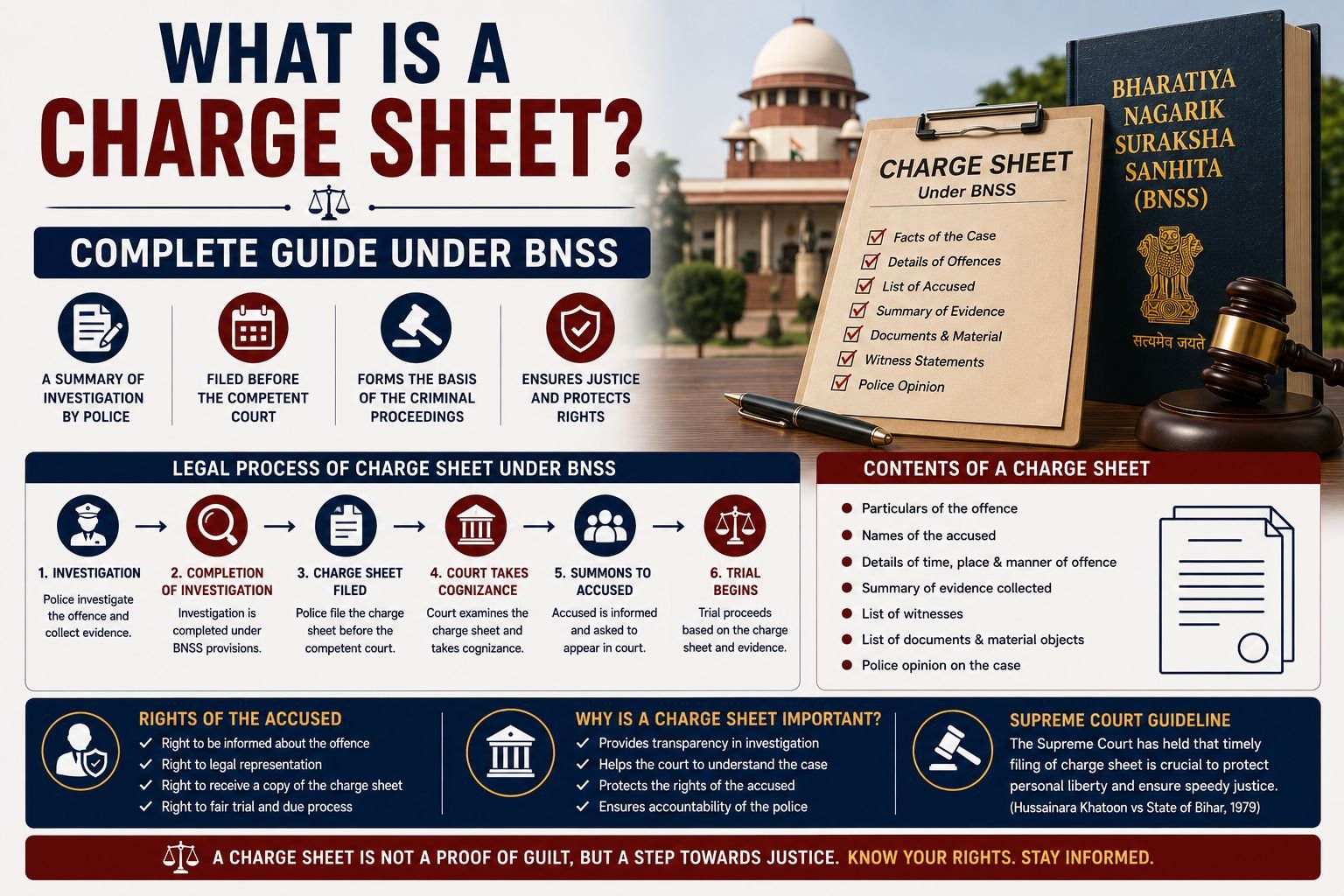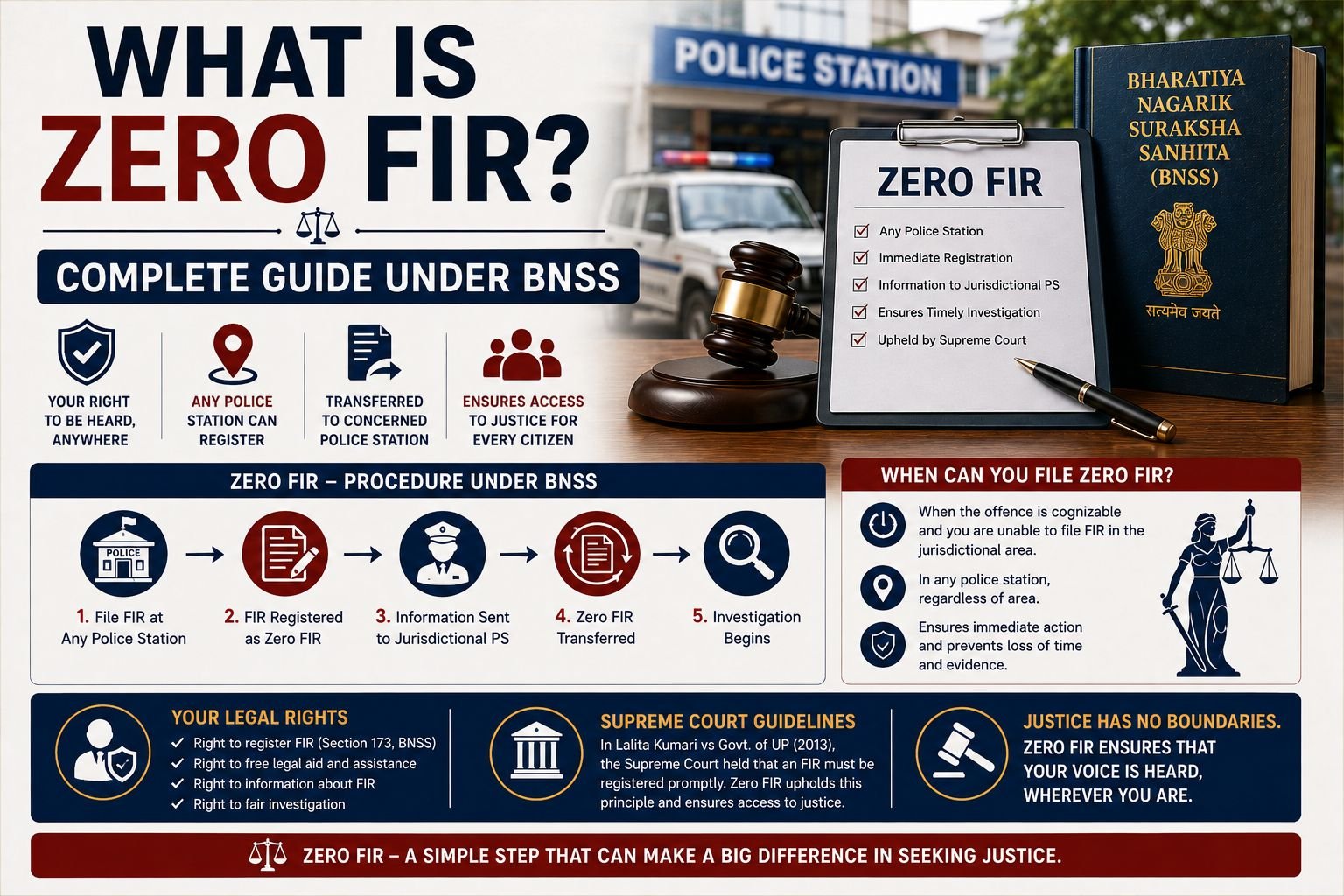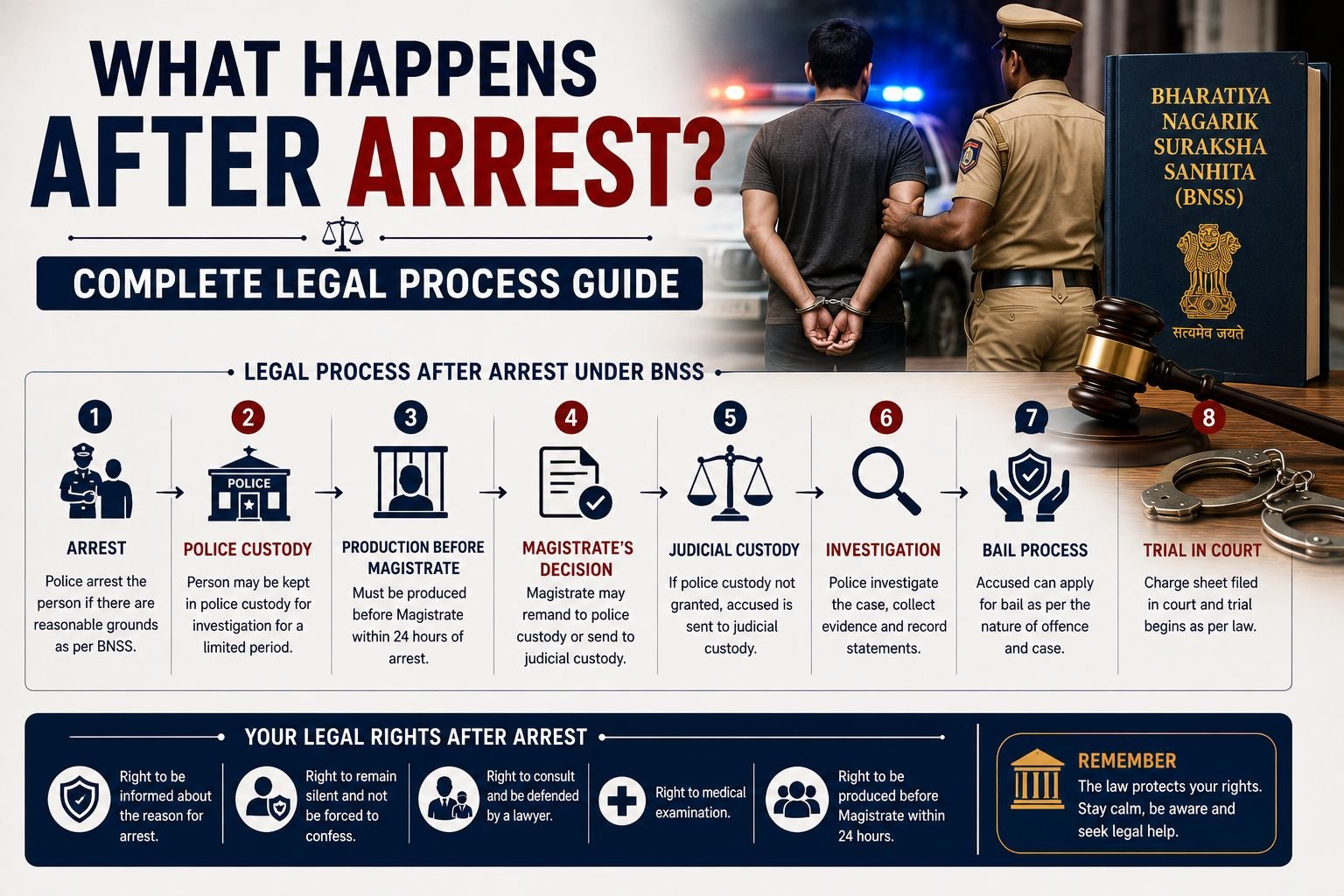
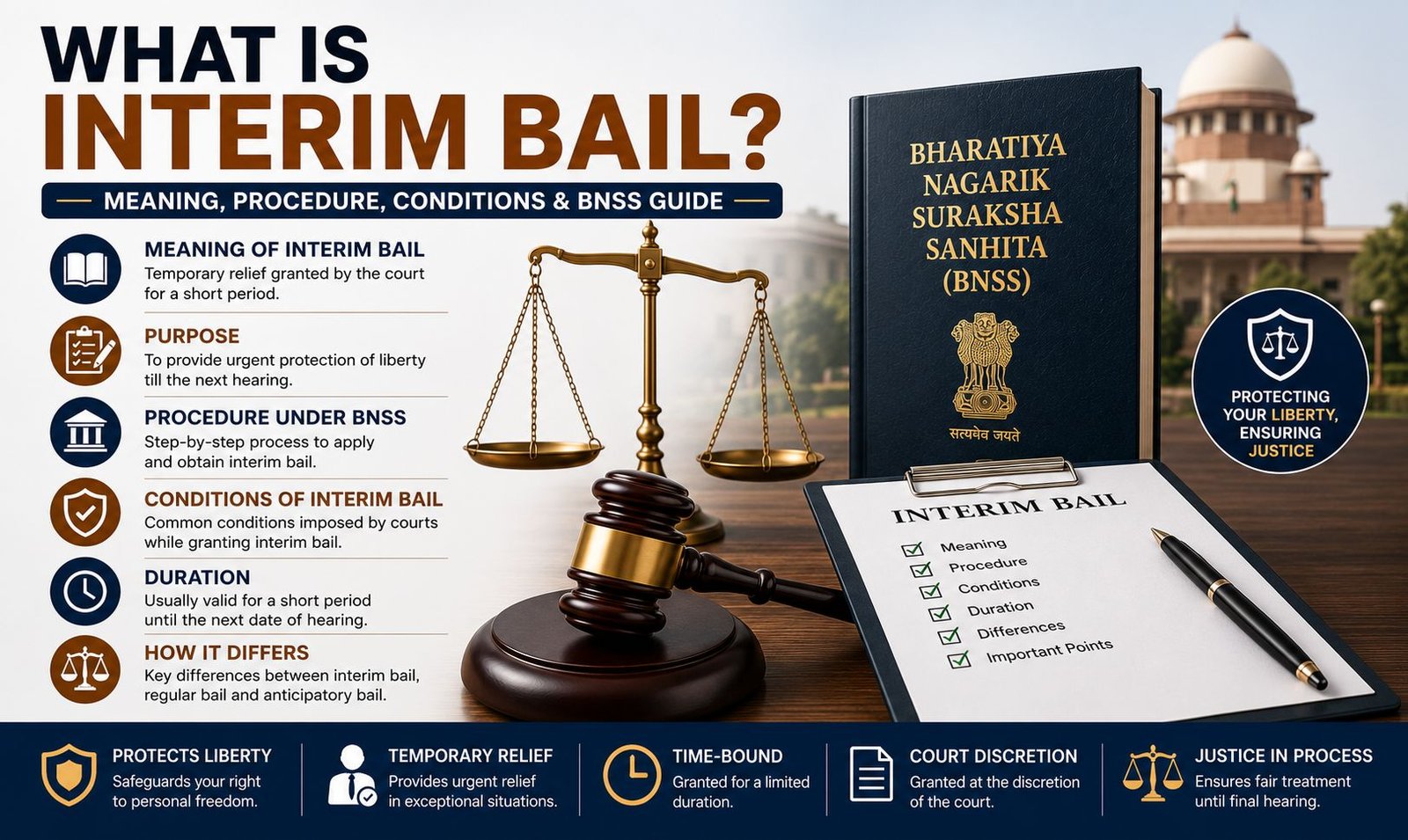
What is Interim Bail? Meaning, Procedure, Conditions & Legal Guide Under BNSS
Bail is an essential part of the criminal justice system as it protects the fundamental right to personal liberty while ensuring that an accused person remains available for investigation and trial. Depending on the circumstances of a case, courts may grant different types of bail, including regular bail, anticipatory bail, default bail, and interim bail.
Among these, interim bail is a temporary form of relief granted by a court for a limited period. It is commonly granted while a regular bail or anticipatory bail application is pending, or in exceptional situations such as medical emergencies, family emergencies, or other humanitarian grounds.
Unlike regular bail, interim bail does not permanently decide the bail application. It only provides temporary protection until the court hears and decides the main bail application or until the expiry of the period specified in the bail order.
Understanding interim bail is important for accused persons, family members, lawyers, and law students because it serves as an important mechanism for balancing the rights of the accused with the interests of justice.
In this comprehensive guide, we will discuss:
- What interim bail means.
- Legal position under the BNSS.
- Circumstances in which interim bail may be granted.
- Eligibility criteria.
- Procedure for applying.
- Duration and conditions of interim bail.
- Important Supreme Court judgments.
- Differences between interim bail, regular bail, anticipatory bail, and default bail.
- Frequently asked questions.
What is Interim Bail?
Interim bail is a temporary order of release granted by a court to an accused person for a specified period or until the disposal of the main bail application.
It is generally granted to provide immediate relief where the court considers that temporary protection is appropriate pending the final decision on the bail application.
Interim bail does not determine the merits of the criminal case or the final bail application. It merely provides temporary liberty subject to the conditions imposed by the court.
Once the specified period expires or the court decides the main bail application, the interim bail order ordinarily comes to an end unless extended by the court.
Meaning of Interim Bail
The word “interim” means temporary or provisional.
Accordingly, interim bail refers to a temporary grant of bail that remains effective only for the period mentioned in the court’s order.
It is usually granted:
- Until the next hearing.
- Until the disposal of the regular bail application.
- Until the disposal of the anticipatory bail application.
- For a specified number of days.
- During exceptional personal circumstances requiring temporary release.
Unlike regular bail, interim bail is not intended to provide long-term release from custody.
Why is Interim Bail Granted?
Courts grant interim bail to ensure that an accused person does not suffer unnecessary hardship while the final bail application is awaiting consideration.
Some common reasons include:
1. Pending Bail Hearing
Where the court requires additional time to hear arguments or obtain records before deciding the regular or anticipatory bail application.
2. Medical Emergencies
Where the accused requires urgent medical treatment that cannot adequately be provided in custody.
3. Family Emergencies
Courts may consider temporary release in situations such as:
- Death of a close family member.
- Serious illness of a family member.
- Marriage of a son, daughter, or sibling.
- Childcare responsibilities in exceptional cases.
Each request is examined on its own facts.
4. Humanitarian Grounds
In appropriate cases, courts may grant interim bail on humanitarian considerations, subject to legal requirements.
Examples may include:
- Advanced age.
- Serious disability.
- Pregnancy.
- Exceptional personal hardship.
5. Protection of Personal Liberty
Interim bail reflects the principle that temporary deprivation of liberty should not extend beyond what is necessary while judicial consideration of the bail application is pending.
Constitutional Basis of Interim Bail
Although interim bail is governed by criminal procedure and judicial principles, its foundation lies in the constitutional protection of personal liberty.
Article 21 of the Constitution
Article 21 guarantees that no person shall be deprived of life or personal liberty except according to the procedure established by law.
Courts have consistently recognised that liberty should not be restricted unnecessarily and that temporary protection may be appropriate in deserving cases while bail applications are under consideration.
Legal Position of Interim Bail Under BNSS
The Bharatiya Nagarik Suraksha Sanhita, 2023 (BNSS) governs criminal procedure in India.
While the BNSS provides the framework for bail, the grant of interim bail has largely developed through judicial practice and court decisions. Courts exercise their jurisdiction in accordance with the applicable statutory provisions and established legal principles while considering requests for interim protection.
Each application is decided on its own facts and circumstances.
Interim Bail vs Regular Bail
Although both result in temporary release from custody, they differ significantly.
| Basis | Interim Bail | Regular Bail |
|---|---|---|
| Nature | Temporary relief | Final order on bail application |
| Duration | Limited period | Continues unless cancelled or modified |
| Purpose | Temporary protection | Release during investigation or trial |
| Stage | Pending disposal of bail application or exceptional circumstances | After consideration of the bail application |
| Court Order | Temporary | Final regarding that bail application |
Interim Bail vs Anticipatory Bail
These two forms of bail operate differently.
| Basis | Interim Bail | Anticipatory Bail |
|---|---|---|
| Stage | Usually after arrest or while a bail application is pending | Before arrest |
| Purpose | Temporary release | Protection against arrest |
| Duration | Limited period | As directed by the court |
| Nature | Interim relief | Pre-arrest protection |
Interim Bail vs Default Bail
Interim bail and default bail are entirely different legal concepts.
| Basis | Interim Bail | Default Bail |
|---|---|---|
| Reason | Temporary judicial protection | Delay in filing the charge sheet within the statutory period |
| Duration | Temporary | Continues subject to bail conditions |
| Basis of Grant | Judicial discretion based on circumstances | Statutory right subject to legal requirements |
| Purpose | Temporary relief | Protection against prolonged investigative detention |
Key Features of Interim Bail
Some important characteristics of interim bail include:
- It is temporary in nature.
- It is granted for a specified period.
- It does not decide the merits of the criminal case.
- It is commonly granted while a regular or anticipatory bail application is pending.
- It may be granted on medical, humanitarian, or family grounds.
- The accused must comply with all conditions imposed by the court.
- The court may extend, modify, or revoke interim bail where appropriate.
- Interim bail does not amount to an acquittal.
Common Misconceptions About Interim Bail
Many people misunderstand the scope of interim bail.
Myth 1: Interim bail permanently releases the accused.
Reality: Interim bail is temporary and remains effective only for the period specified by the court.
Myth 2: Interim bail automatically becomes regular bail.
Reality: No. The court separately decides the regular bail application after considering the relevant facts and legal submissions.
Myth 3: Every accused person is entitled to interim bail.
Reality: Interim bail is discretionary and depends on the facts of the case, the applicable law, and the court’s assessment.
Myth 4: Interim bail ends the criminal proceedings.
Reality: Interim bail only provides temporary release. The investigation, trial, or other legal proceedings continue.
Why Understanding Interim Bail is Important
Knowledge of interim bail helps accused persons and their families understand:
- When temporary protection may be available.
- The distinction between different types of bail.
- Their legal rights during criminal proceedings.
- The importance of complying with court-imposed conditions.
- The need to seek timely legal advice where appropriate.
Understanding these principles can assist individuals in navigating the criminal justice process more effectively.
When Can Interim Bail Be Granted?
Interim bail is granted to provide temporary relief to an accused person until the court decides the main bail application or until the expiry of the period specified in the bail order.
Unlike regular bail, interim bail is not granted as a matter of right. The court exercises its judicial discretion after considering the facts and circumstances of each case.
Interim bail may be considered where:
- A regular bail application is pending.
- An anticipatory bail application is pending.
- The accused faces exceptional hardship.
- Temporary release is necessary on humanitarian grounds.
- The court considers that immediate protection is justified.
Each application is decided on its own merits.
Eligibility Criteria for Interim Bail
Although there is no fixed checklist applicable to every case, courts generally consider the following factors before granting interim bail.
1. Pending Bail Application
Interim bail is commonly sought when a regular or anticipatory bail application is awaiting final hearing.
2. Genuine Urgency
The applicant should demonstrate a genuine and immediate reason requiring temporary release.
3. No Risk of Absconding
The court considers whether the accused is likely to appear before the court after the expiry of interim bail.
Factors include:
- Permanent residence.
- Family ties.
- Employment.
- Previous conduct.
- Criminal history.
4. Cooperation with Investigation
The court may consider whether the accused has cooperated with the investigating agency and complied with previous legal directions.
5. Nature of the Offence
The seriousness of the alleged offence is an important factor.
Courts generally examine:
- Nature of allegations.
- Maximum punishment prescribed.
- Stage of investigation.
- Public interest.
Grounds for Grant of Interim Bail
Courts may consider interim bail on various grounds depending on the circumstances of the case.
1. Medical Grounds
Medical emergencies are among the most common reasons for seeking interim bail.
Examples include:
- Serious illness.
- Major surgery.
- Cancer treatment.
- Cardiac conditions.
- Kidney disease.
- Severe injuries.
- Pregnancy-related medical needs.
- Mental health treatment where appropriate.
The applicant should ordinarily produce relevant medical records or certificates in support of the request.
2. Family Emergencies
Courts may consider temporary release in genuine family emergencies.
Examples include:
- Death of a close relative.
- Last rites or funeral ceremonies.
- Serious illness of a spouse, parent, or child.
- Marriage of a son or daughter.
- Childcare responsibilities in exceptional circumstances.
The court assesses the urgency and supporting evidence before granting relief.
3. Humanitarian Grounds
In suitable cases, interim bail may be granted on humanitarian considerations.
Examples include:
- Advanced age.
- Serious physical disability.
- Pregnancy.
- Care of an infant.
- Exceptional personal hardship.
Humanitarian considerations are evaluated together with other relevant legal factors.
4. Temporary Protection During Bail Hearing
Sometimes the court requires additional time to hear detailed arguments or obtain the case records.
To avoid unnecessary hardship, the court may grant interim bail until the next hearing or until the final disposal of the bail application.
This ensures that the accused receives temporary protection while the court completes its consideration.
5. Educational or Examination Grounds
In exceptional circumstances, an accused may request interim bail to:
- Appear in public examinations.
- Attend university examinations.
- Complete important educational requirements.
Courts examine such requests carefully and may impose strict conditions.
6. Employment or Professional Reasons
Occasionally, interim bail may be sought to enable the accused to:
- Attend important employment obligations.
- Participate in essential professional commitments.
- Complete unavoidable official responsibilities.
Such requests are assessed cautiously and only where justified by the facts.
Situations Where Interim Bail May Be Refused
Interim bail is not granted in every case.
A court may refuse interim bail where:
- The grounds are not genuine.
- Supporting documents are inadequate.
- The accused is likely to abscond.
- There is a possibility of influencing witnesses.
- There is a risk of tampering with evidence.
- The accused has previously violated bail conditions.
- The allegations disclose a serious threat to public safety.
- The court considers that temporary release is not justified in the circumstances.
Each decision depends on the facts of the individual case.
Factors Considered by Courts While Granting Interim Bail
Before granting interim bail, courts generally evaluate several relevant factors.
Nature and Gravity of the Offence
The seriousness of the alleged offence remains an important consideration.
More serious allegations may require closer judicial scrutiny.
Stage of Investigation
The court considers whether:
- The investigation is at an early stage.
- Evidence has already been collected.
- Custodial interrogation is still necessary.
Criminal Antecedents
The court may examine:
- Previous criminal cases.
- Past convictions, if any.
- Earlier compliance with bail conditions.
- Overall conduct of the accused.
Risk of Absconding
The court considers whether the accused is likely to evade the legal process if temporarily released.
Possibility of Witness Intimidation
Protection of witnesses is an important consideration.
If there is a reasonable apprehension that the accused may influence or threaten witnesses, interim bail may be declined.
Possibility of Evidence Tampering
The court assesses whether temporary release could adversely affect the investigation by enabling the accused to tamper with evidence.
Public Interest
Courts balance individual liberty with the larger interests of society and the proper administration of justice.
Is Interim Bail Automatic?
No.
Interim bail is not a statutory right like default bail.
It is granted at the discretion of the court after considering:
- The facts of the case.
- The urgency of the request.
- The conduct of the accused.
- The applicable legal principles.
The burden lies on the applicant to demonstrate why temporary protection is justified.
Can the Prosecution Oppose Interim Bail?
Yes.
The prosecution has the right to oppose an interim bail application by presenting legal or factual objections.
Common objections may include:
- Seriousness of the offence.
- Ongoing investigation.
- Need for custodial interrogation.
- Risk of absconding.
- Possibility of influencing witnesses.
- Likelihood of evidence tampering.
The court hears both sides before passing an appropriate order.
Practical Examples
Example 1 – Medical Emergency
An accused undergoing treatment for a serious heart condition seeks interim bail to undergo surgery at a specialised hospital.
The court may consider medical records, the urgency of treatment, and the prosecution’s response before deciding the application.
Example 2 – Family Emergency
An accused applies for interim bail to attend the funeral of a parent.
The court may grant temporary bail for a limited period subject to appropriate conditions, such as surrendering before a specified date.
Example 3 – Pending Regular Bail Application
A regular bail application is listed for hearing after two weeks.
The accused requests interim bail to avoid continued custody until the hearing.
The court may consider granting temporary protection if it finds the request justified.
Common Reasons Why Interim Bail Applications Fail
Applicants should avoid the following mistakes:
- Submitting false or exaggerated claims.
- Failing to produce supporting documents.
- Filing incomplete applications.
- Concealing material facts.
- Violating previous court orders.
- Ignoring hearing dates.
- Seeking interim bail for non-genuine reasons.
Honesty and complete disclosure are essential when seeking discretionary relief.
Tips Before Applying for Interim Bail
- Consult an experienced criminal lawyer.
- Gather all supporting documents.
- Obtain medical certificates where applicable.
- Prepare evidence supporting humanitarian or family grounds.
- Ensure all dates and facts are accurate.
- Be prepared to comply with court conditions.
- Attend every hearing as directed by the court.
Step-by-Step Procedure to Apply for Interim Bail
A person seeking interim bail should follow the appropriate legal procedure before the competent court. Since interim bail is discretionary, the application should clearly explain why temporary protection is necessary.
The general procedure is outlined below.
Step 1: Consult a Criminal Lawyer
Although legal aid may also be available, consulting an experienced criminal lawyer helps ensure that the application is properly prepared.
A lawyer can:
- Examine the facts of the case.
- Identify the appropriate legal grounds.
- Draft the interim bail application.
- Prepare supporting documents.
- Represent the accused before the court.
- Respond to objections raised by the prosecution.
Step 2: Determine the Appropriate Ground
The application should clearly mention the reason for seeking interim bail.
Common grounds include:
- Medical treatment.
- Serious illness.
- Family emergency.
- Funeral of a close relative.
- Marriage in the family.
- Pending hearing of the regular bail application.
- Humanitarian considerations.
- Educational examinations in exceptional cases.
The court expects genuine and well-supported reasons.
Step 3: Collect Supporting Documents
The applicant should gather documents supporting the request.
Depending on the facts, these may include:
- Medical records.
- Hospital admission documents.
- Medical certificates.
- Death certificate of a family member.
- Marriage invitation or supporting documents.
- Examination admit card.
- Employment-related documents (where relevant).
- Identity proof.
- Address proof.
- Previous court orders.
Authentic documentary evidence significantly strengthens the application.
Step 4: Draft the Interim Bail Application
The application should be clear, concise, and supported by relevant facts.
It generally contains:
- Name of the court.
- Case number.
- FIR number.
- Police station.
- Details of the accused.
- Relevant offences.
- Grounds for seeking interim bail.
- Supporting facts.
- List of annexures.
- Prayer requesting temporary release.
The application should avoid unnecessary allegations or irrelevant information.
Step 5: File the Application Before the Competent Court
The application should be filed before the court having jurisdiction over the criminal proceedings.
After filing:
- The court registers the application.
- A hearing date is fixed.
- Notice may be issued where required.
- The prosecution is given an opportunity to respond.
- The court hears both parties.
Which Court Can Grant Interim Bail?
The competent court depends on the stage of the proceedings and the nature of the case.
Interim bail applications may be considered by:
- Judicial Magistrate.
- Chief Judicial Magistrate.
- Sessions Court.
- High Court.
- Supreme Court, where legally permissible.
Jurisdiction depends upon the applicable provisions of the BNSS and the facts of the case.
Documents Required for Interim Bail
The exact documents vary depending on the circumstances.
Commonly required documents include:
Basic Documents
- Interim bail application.
- Copy of the FIR.
- Arrest memo.
- Remand order.
- Identity proof.
- Address proof.
- Vakalatnama (where applicable).
Medical Documents
Where interim bail is sought on medical grounds:
- Medical reports.
- Diagnostic reports.
- Hospital admission papers.
- Doctor’s certificate.
- Prescription.
- Treatment records.
Family Emergency Documents
If the request is based on a family emergency:
- Death certificate.
- Medical records of the family member.
- Marriage invitation.
- Proof of relationship.
- Other supporting documents.
Additional Documents
Depending on the case:
- Previous bail orders.
- Affidavit.
- Character certificates (where appropriate).
- Educational documents.
- Employment records.
Drafting an Interim Bail Application
A properly drafted application improves the chances of effective judicial consideration.
The application generally includes the following components.
Court Details
Mention:
- Name of the court.
- Case number.
- FIR number.
- Police station.
Applicant’s Particulars
Include:
- Name.
- Residential address.
- Age.
- Occupation.
Facts of the Case
Provide a brief summary including:
- Date of arrest.
- Present stage of the case.
- Status of investigation.
- Existing custody.
Grounds for Interim Bail
Clearly explain the temporary circumstances justifying release.
For example:
- Medical treatment.
- Family emergency.
- Humanitarian grounds.
- Pending regular bail hearing.
Prayer
Request the court to grant interim bail for an appropriate period subject to such conditions as it considers fit.
Court Hearing Process
During the hearing, both parties are given an opportunity to present their submissions.
The court generally considers:
- Nature of allegations.
- Stage of investigation.
- Grounds mentioned in the application.
- Supporting documents.
- Response of the prosecution.
- Possibility of misuse of liberty.
After hearing both sides, the court passes an appropriate order.
Duration of Interim Bail
Interim bail is always granted for a limited period.
The duration depends upon:
- The reason for granting bail.
- The facts of the case.
- Directions issued by the court.
Examples include:
- A few days.
- One week.
- Two weeks.
- One month.
- Until the next hearing.
- Until disposal of the main bail application.
The court specifies the duration in its order.
Conditions Commonly Imposed by Courts
While granting interim bail, courts frequently impose conditions to ensure the accused remains available for legal proceedings.
Common conditions include:
- Furnishing a personal bond.
- Providing sureties, where required.
- Appearing before the court on scheduled dates.
- Cooperating with the investigation.
- Not leaving the jurisdiction without permission, if directed.
- Not tampering with evidence.
- Not contacting or threatening witnesses.
- Surrendering before the court on expiry of interim bail if directed.
Violation of these conditions may have legal consequences.
Can Interim Bail Be Extended?
Yes.
Where justified, the accused may request an extension of interim bail before the expiry of the original period.
The court considers:
- Whether the circumstances still exist.
- Compliance with previous bail conditions.
- Progress of the investigation.
- Objections, if any, raised by the prosecution.
Extension is entirely within the discretion of the court.
Can Interim Bail Be Cancelled?
Yes.
A competent court may cancel interim bail on legally recognised grounds.
Examples include:
- Violation of bail conditions.
- Absconding.
- Tampering with evidence.
- Threatening witnesses.
- Misrepresentation of facts.
- Misuse of the liberty granted by the court.
- Commission of another offence during the bail period.
Cancellation follows the legal process and is not automatic.
Rights of the Accused During Interim Bail
An accused released on interim bail continues to enjoy important legal rights, including:
- Right to personal liberty during the bail period.
- Right to legal representation.
- Right to prepare a defence.
- Right to receive a fair hearing.
- Right to apply for regular bail or other appropriate relief.
Responsibilities of the Accused
The accused must comply with every condition imposed by the court.
These responsibilities include:
- Appearing before the court as directed.
- Cooperating with the investigation.
- Not influencing witnesses.
- Not tampering with evidence.
- Remaining available for further proceedings.
- Surrendering before the court or authorities if required after expiry of interim bail.
Failure to fulfil these obligations may result in cancellation of bail.
Practical Examples
Example 1 – Medical Treatment
An accused requires urgent surgery that cannot be postponed.
The court may grant interim bail for a specified period to enable treatment, subject to medical evidence and appropriate conditions.
Example 2 – Funeral of a Parent
An accused seeks interim bail to attend the funeral and related ceremonies of a parent.
The court may grant temporary bail for a limited period, directing the accused to surrender on the specified date.
Example 3 – Pending Regular Bail Application
A regular bail application is listed for hearing after ten days.
The accused seeks interim bail until the hearing.
The court may grant temporary protection if it considers the request justified.
Common Mistakes While Filing an Interim Bail Application
Applicants should avoid:
- Filing incomplete applications.
- Providing inaccurate facts.
- Failing to submit supporting documents.
- Seeking relief on non-genuine grounds.
- Ignoring previous court directions.
- Violating earlier bail conditions.
- Delaying the filing of the application in urgent situations.
Tips for a Strong Interim Bail Application
- Clearly explain the urgency.
- Attach authentic documentary proof.
- Ensure all facts are accurate.
- Avoid exaggeration.
- Seek professional legal assistance.
- Be prepared to comply with all court directions.
- Attend every hearing punctually.
Important Supreme Court Judgments on Interim Bail
Although interim bail depends on the facts of each case, several decisions of the Supreme Court have laid down important principles relating to personal liberty, bail, and temporary protection.
1. Gurbaksh Singh Sibbia v. State of Punjab (1980)
Principle
The Supreme Court emphasised that bail provisions should be interpreted in a manner that protects personal liberty while balancing the interests of justice. The Court recognised that courts have the discretion to grant appropriate interim protection depending on the facts of each case.
Importance
This landmark judgment forms the foundation of modern bail jurisprudence in India and continues to guide courts while considering temporary protection in appropriate cases.
2. Siddharam Satlingappa Mhetre v. State of Maharashtra (2011)
Principle
The Supreme Court reiterated that personal liberty is a fundamental constitutional value and that courts should exercise their discretion carefully while deciding bail matters.
Importance
The judgment highlights that temporary judicial protection may be appropriate where the circumstances justify such relief.
3. Arnesh Kumar v. State of Bihar (2014)
Principle
The Court stressed that arrests should not be made routinely and that investigating agencies must comply with statutory safeguards before depriving a person of liberty.
Importance
Although the case primarily concerns arrest procedures, it reinforces the broader principle that unnecessary detention should be avoided.
4. Satender Kumar Antil v. CBI (2022)
Principle
The Supreme Court issued comprehensive guidelines to ensure a fair and efficient approach to bail matters and emphasised that personal liberty should not be curtailed unnecessarily.
Importance
The decision encourages courts to adopt a balanced approach while considering various forms of bail, including requests for temporary protection where legally justified.
5. P. Chidambaram v. Directorate of Enforcement (2019)
Principle
The Supreme Court observed that the grant of bail depends upon several factors, including the facts of the case, the seriousness of the allegations, and the need for custodial interrogation.
Importance
The judgment illustrates the principles that courts consider while exercising judicial discretion in bail matters.
Interim Bail Under CrPC vs BNSS
The concept of interim bail existed during the operation of the Code of Criminal Procedure, 1973 (CrPC) and continues to be recognised in judicial practice under the Bharatiya Nagarik Suraksha Sanhita, 2023 (BNSS).
The BNSS governs criminal procedure, while the principles relating to interim bail continue to be guided by judicial precedents and the court’s discretionary powers.
| Basis | CrPC | BNSS |
|---|---|---|
| Governing Law | Code of Criminal Procedure, 1973 | Bharatiya Nagarik Suraksha Sanhita, 2023 |
| Nature | Temporary judicial relief | Temporary judicial relief |
| Purpose | Temporary protection pending bail proceedings | Temporary protection pending bail proceedings |
| Duration | Fixed by court | Fixed by court |
| Grant | Judicial discretion | Judicial discretion |
| Conditions | Imposed by court | Imposed by court |
Advantages of Interim Bail
Interim bail serves several important purposes within the criminal justice system.
1. Protects Personal Liberty
It prevents unnecessary detention while the court considers the main bail application.
2. Provides Immediate Relief
Where urgent circumstances exist, interim bail enables the accused to obtain temporary protection without waiting for the final disposal of the bail application.
3. Addresses Medical Emergencies
It allows an accused person to receive urgent medical treatment outside custody when justified by the facts.
4. Supports Humanitarian Considerations
Courts may grant temporary relief for genuine family emergencies or other exceptional humanitarian circumstances.
5. Ensures Fair Judicial Process
Interim bail enables courts to examine the main bail application carefully without causing avoidable hardship to the accused.
6. Balances Competing Interests
It strikes a balance between protecting individual liberty and ensuring that the accused remains available for investigation and trial.
7. Flexible Judicial Remedy
The court may tailor the duration and conditions of interim bail according to the facts of each case.
Limitations of Interim Bail
Despite its usefulness, interim bail has certain limitations.
1. Temporary Relief Only
Interim bail remains effective only for the period specified by the court.
2. Not a Matter of Right
Unlike default bail, interim bail is granted at the discretion of the court.
3. Subject to Strict Conditions
The accused must comply with all conditions imposed by the court.
4. Does Not Decide the Main Bail Application
Grant of interim bail does not guarantee that regular or anticipatory bail will also be granted.
5. Can Be Cancelled
Interim bail may be cancelled if the accused violates the conditions or misuses the liberty granted.
6. Investigation Continues
Temporary release does not prevent the investigating agency from continuing its investigation in accordance with law.
Common Mistakes While Applying for Interim Bail
Applicants often make avoidable mistakes that may weaken their application.
These include:
- Filing the application without supporting documents.
- Making inaccurate or exaggerated claims.
- Concealing material facts.
- Seeking interim bail on non-genuine grounds.
- Ignoring previous court directions.
- Failing to comply with earlier bail conditions.
- Delaying the application despite genuine urgency.
- Not consulting legal counsel in complex cases.
Practical Examples
Example 1 – Hospitalisation
An accused requires immediate surgery and submits hospital records confirming the urgency.
The court may grant interim bail for a limited period to enable treatment, subject to suitable conditions.
Example 2 – Funeral Attendance
An accused applies for interim bail to attend the funeral and last rites of a close family member.
If satisfied with the supporting evidence, the court may permit temporary release for a specified duration.
Example 3 – Pending Anticipatory Bail
An anticipatory bail application cannot be heard immediately because the court requires additional time.
The applicant seeks interim protection until the next hearing.
The court may grant temporary protection after considering the circumstances.
Example 4 – Educational Examination
A student facing criminal proceedings requests interim bail to appear in a university examination.
The court may consider granting temporary relief after evaluating the urgency, supporting documents, and the facts of the case.
Role of a Criminal Lawyer in Interim Bail Cases
A criminal lawyer plays an important role in preparing and presenting an effective interim bail application.
The lawyer may assist by:
- Assessing whether interim bail is appropriate.
- Identifying the strongest legal grounds.
- Preparing the application and supporting affidavit.
- Collecting documentary evidence.
- Representing the accused before the court.
- Responding to objections raised by the prosecution.
- Advising the accused regarding compliance with bail conditions.
- Assisting with applications for extension or modification of interim bail, where necessary.
Professional legal assistance helps ensure that the application complies with procedural requirements and effectively presents the applicant’s case.
Tips for Accused Persons and Family Members
If interim bail is required urgently, consider the following practical steps:
- Contact a criminal lawyer without delay.
- Preserve all medical records and supporting documents.
- Obtain official certificates where applicable.
- Keep copies of the FIR and remand orders.
- Attend every court hearing.
- Follow every condition imposed by the court.
- Do not misuse the temporary liberty granted.
- Apply for an extension before expiry if circumstances continue and legal advice supports doing so.
Frequently Raised Legal Issues
Courts frequently encounter questions relating to:
- Whether the grounds are genuinely urgent.
- Sufficiency of supporting evidence.
- Appropriate duration of interim bail.
- Extension of interim bail.
- Compliance with previous court orders.
- Risk of absconding.
- Possibility of witness intimidation.
- Ongoing investigation requirements.
Each issue is decided on the basis of the facts of the individual case.
Does Interim Bail Mean the Case Is Over?
No.
Interim bail is only a temporary judicial order granting short-term relief.
It:
- Does not determine guilt or innocence.
- Does not amount to an acquittal.
- Does not terminate the investigation.
- Does not conclude the criminal trial.
- Does not automatically result in regular bail.
The criminal proceedings continue according to law unless otherwise directed by the court.
Frequently Asked Questions (FAQs)
1. What is interim bail?
Interim bail is a temporary bail granted by a court for a specified period until the final hearing of a regular or anticipatory bail application or for a limited purpose.
2. Is interim bail permanent?
No. Interim bail is temporary and remains valid only for the duration specified in the court’s order.
3. Who can apply for interim bail?
Any accused person who has a genuine legal ground and satisfies the court that temporary protection is necessary may apply for interim bail, subject to applicable law.
4. Is interim bail a legal right?
No. Interim bail is not an automatic or statutory right. It is granted at the discretion of the court based on the facts and circumstances of each case.
5. What is the purpose of interim bail?
The primary purpose is to provide temporary relief while the court decides the main bail application or where exceptional circumstances justify temporary release.
6. Can interim bail be granted before arrest?
Interim protection may be granted by a court while an anticipatory bail application is pending in appropriate cases. The nature and scope of such protection depend on the court’s order and the facts of the case.
7. What is the difference between interim bail and regular bail?
Interim bail is temporary, whereas regular bail is granted after the court finally decides the bail application and continues unless modified or cancelled.
8. What is the difference between interim bail and anticipatory bail?
Interim bail is temporary relief, while anticipatory bail is pre-arrest protection granted under the law.
9. What is the difference between interim bail and default bail?
Default bail arises due to the investigating agency’s failure to file the charge sheet within the statutory period, whereas interim bail is temporary relief granted at the court’s discretion.
10. Which court grants interim bail?
Depending on the circumstances, interim bail may be granted by the appropriate Magistrate, Sessions Court, High Court, or the Supreme Court where legally permissible.
11. Can interim bail be granted in serious offences?
Yes. Courts may consider interim bail even in serious cases if the facts and circumstances justify temporary protection.
12. What documents are required for interim bail?
The documents generally include:
- Bail application
- FIR copy
- Remand order
- Medical records (if applicable)
- Identity proof
- Address proof
- Other supporting documents relevant to the request
13. Can interim bail be extended?
Yes. The accused may apply for an extension before the expiry of the interim bail period. The court decides the request based on the circumstances.
14. Can interim bail be cancelled?
Yes. A competent court may cancel interim bail if the accused violates bail conditions or misuses the liberty granted.
15. What conditions are usually imposed while granting interim bail?
Common conditions include:
- Furnishing bail bonds.
- Appearing before the court.
- Cooperating with the investigation.
- Not influencing witnesses.
- Not tampering with evidence.
- Complying with any additional directions issued by the court.
16. Can the police oppose interim bail?
Yes. The prosecution or investigating agency may oppose the application by placing relevant facts and legal objections before the court.
17. Does interim bail stop the investigation?
No. The investigation may continue even while the accused is on interim bail.
18. Can interim bail be granted on medical grounds?
Yes. Courts may grant interim bail where genuine medical circumstances require temporary release, subject to supporting evidence.
19. Can interim bail be granted for a family emergency?
Yes. Courts may consider requests relating to serious family emergencies such as the death or critical illness of a close relative, depending on the facts.
20. Can interim bail be granted for attending a marriage?
In appropriate cases, courts may grant temporary bail for attending important family functions if justified by the circumstances.
21. Does interim bail mean the accused is innocent?
No. Interim bail does not determine the guilt or innocence of the accused. It only grants temporary release.
22. Can interim bail automatically become regular bail?
No. The court separately decides the regular bail application after considering the merits of the case.
23. What happens after interim bail expires?
The accused must comply with the court’s directions. If no extension is granted or regular bail is not allowed, the accused may be required to surrender as directed by the court.
24. Is a lawyer necessary for interim bail?
Although a person may seek legal aid where available, assistance from an experienced criminal lawyer is often helpful in preparing and presenting the application.
25. Can interim bail be granted more than once?
Yes. Depending on the circumstances and the court’s discretion, interim bail may be granted or extended more than once.
26. Can the accused travel during interim bail?
The accused must comply with the conditions of the bail order. If travel restrictions are imposed, prior permission from the court may be required.
27. What happens if the accused violates interim bail conditions?
The prosecution may seek cancellation of interim bail, and the court may take appropriate legal action after considering the facts.
28. Does interim bail apply to every criminal case?
No. Interim bail depends on the facts of each case and the court’s discretion.
29. Can interim bail be granted online?
The mode of filing depends on the rules of the concerned court. Many courts permit electronic filing in accordance with applicable procedural rules.
30. Where can I get legal assistance for interim bail?
You may consult a qualified criminal lawyer or seek assistance from the Legal Services Authorities if you are eligible for free legal aid.
Conclusion
Interim bail is an important procedural safeguard that enables courts to grant temporary relief in deserving cases while balancing the rights of the accused with the interests of justice. It serves as a short-term measure during the pendency of a regular or anticipatory bail application or in exceptional circumstances such as medical emergencies or humanitarian situations.
Unlike regular bail, interim bail is limited in duration and does not finally determine the accused’s entitlement to bail. Courts carefully evaluate the facts, urgency, supporting evidence, and legal principles before granting such relief. Since every case is unique, applicants should ensure that their application is supported by proper documentation and complies with all legal requirements. Seeking timely legal advice can significantly improve the chances of presenting a well-prepared interim bail application.